




Red Barn is Closer to Being Saved
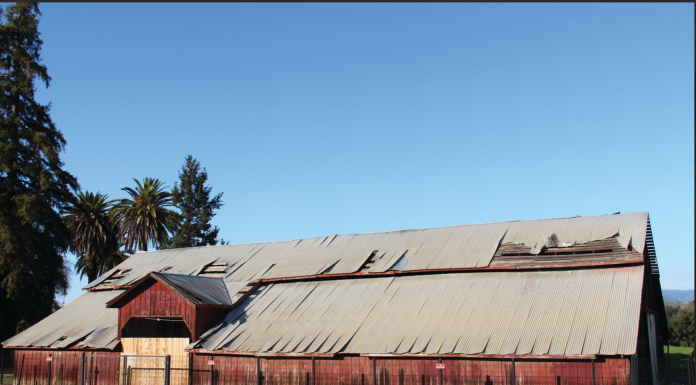
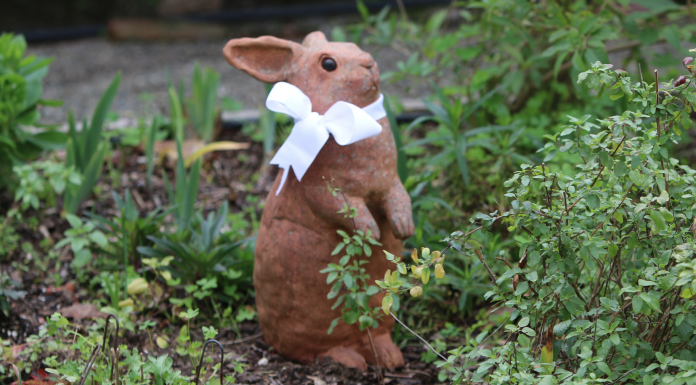
“It is so exciting that we can finally see the light at the end of the tunnel,” said Kathy Chavez, a local resident who has been working for more than two years to save the historic red barn in Christmas Hill Park from demolition.
Vets wrapped in Quilts of Valor
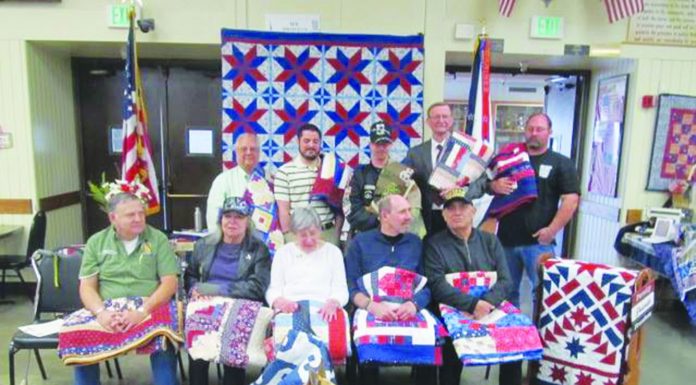
Ten area veterans, including one Gilroyan were presented with hand-sewn quilts in honor of their service to the country at a reception at American Legion Mission Post 564 in Santa Clara last month.Presented by the South Bay Blue Star Moms, a military support group that sends care packages to service members, the quilts were given to veterans of the wars in Vietnam and the Persian Gulf, Iraq and Afghanistan at a moving ceremony on Feb. 20, where recipients were called one-by-one to the front of the room and wrapped in their quilt by loved ones.Called Quilts of Valor, they are meant to convey thanks to veterans for their sacrifice and are made to a particular size and standard. The foundation was started in 2003 by Catherine Roberts, whose son was stationed in Iraq. Through word-of-mouth and the Internet, the organization has spread across the country, awarding more than 133,000 quilts to date.Joseph Jauch, an Iraq War veteran from Gilroy who served two tours in the Army, was presented with a quilt by his mother, Jacqulyn Jauch of Gilroy, who pieced it together over a period of months. The patchwork design includes images of tanks and the dominant hue, army green.At the ceremony, Jacqulyn Jauch wrapped her son in the quilt, which included the label “Army Strong.”“He’s a very strong person; very committed and passionate about what he does,” said Jacqulyn Jauch, whose son joined up at age 19. “I’ve always admired him very much—he’s my hero.”What he has gone through during his service in the Army has made him a very strong man, she added.Jacqulyn Jauch said the group seeks to identify Vietnam War veterans to receive Quilts of Valor.“We always go out of our way to thank or hug our Vietnam veterans because they were treated so poorly when they returned. We make a special point for getting Vietnam veterans Quilts of Valor considering what they went through.”Two Vietnam veterans were presented with quilts at the ceremony.No easy task, Jacqulyn Jauch described the quilt-making process.“You have to lay out all the pieces, get the design how you want it to look, stack all the pieces of material in rows and in the right order so they’re sewn together in the right order.”While some quilts are more elaborate than others, with some of the quilters being more experienced, the aim is all the same: to give thanks and comfort.The South Bay Blue Star Moms hold two major fundraisers, a casino night in San Jose in the spring and fall spaghetti dinner annually and collect donations in support of their program that sends care packages to deployed service members. Their last shipment of care packages numbered 600 boxes, according to Jauch.For more information about their care package program, visit www.southbaybluestarmoms.org.
Silent Gilroy Vigil for 40 Days
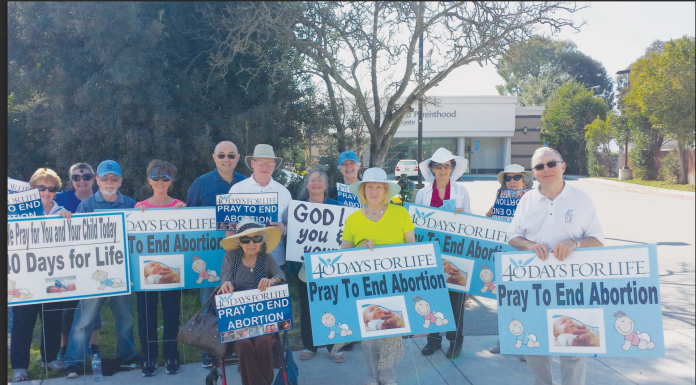
Since Feb. 10 anti-abortion protesters have gathered peacefully outside the Planned Parenthood Gilroy Health Center, saying they are determined to quietly change and save lives and support women in need.
Kids Learn about H20

Before Miranda Paul became a children’s book author she was studying aquatic biology. Luckily for young readers today, Paul switched her major to English and Education.“Now I feel like I’m just using everything that I’m passionate about, and everything that I’m good at, and they’re all coming together,” Paul said.“I really feel like I found where I can use my voice for the most good.”Paul’s voice reaches children, and adults, everywhere, with her messages of environmental awareness and understanding.On Saturday, February 27, the popular author will pay a visit to Gilroy Library where she will read from her book, Water Is Water.Earlier in the month, on Feb. 4, Mike Wasserman, District 1 Supervisor for Santa Clara County, also stopped by the library, as a guest reader for the Silicon Valley Reads program. His book of choice was also Water Is Water.“Any day I can start with children, beats any day I start with adults,” Wasserman said. “It energizes me, I look forward to it.” The Supervisor, a staunch advocate for education, is well aware of the importance of reading.“You have to read in order to be educated, and to be happy and successful, you’ve got to be educated, so reading is the cornerstone of education,” Wasserman said.The storytime attendees followed along as the supervisor read from the book, making sure to take time to present to the excited crowd the beautifully illustrated pages that for Wasserman, were a main feature of the book.“I read the book twice. Each time I went back and looked, I found more things hidden,” Wasserman said of Jason Chin’s illustrations.Andrew Brinton, who attended the reading with his daughter, Lyra, 2, enjoyed storytime.“I thought Mr. Wasserman did a great job,” Brinton said.Supervising Children’s Librarian, Sharon Kelly, agreed.“I thought Mike was great, he obviously spends a lot of time with children and families, he’s a natural,” Kelly said. “He had so much enjoyment reading it, and that came across during the story, so we were very happy, and I think the kids and the families were very happy too,” Kelly said.Each year the Silicon Valley Reads program selects a particular theme. This year’s theme is water. The organization then selects companion books for children that reflect that particular theme. Water Is Water in their opinion, was a perfect fit.“We were excited to discover Water Is Water by Miranda Paul, as we searched for a great book for our youngest audience, pre-K-Grade 3,” said Nancy Howe, county librarian and co-chair of Silicon Valley Reads.The goal of Silicon Valley Reads program is to have families read together about a subject matter, each at their own level, so that they can think and talk about a subject that is important to our region.“After so many years of drought, everyone is more aware of what a precious resource water is in our lives,” Howe said. Kelly agrees that Paul’s book is an excellent choice for a read-a-loud book.“Its very difficult to write about a subject as complex as the water cycle for a preschool audience,” Kelly said.“To have it engaging, and exciting, and compelling, and understandable, and the illustrator did such a beautiful job, so together, that’s why I think it’s a near-perfect book.”Paul is more than pleased about her association with the Silicon Valley Reads program, and excited about the upcoming readings scheduled throughout the Bay Area.“I think it’s wonderful that there are going to be all these other read-a-louds,” Paul said. “I’m so honored that people are going to read Water Is Water, and hopefully enjoy it, and inspire some kids.”Her books come from a place of passion for the environment, and passion for poetry, and literature and science, and the beauty of nature.“I really feel like there is a connection, an innate connection, between people and our environment,” Paul said.The fact that her books have been so widely received came as a surprise to the author.“When you write books for children, essentially, if you boil it down, you’re writing for about 8 percent of the population,” Paul said.The author enjoys working with publishers who make an effort to reach bookstore shoppers as well as the school and library market. She’s found that even though she writes picture books, which are normally geared to a younger audience, her books are hitting a much broader age range, including the upper grade students, who use them for school projects.She discovered one such project on a recent elementary school visit, where, pasted all over the stairwell walls, were hand-drawn raindrops. Inside each raindrop students had written their ideas on how to conserve water.Paul described the display as a “rainstorm.”She was all the more astounded to find out that the project had been inspired by her book.“Its an honor to have my books, or the topics, be these springboards,” Paul said.Ideally, her goal is to take the spotlight off herself, as an author, and shine it on the children. “Really that’s the only way we move forward, environmentally,” Paul said.“A book can be in and of itself something beautiful, and fun, and a tool, but when the book is a platform, and it’s a jumping off point for action, its really amazing to see what kids can do, what ideas they can come up with, and how they can actually make change,” Paul said.For more information about Miranda Paul’s reading at Gilroy Library, go to: http://www.sccl.org//gilroy/.
‘Prius Page’: Drive more to save more
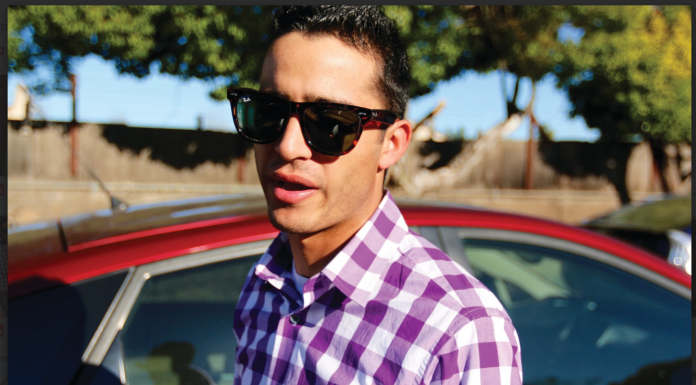
Don’t expect perfection at Khodas used car lot behind the old DMV building on Church Street.
Disabled Vet Sues Downtown Apartments for Discrimination
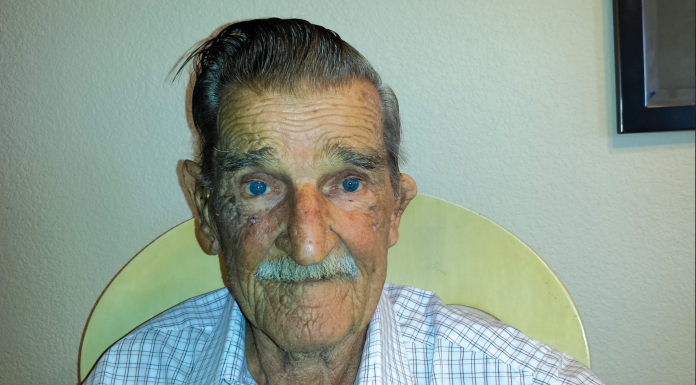
The man known as the “King of Downtown Gilroy” has filed a federal lawsuit against a landmark hotel he called home for 15 years, alleging he was evicted in 2015 because he is disabled and needs a wheelchair.
New Laws for Kennels
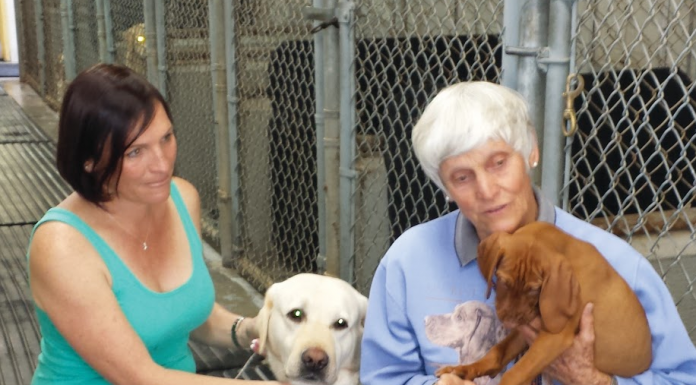
A bill that would set health and care standards for the state’s pet boarding facilities—including stables—has been introduced in Sacramento by State Senator Bill Monning, whose 17th district includes Gilroy.
Local group crafts smart growth ballot initiative
Worried about sprawl and impacts to the city due to unmitigated growth, a group of Gilroy community members ranging from longtime residents to recent arrivals are in the process of drafting what they call a “smarter growth” ballot initiative that would give voters control over how much the city can grow.“The complete language of the initiative is still being authored as we speak,” explained Sandie Silva of the new advocacy group, Gilroy Growing Smarter, via text message.“We are making it so that the voters will be the decision-makers for the overall limits to Gilroy's growth and leave the responsibility for smart use of limited land within our boundaries to the elected officials.”Forged out of the controversy surrounding the 721-acre Rancho Los Olivos housing project proposed for an area north of Gilroy, Gilroy Growing Smarter includes the same folks that created the online petition in December that generated more than 2,200 signatures from people opposed to the 4,000-home development.Silva, who is part of a Gilroy farming family, said she has never been political before, but was dismayed watching people go to City Council meetings and voice their opinions, only to be rebuffed and have their concerns ignored by elected officials. So she decided to get involved.“We started because of the 721 acres and I started the petition,” Silva recalled. “And [the City Council] decided to vote against what the people wanted anyway.”She said the council’s actions raised “a lot of flags” with people who were left wondering what was going on at the council and why they were not being heard.Overwhelmed by public criticism and two lawsuits, the developers behind the large-scale development rescinded their application in January, deciding to take more time to sell the project to the public. But for those who understand it is too late to complain about new construction when the tractors have already rolled in, the battle to save Gilroy from being another bedroom community for Silicon Valley has just begun.“We are a very diverse group,” said Silva. “We come from downtown and unincorporated areas; we are business owners, parents, and we feel we speak for the vast majority of Gilroy who want the city to grow in a compact and responsible way. We are not anti-growth.”In addition to working on the initiative and gathering enough signatures of registered Gilroy voters to make the November ballot, the group plans on forming sub-committees to tackle other pressing issues relating to Gilroy’s growth, including the state of downtown and infrastructure.“Downtown has been a thorn in everyone’s side for years, so we would want that area revitalized,” said Silva.“It is very complicated today to do something innovative downtown,” said David Lima, a member of Gilroy Growing Smarter. Gilroy resident, Lima has written on development issues for the Dispatch before. “There are a lot of rules and adversarial relationships that developed since 1989 when the buildings were damaged—a lot of factors have made it difficult to do clever things downtown.”“Existing infrastructure is another thing we want to look at,” said Silva. “Schools are already overcrowded and there are the poor street conditions.”On its website,www.gilroygrowingsmarter.org, the group lays out its aims: elect a responsive city council that will honor the wishes of the citizens; combat suburban sprawl through careful redevelopment of downtown, with gradual residential infill; preserve agricultural and open space land and encourage the creation of high-quality jobs in Gilroy for Gilroy residents.Asked if it was all the current construction underway which has made folks in Gilroy jittery (some projects were approved more than 10 or 15 years ago and delayed due to the 2008 economic downturn), Lima replied yes, that was part of it, but it was more to do with the potential impacts to the city and its residents that got people concerned.“All of the projects that have been approved, are in the planning process or under construction have the potential to add 15,000 people to Gilroy (about a 30 percent increase to its current population of 53,000),” he said. “That is a huge increase.”And with all that growth, he added, there will be impacts to traffic, water and air quality that have not yet been felt.Lima said he’s probably spoken to hundreds of people over the last couple years about why they live in Gilroy and what it is about living in a “small town” that people love.He said that overall people wanted a definite boundary, a green boundary of farmland or open space around their city. They also wanted a “clearly identified center in downtown” where you can find grocery stores and restaurants. Traffic should also manageable with motorists usually being able to get through the traffic lights with one change.“And you know quite a few of the faces you see at the store,” he said.“People are really concerned that if we grow beyond our 53,000 all of those lovely, small town characteristics will simply disappear, which will make people very unhappy.”