


Every day, global headlines remind us of a painful reality. From the Middle East to Eastern Europe, conflicts rage on with no end in sight. Nations fight with advanced weapons, driven by deep mistrust and fear.
History shows us that these external wars rarely bring lasting peace; one conflict simply leads to the next, creating an endless cycle of destruction.
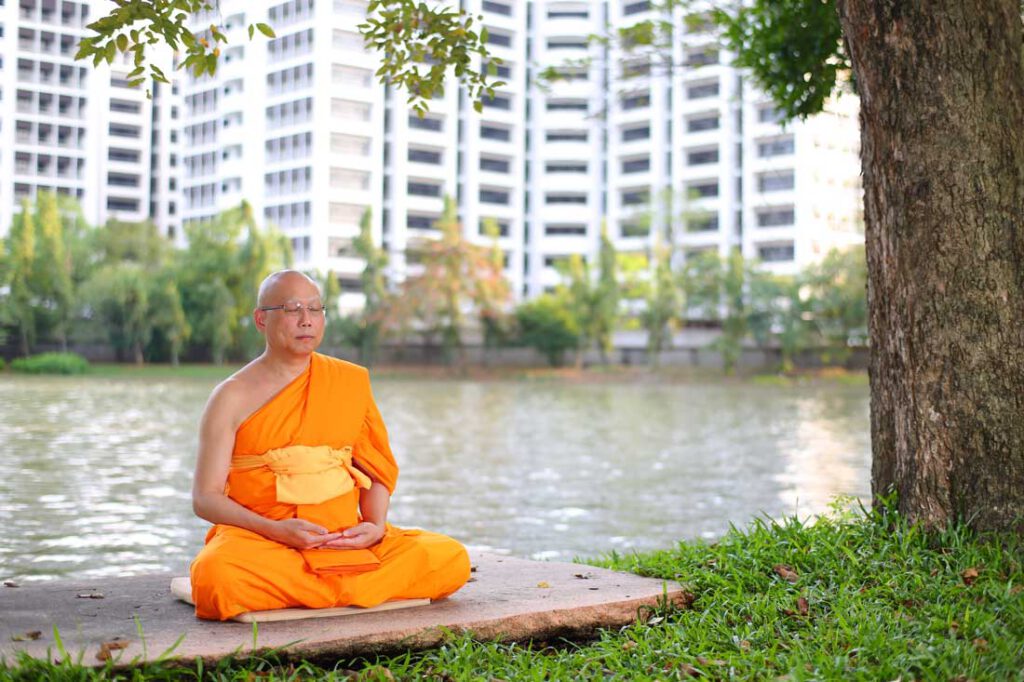
How can we break this cycle? The answer can be found in the timeless lessons of Vesak, which we celebrated recently on the full moon day of the sixth lunar month.
For those unfamiliar, Vesak honors the birth, enlightenment and passing of the Buddha. But at its core, Vesak celebrates a different kind of war—and a definitive victory.
While the world fights external battles, the Buddha fought an internal one. His enemies were not other nations, but the “inner defilements” (kilesas)—greed, anger, delusion and ignorance (avijja)—that cloud the human mind.
By sitting in deep meditation, he conquered these root causes of suffering. Unlike worldly wars that only lead to future resentment, the Buddha’s victory over his own mind was absolute. It was a victory that can never turn into defeat.
This shows us a profound truth: All external wars are just reflections of internal wars. Everything we experience follows a precise chain: Mind, Thought, Speech, Action.
When world leaders and societies operate from a mind full of fear and suspicion, their thoughts, words and actions naturally lead to war. Therefore, using weapons to achieve peace is like trying to put out a fire with oil. True peace can only begin when we disarm the negativity inside our own minds.
This is why practicing meditation is the most urgent need for our world today. And as highlighted in this column last year, a great meditation master from Thailand, Luang Pu Wat Paknam, discovered a practical way to achieve this inner stillness.
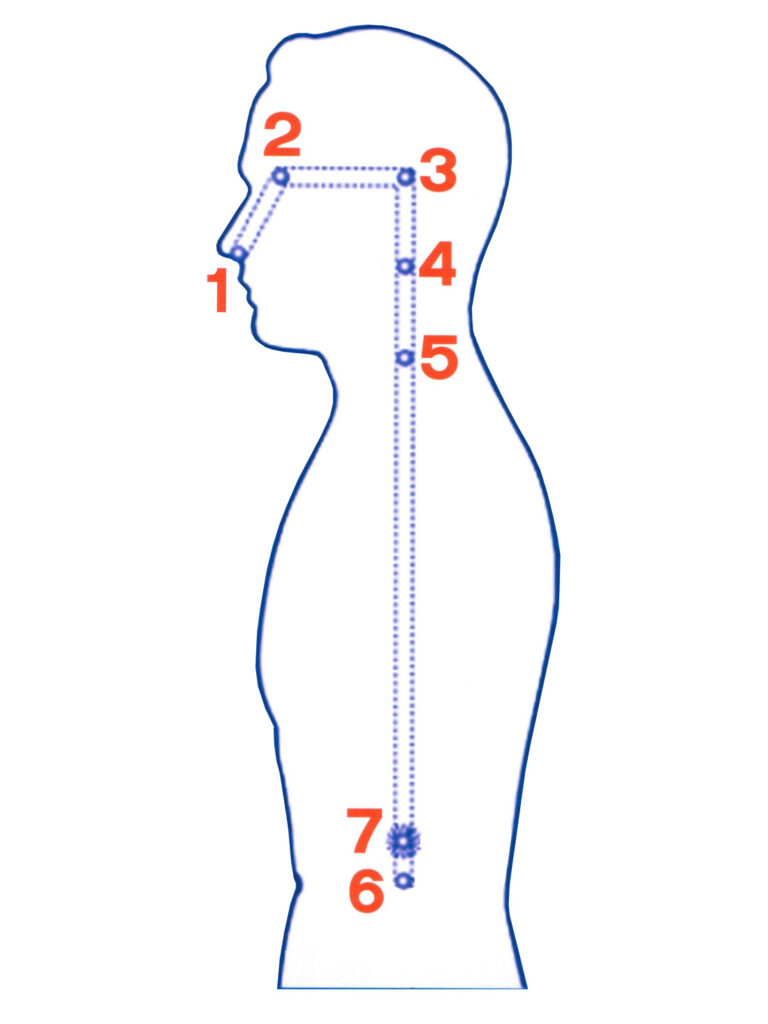
He taught that true peace begins when we bring our wandering mind back to its natural home: the seventh base of the body, located at the center of our torso.
When we rest our attention gently at this center, the mind naturally stops racing. It settles, clears and becomes pure. In that state of stillness, fear and prejudice disappear, replaced by genuine compassion for all living beings.
We may not be able to personally negotiate peace treaties between nations. However, we have total control over our own minds. By choosing to quiet our minds at the center of the body for just a few minutes each day, we stop contributing to the world’s chaos. Instead, we become a source of peace wherever we are.
Let us remember: Global peace is not achieved on a battlefield. It is won within the silence of a still mind.
Phrakrubhavanavides (Manikanto Bhikkhu) is the senior Abbot of the Dhammakaya Meditation Center Silicon Valley. An ordained Buddhist Monk for 38 years, Abbot Manikanto has been in South County for about six years. He is an active member of the Interfaith Clergy Alliance and can be reached at ob*****@*****il.com.








There’s relatively little compassion in the world when compared to the very plentiful anger or rage and violence. I’ve noticed myself getting angrier over the last few years, especially about domestic and global injustices, or at least how I perceive them as such.
.
Maybe my anger is largely related to the Internet’s ‘angry algorithm’ sending me the stories, etcetera, it has (unfortunately correctly) calculated will successfully agitate me into keeping the (I believe, overall societally-/socially-damaging) process going thus maximizing the number of clicks and scrolls I’ll provide it to sell to product advertisers.
.
Mostly relevant to the social and political turmoil seemingly everywhere are the words of American sociologist Stanley Milgram (1933-1984), of Obedience Experiments fame/infamy: “It may be that we are puppets — puppets controlled by the strings of society. But at least we are puppets with perception [and] awareness. And perhaps our awareness is the first step to our liberation.”
.
At least as individuals, we can try to resist flawed human nature thus behavior, however societally normalized it may be, once we become aware of its potential within ourselves. Once cognizant of it, perhaps enough of us could instead perform truly humane acts in sufficient quantity to initiate positive change on a large(r) scale.
.
The narrator in Nobel laureate Toni Morrison’s novel Beloved notes that, like the South, the Civil War era northern states also hated Black people but happened to hate slavery more. Of course, this succinct summation of the callousness, if not ugliness, of the politics of difference and scale is applicable elsewhere, today: for example, they may hate libertarians but hate liberals more; hate Hispanics but abhor Chinese people even more; and loath Jews but despise Muslims far more, etcetera.
.
Racist and other bigoted sentiment is typically environmentally developed/acquired during childhood, often enough even passed down generationally, if not also genetically. Especially if it’s deliberate, exposing very impressionable cerebrally-developing children to such an environment of baseless contempt and overt bigotry amounts to a formidable form of child abuse.
.
If the parents won’t do it for plain moral reasons, they then should do their own children a big favor by NOT passing down onto them such destructive anti-social/-societal sentiments and perceptions (including stereotypes and ‘humor’), since such rearing can readily make life much harder for those children.
.
It fails to prepare them for the practical reality of an increasingly diverse and populous society and workplace. It also makes it so much less likely those children will be emotionally content or (preferably) harmonious with their multicultural, multi-faith and multi-ethnic/-racial surroundings.