


April is recognized as World Autism Month, and I write this as both a mother and an advocate.
Like many parents, my early experiences with autism were overwhelming and, at times, isolating.
In our community, support can feel limited. Many autistic children are often defined by behaviors that others don’t understand—screaming, tantrums or difficulty communicating, especially in early childhood. I remember moments when simply leaving the house felt daunting, even requiring calls for help, or chasing my son through a parking lot because of his fear of unfamiliar places like doctors’ offices.
But over time, my perspective began to shift.
As I observed not only my son but other autistic children, I started to see something deeper. Beneath those challenging behaviors are remarkable minds—children with unique talents, creativity and intelligence.
Too often, those gifts are hidden behind sensory struggles that can drain families emotionally and physically.
That realization led me to learn more about what shapes these behaviors. I began studying how both internal and external factors affect autistic children—especially their sensory environments.
What many of us consider normal background noise—a refrigerator humming, a washing machine running, a vacuum cleaner, even the ticking of a clock—can feel overwhelming.
Sensory overload is real, and it can trigger anxiety and distress.
I’ve seen firsthand how small environmental changes can make a meaningful difference. At Achieve Kids School in Palo Alto, a high school community project focused on redesigning classroom space. By adjusting layout, color and visual cues, teachers noticed students were calmer, happier and more focused. The transformation was powerful.
These same principles can be applied beyond the classroom—to homes, daycares and even medical waiting rooms.
For families, simply getting out the door can be a challenge. When children become overwhelmed, having a designated safe space can make all the difference.
A calming space gives a child a place to reset and self-regulate—a place where they feel secure and in control. When a child is calm, the entire family benefits. Siblings can build stronger relationships, and parents can better support their child’s growth. From there, additional therapies and learning opportunities become more effective.
In my own journey to better understand autism, I’ve hosted two global summits, “Your Child with Autism,” where I interviewed 26 professionals and autistic adults during the pandemic. Experts ranged from autism celebrities, brain researcher, autism professors, occupational speech and music therapist, interior and architect who designed spaces for autistic children.
I was honored to include renowned autism advocate Temple Grandin, Stephen Shore for the events.
This work continues. My next Live Virtual Autism Summit will take place May 9, featuring Temple Grandin, Ph.D., Dr. Stephen Shore and Nancy Amar, OTR/L.
Autistic children are not defined by their challenges. They are part of our future, and they deserve understanding, support and environments that allow them to thrive.
I will continue this journey—for my child, and for others like him.
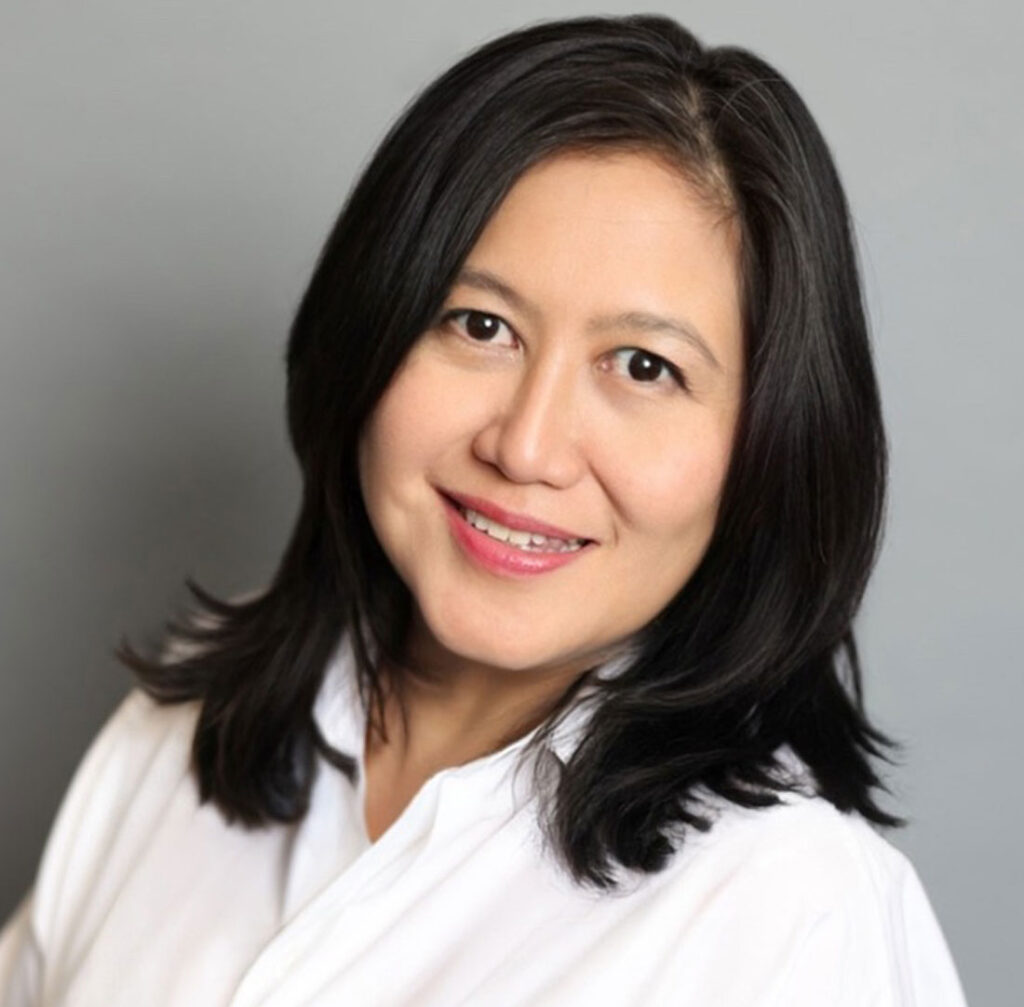
Florencia Djoe is the Principal/Sensory Interior Designer of a full interior design consultant in Morgan Hill. She has been in the design industry since 1985. Her projects range from high end residential, hospitality and commercial up to Fortune 500 offices. Find more info on her website at FlorenciaDjoe.com.









My autism spectrum disorder is an obvious condition with which I greatly struggle(d) while unaware until I was a half-century old that its component dysfunctions had formal names. Then again, had I been aware back in the 1970s and ’80s I likely would’ve kept it a secret nonetheless, especially at school, lest the A-word [autism] gets immediately followed by the F-word [freak].
From my recollection and understanding: while children with ‘low-functioning’ autism spectrum disorder seem to be more recognizable thus treated in school systems, high-er (as opposed to high) functioning ASD students — who tend to not exhibit the more overt, debilitating symptoms of autism — are more likely to basically be left to fend for themselves, except if their parents can finance specialized education.
If it is feasible, parents should seriously consider not enrolling their high-er functioning ASD child in regular, ‘neurotypical’ grade school. The combination of my CPTSD and undiagnosed autism spectrum disorder was often mistaken for ADHD during grade school, for which I was shamed and scolded.
As a boy with an undiagnosed ASD, my public-school Grade 2 teacher was the first and most formidably abusive authority figure with whom I was terrifyingly trapped. Though there were other terrible teachers, for me she was uniquely traumatizing, especially when she wore her large, dark sunglasses when dealing with me.
Rather than tell anyone about my ordeal with her and consciously feel victimized, I instead felt some misplaced shame: I was a ‘difficult’ boy, therefore she likely perceived me as somehow ‘deserving it’. But not being mentally, let alone physically, abused within or by an educational system is definitely a moral right; I was simply unable to see this.
Perhaps schoolteachers should receive training in high-er functioning ASD, especially if the rate of autism diagnoses is increasing. There could also be an inclusion in standard high school curriculum of child-development science that would also teach students about the often-debilitating condition.
Neurodiversity lessons, while not overly complicated or extensive, might help reduce the incidence of chronic bullying against such vulnerable students. It would explain to students how, among other aspects of the condition, people with high-er functioning ASD are often deemed willfully ‘difficult’ and socially incongruent, when in fact such behavior is really not a ‘choice’.
It would also elucidate how “camouflaging” or “masking,” terms used to describe higher-functioning ASD people pretending to naturally fit into a socially ‘normal’ environment, causes their already high anxiety and depression levels to further increase. And that this exacerbation is reflected in the disproportionately elevated rate of suicide among them.
As a moral rule, a mentally as well as a physically sound future should be EVERY child’s foremost fundamental right — along with air, water, food, and shelter — especially considering the very troubled world into which they never asked to enter.
Like my (now long-deceased) father, I’ve been a chronic worrier and negative thinker almost my entire life. Perhaps it’s not surprising, then, that I cannot recall much of my half-century-plus life, and little that was positive; I was/am busy spending my ‘present’ anxious about my future and depressed over my past. For me, that includes a fear of how badly I will emotionally deal with the negative or horrible event—which usually doesn’t occur—and especially if I’ll also conclude that I’m at fault.
It would be appropriate to have stated on my grave/urn marker someday that, ‘He spent his life worrying sick about things that never happened.’
I find that this curse essentially prevents me from meeting and befriending a special significant other. Most notably, I’ll start talking to a woman I find attractive but then mentally freeze up with anticipations of, among other disasters, a potential relationship’s inevitable failure, right up to signing divorce papers a few years later.
In summation: It would therefore be great if there could be some valuable academic or clinical use from it all—to create or extract from it some practical positivity and purpose—so that all of the suffering will not have been in vain.
Awareness is key to prevention, if not also healing.
While I don’t know the precise/entire cause-and-effect of my chronic anxiety and clinical depression, my daily cerebral turmoil mostly consists of a formidable combination of adverse childhood experience trauma, autism spectrum disorder and high sensitivity, with the ACE trauma in large part the result of my ASD and high sensitivity. I self-deprecatingly refer to it as my perfect storm of train wrecks.
Coexistent conditions, such as mine, likely amplify the turmoil usually suffered by people living with less complicated conditions. ACE abuse thus trauma, for example, is often inflicted upon ASD and/or highly sensitive children and teens by their normal or ‘neurotypical’ peers — thus resulting in immense and even debilitating self-hatred and shame — so why not at least acknowledge that consequential fact in a meaningfully constructive way? It could be very helpful to have books written about such or similar coexistent cerebrally-based conditions.
As it currently is, The Autistic Brain fails to mention the real potential for additional challenges created by an autism spectrum disorder coexisting with thus exacerbated by high sensitivity and/or adverse childhood experience trauma. The book Childhood Disrupted: How Your Biography Becomes Your Biology and How You Can Heal, on adverse childhood experience trauma, fails to mention high sensitivity or ASD. And The Highly Sensitive Man has no mention of ASD or ACE trauma.
I’ve read much of the book WHAT HAPPENED TO YOU?: Conversations on Trauma, Resilience and Healing, by Dr. Bruce D. Perry (M.D., Ph.D.) and Oprah Winfrey. It is exceptionally enlightening, although I’ve thus far not come across any mention of the complications caused by coexistent conditions.
Dr. Joseph Burgo’s book SHAME: Free Yourself, Find Joy and Build True Self-Esteem — about the various forms and degrees of shame, including the emotionally and mentally crippling “core shame” life curse — is quite revelatory. He writes:
“When brain development goes awry, the baby senses on the deepest level of his being that something is terribly wrong — with his world and with himself. As the psychoanalyst James Grotstein has described it, ‘These damaged children seem to sense that there is something neurodevelopmentally wrong with them, and they feel a deep sense of shame about themselves as a result.’
“Throughout my work I have referred to this experience as ‘core shame.’ It is both intense and global. Under conditions that depart widely from the norm, shame also becomes structural, an integral part of developing child’s felt self. Rather than feeling beautiful and worthy of love, these children come to feel defective, ugly, broken, and unlovable.”
A core shame diagnosis would help explain why, among its other debilitating traits, I’ve always felt oddly uncomfortable sharing my accomplishments with others, including those closest to me. And maybe explain my otherwise inexplicable almost-painful inability to accept compliments, which I had always simply attributed to a ridiculous degree of modesty.
It would also help explain why I have consistently felt unlovable.
Largely due to ASD traits that rubbed against the grain of social normality thus were clearly unappreciated by others, my unlikability was for me confirmed. My avoidance of social interaction and even simple smiles at seemingly-interested females was undoubtedly misperceived as snobbery. The bitter irony was that I was actually feeling the opposite of conceit or even healthy self-image/-esteem.