
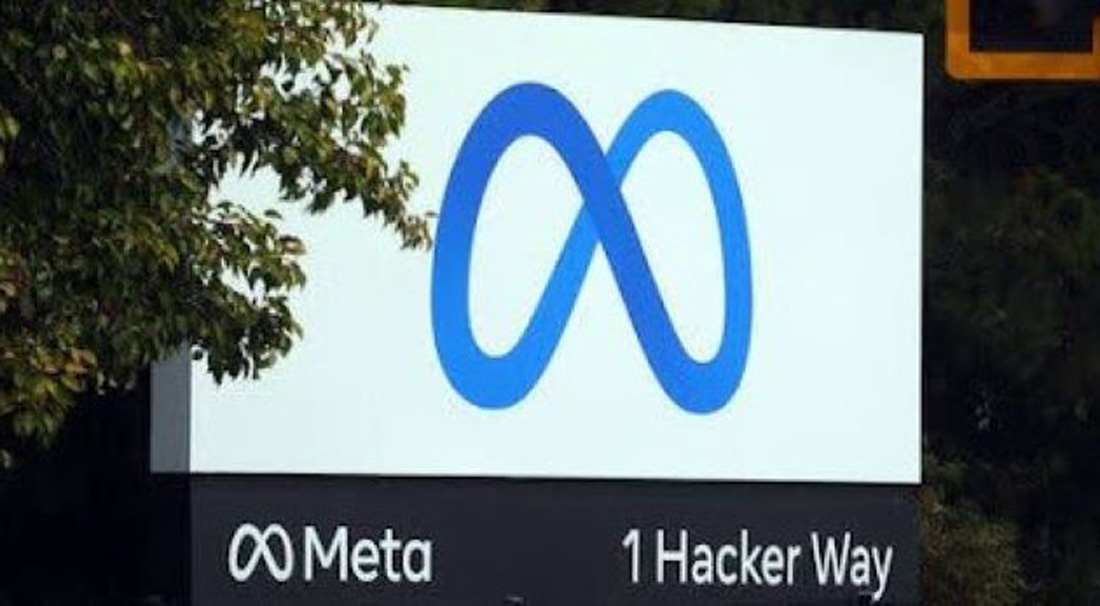
Meta has agreed to pay a maximum of $16.68 billion and make major changes to Facebook and Instagram to resolve claims by California and 50 other jurisdictions that the company designed those platforms to addict children, misled consumers about their safety and improperly collected children’s personal data.
The proposed agreement, if approved by federal court, was praised by California Attorney General Rob Bonta, who announced it last week , calling it a “transformative settlement.”
“Today we have secured a settlement with Meta that will make social media less dangerous for our kids and make a world of a difference for children and their families,” said Bonta. “Meta has agreed to make massive transformations that will reduce the risk of harm from its platforms—and will do it within months.
The settlement represents just 1.2% of the estimated $1.7 trillion loss that the Menlo Park-based social media giant had faced in a civil trial that began last week in federal court in Oakland.
Meta still faces thousands of personal injury claims and litigation from school districts across the U.S., none of which the agreement covers.
The case by the 29 states was among the most far-reaching, with Meta warning that a courtroom loss could have exposed it to more than $1 trillion in penalties.
Meta stock rose more than 1% by midday after the settlement announcement. Meta has a market capitalization value of nearly $1.5 trillion.
In a statement to the media, Meta framed the deal as a template for the rest of the industry and asked its competitors to match it.
“Because teens move fluidly across dozens of apps, we need an industry-wide solution,” said C.J. Mahoney, Meta’s chief legal officer. “We therefore call on our industry peers, TikTok and YouTube, to implement this new framework, right away.”
Bonta said that the payments from the settlement will be paid in annual installments over 10 years, with California potentially receiving between $1.5 billion and $2.1 billion.
Participating states receive 70% of the allocated payment, while the remaining 30%, or $5.3 billion, would be released only if YouTube and TikTok implement the same age assurance measures and match that amount.
The states’ lawsuit alleged among other things, that “the company designed and deployed harmful features on Instagram and Facebook that drive compulsive use by children and teens to their mental and physical detriment, all the while misleading users, their families and the public regarding the existence and severity of these risks.”
The trial of this case began on Aug. 18 in the U.S. District Court for the Northern District of California in Oakland. The lawsuit was filed in 2023.
“Today’s settlement, subject to court approval, provides for strong injunctive terms designed to help protect children from the mental health harms associated with social media, including default daily time limits on social media and a block on overnight use that can only be lifted by a parent, enhanced parental supervision tools, robust age assurance measures to detect users under 18 and children under 13 that are on the platform, and the appointment of an independent auditor to oversee compliance,” Bonta’s office said in a press release.
“We are talking about time limits, stopping notifications during school, a block on the app during critical overnight hours, bans on plastic surgery filters and so much more,” Bonta said. “Alongside a bipartisan coalition of my colleagues, I am proud to deliver this settlement that addresses the concerns at the core of our lawsuit and institutes real change, real transparency and real enforceable protections for children on Facebook and Instagram—right now, no more waiting.”
How a significant portion of the payment received by California will be spent will ultimately be decided by the Legislature and Gov. Gavin Newsom, but in the proposed settlement it is earmarked for purposes related to the prevention or remediation of mental health or other harms to young Californians associated with social media use, according to Bonta’s office.
The proposed settlement is designed to help protect teens from the mental health harms associated with social media use, including bans and blocks on features known to be harmful, such as:
• A default daily time limit of two hours for users under 18 that can only be lifted by a parent. If other social media platforms agree to similar terms, the daily time limit will drop to one hour.
• A default nighttime block between midnight and 6am for users under 18 that can only be lifted by a parent. If other social media platforms agree to similar terms, the nighttime block will expand to cover 10pm-7am.
• Default blocks on notifications to users under 18 from 10pm-7am and during the school day (8am-3pm from Aug. 15-June 15.)
• An enhanced mechanism for teens to report potentially harmful content and a requirement that Meta respond to 90% of those reports within six hours.
• A ban on displaying numbers of likes or reactions to users under 18.
• A ban on cosmetic procedure image filters for users under 18.
• An option for users under 18 to have a non-personalized feed, meaning a feed that doesn’t use an algorithm to target them with content aimed to keep them endlessly scrolling.
• A commitment from Meta to maintain, review and improve existing teen content safety measures.
The company will also be required to maintain other protections. For example:
• Meta has agreed to maintain, review and improve existing teen content safety measures and will create enhanced parent supervision tools.
• Meta will institute robust age assurance measures to detect users under 18, as well as measures to identify and remove kids under 13 from their platforms.
• Meta will bring on an independent auditor with expansive access to information and resources, regular reporting and the right to communicate concerns to the Attorneys General.
• Finally, Meta will be subject to an injunction prohibiting it from making further false, misleading or deceptive statements around its safety features.
This story was originally published by sanjoseinside.com.









Meta, Google, et al, are as American as are insatiable corporate and oligarchic greed and superfluous profit/wealth. They’ll claim that best business practices, including what’s best for consumers, are best decided by business decision-makers. However, while there must be a point at which greed-fueled practice ends up hurting big business’s own monetary interests, can the unlimited-profit objective/nature be somehow irresistible? It brings to mind the allegorical fox stung by the instinct-abiding scorpion while ferrying it across the river, leaving both to drown.
Also, the biggest of businesses (at least here in Canada) get unaccountably even bigger, defying the very spirit of government rules established to ensure healthy competition by limiting mass consolidation.
Western governments need to cling far less to an outdated capitalist-manifesto mentality and instead open their eyes to increasingly disturbing insatiable greed that’s ignoring, if not exploiting via profiteering from, the legitimate needs of nations and in particular the growing number of financially struggling citizens within. But, of course, fat chance!
I sometimes wonder whether some morbidly and self-mortally greedy corporate officers may know their big businesses will inevitably, if not imminently, collapse due to a great lack of consumers who can afford those big businesses’ products — perhaps including some would-be consumers who’d lost their jobs to employer-profit-maximizing Artificial Intelligence or other forms of non-human automation; and, yet, the corporate officers will nonetheless continue ardently politically supporting (via covert lobbying of governments, of course) the very economic system, especially its below-poverty-line minimum wage, that is basically going to ruin their big businesses.
As strange as it likely sounds, perhaps those corporate officers cannot help themselves, and even they realize an intervention by a truly-independent body/entity may be needed, one completely untouchable by the immoral and/or unethical corporate/oligarchic lobbyists. ‘We scorpions simply cannot help ourselves. We know there needs to be external and independent intervention in our superfluous-profit greed, but we will still resist such intervention. It’s in our nature.’
It seems like a pathologically irresistible obsession or compulsion.