



37.7 F
Gilroy
January 14, 2026

The ‘spice of life’ – and food

Under the radar in Gilroy is a thriving gourmet food industry, home to all kinds of delicious, locally-made spices, sauces and spreads. In an age where foodies run rampant and shopping like a locavore is the new American ideal, Gilroy is where it’s at. So throw out that old jar of Tabasco and that Walmart brand steak rub and check out these Epicurean delights, sourced and produced in your own backyard.

Gilroy Just Says No to Cannabis

On Monday, Gilroy joined a growing number of jurisdictions across the state that have banned the cultivation of marijuana.In a unanimous vote—with no discussion from the dias or objection from the public—the City Council passed a new zoning ordinance which prohibits the cultivation, processing, delivery and dispensing of marijuana within city limits.The ordinance, which was introduced at a Planning Commission session in December and had its final reading at the council meeting on Monday, makes no distinction between the cultivation of marijuana for commercial and personal use.The state’s Compassionate Use Act of 1996 and Senate Bill 420, known as the Medical Marijuana Program Act (adopted in 2003) allows an individual, a qualified patient, a primary caregiver, or a member of a legal cooperative to possess a specified amount of marijuana with a doctor’s recommendation.In 2010, Gilroy passed an ordinance prohibiting medical marijuana dispensaries.A trio of bills, known as the Medical Marijuana Regulation and Safety Act (MMRSA), was signed into law by Gov. Jerry Brown in October, establishing a regulatory framework and licensing authority for the state’s rapidly growing medical marijuana industry. In response, cities and counties across the state have been scrambling to put their own regulations on the books in order to maintain local control.The rush was prompted in part by a March 1 deadline for local zoning rules that the author of the Assembly bill now says was a mistake.According to the city’s reading of the legislation, under AB 243, “if a local agency does not have an ordinance in effect by March 1, 2016, that either expressly prohibits or expressly regulates the cultivation of medical marijuana, the California Department of Food and Agriculture will be the sole licensing authority for such uses, and may issue such permits for locations within Gilroy.”In a press release, Assemblymember Jim Wood (D-Healdsburg) said, “Nobody intended to give local lawmakers such a short timeline to develop regulations for an industry as complex as medical cannabis.”Wood introduced a bill last week that would remove the March 1 deadline and delete the authorization of local jurisdictions to prohibit the cultivation, storage, manufacture, transport, provision or other activity by patients and caregivers otherwise exempt from state regulation. On Monday, AB 21 as amended passed the state Senate and will go on to the Assembly and then to the governor for his signature. Gov. Brown has said he supports the deadline “fix.”Yet it seems no legislative action can come soon enough to impede the banning trend that is sweeping the state. California Norml, the state’s largest advocacy group pushing for marijuana reform, estimates that nearly 160 jurisdictions have put bans on the books or are considering bans on commercial and/or personal marijuana cultivation.In unincorporated areas of Santa Clara County, commercial cultivation of marijuana is banned. The Patient and Caregiver Medical Marijuana Cultivation Ordinance regulates cultivation by three or fewer qualified patients and primary caregivers for the patient’s personal medical use and prohibits distribution.“There is a wave of communities looking at banning cultivation, which is an unfortunate side effect of regulations,” said Mike Adams, a grower from Nurturing Seed Farms in Mendocino County.Adams was part of a panel discussion on cannabis at the EcoFarm conference in Pacific Grove on Friday. The well-attended panel was the first of its kind for the agricultural conference, which focuses on sustainable, organic and ecological farming techniques.Adams sees the cultivation of cannabis as an opportunity for small-scale farmers to bolster their revenue and gird them from the risk of operating a small farm. He said that with small-scale farming you are “basically taking a vow of poverty.”Calling cannabis the “number one cash crop,” Adams said in his eight years in California he can confidently say that cannabis growers are doing financially better than those growing kale.Yet, with the trend of cultivation bans sweeping the state, it is hard to predict how things will pan out for people interested in growing cannabis.Since 2004, when SB 420 established the medical marijuana program in the state, a patchwork of municipal ordinances has popped up as local jurisdictions attempted to address key issues like land use and public safety. Most ordinances dealt primarily with dispensaries and brick and mortar stores, not cultivation.All that changed with the signing of MMRSA. While most of the provisions of the law do not fully take effect until 2018, the rush by local jurisdictions to put their own regulations on the books has left growers, industry watchers and patient advocates in a state of shock.In an open memo to local governments, medical marijuana patient advocacy group, Americans for Safe Access, stated that banning the personal and commercial cultivation of medical cannabis since the adoption of the MMRSA is “an unnecessary step that is harmful to patients and may deprive the cities and counties of the proven benefits of regulation: reduced crime, fewer complaints, greater clarity for all stakeholders (especially law enforcement), tax revenue, and more.”Researchers from cannabis industry investment firm The ArcView Group found that the U.S. market for legal cannabis grew 74 percent in 2014 to $2.7 billion, up from $1.5 billion in 2013. According to the Washington Post, the cannabis industry will be worth $35 billion by 2020.    

Summers in the Classroom Proposed

State of the Schools address delivered; topics include funding,

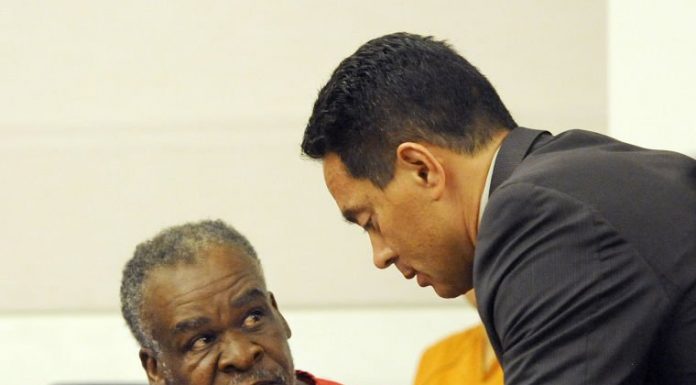
DNA notes delay hearing in Hollister homicide

With difficulty procuring DNA notes from the state, a

Mervyns says it will liquidate all stores

Ailing department store chain Mervyns LLC, which filed for

Police blotter: Man arrested on substance, jaywalking warrants

Steven Hazard, 47, of San Jose, 8:25 a.m. Friday, at 7872

Catching waves

Robin Nielsen met with business partner and life-long friend

Alice Laverne McDonald

Passed away in Hollister at the age of 91. Funeral services will be held on Thursday, July 3, 2008 at 2:00 P.M. at Black Cooper Sander Funeral Home. Interment will follow the funeral at the IOOF Cemetery. Obituary and condolences: www.blackcoopersander.com

David L. Yoder

Dave was born and grew up in the small community of West Liberty, OH. He had dreams of exploring the world beyond his home community, so he began by saving for college by delivering papers. He later attended Goshen College in Indiana for one year until he was drafted.  As a conscientious objector, he did alternative service as a health attendant for spinal cord injured patients for two years.  He later returned to Goshen College, graduating with a degree in Biology in 1960.  He met his wife, Marian, at college and made many life-long friends.

Police Blotter

Police Blotter

SOCIAL MEDIA

10,025FansLike
1,454FollowersFollow
2,589FollowersFollow