
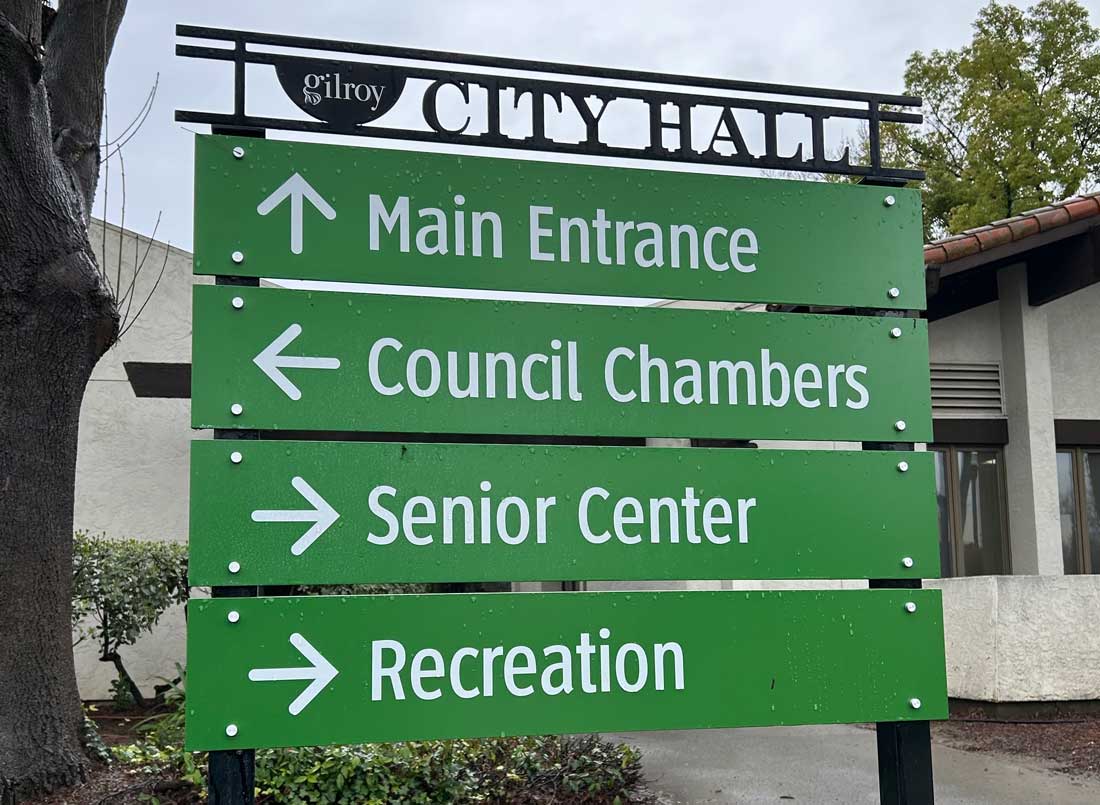
An update to California’s Ralph M. Brown Act—which ensures that local government meetings are open to the public—requires Gilroy and other cities to offer remote participation options as well as translation and inclusivity for the public.
To comply with the legislature’s new requirements, in a law known as SB 707, the Gilroy City Council on March 2 unanimously approved a new policy on disruptions of telephone or internet service during public meetings. SB 707 will take effect July 1, and applies to municipal government meetings throughout the state.
The council’s vote followed a presentation from City Clerk Kim Mancera and City Attorney Andy Faber. Faber referred to SB 707 as the “new Brown Act” and called it “the greatest revision to the Brown Act in quite a few years.”
Notable changes in the update will affect council members’ ability to participate remotely in public meetings. “There are more avenues for you as city council members to appear remotely,” Faber said.
Currently, council members do not have to declare a reason for participating in a meeting remotely by telephone or internet video call. Under SB 707, council members must show “just cause”—defined as childcare or family caregiving, contagious illness, official travel, medical emergency among other reasons—to participate in a scheduled meeting remotely.
In order to meet the new Brown Act requirements to offer two-way remote participation at all public council meetings, the city plans on upgrading some of its equipment in council chambers at a cost of about $6,000, Mancera said. A subscription to the online meeting service Zoom Webinar will cost the city no more than $3,800 per year.
The new law also requires the city to continue providing live webcasting of meetings. The City of Gilroy currently broadcasts meetings on its social media channels, but these webcasts do not allow the viewer to comment or ask questions live.
SB 707 will also require the city to offer translation services into any language spoken by at least 20% of the city’s population.
The new state law says local elected bodies must also take measures to maintain public access and participation in the event of an internet or telecommunications disruption.
Under SB 707, if the internet goes out during a public meeting the city council must immediately halt the open session, Faber explained. The council may not resume the open meeting until at least one hour has passed or internet service is restored—whichever happens first.
The council adopted a policy allowing these measures on a motion from Council member Tom Cline and seconded by Council member Kelly Ramirez.
The new local policy “establishes clear procedures for recessing, restoring service and reconvening meetings in the event of a disruption,” says a city staff report. “Adoption of the policy ensures the City of Gilroy remains compliant with state law and continues to support transparent and accessible public meetings.”
The Brown Act was initially adopted by the California legislature in 1953. The law is intended to guarantee the public’s right to attend and participate in meetings conducted by local and legislative bodies. The law applies not only to city councils, but also county supervisorial boards, boards of education and special district governing bodies.