




More about Roundabouts
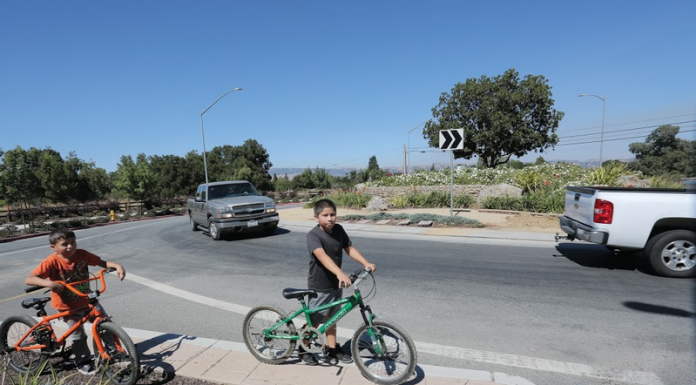
Over the last couple weeks my morning commute into Gilroy got a little more exciting with the opening of a new roundabout on Santa Teresa Boulevard. After weeks of navigating through construction zones in temporary lanes that should have resulted in a DMV drive test pass for life, driving the new roundabout at Miller Ave. with its smooth, freshly laid pavement and traffic lines still gleaming with fresh paint was a breeze.As reported in the Dispatch earlier this year, the city is in the midst of a roundabout building boom, and will have 15 of them within the next two years.Cheaper to maintain over time than traditional lighted intersections, city engineers love roundabouts. They increase fuel efficiency because vehicles do not have to come to a complete stop. They also operate more efficiently, allowing more vehicles to pass through than a 4-way intersection, which was proven during a MythBusters episode.Roundabouts are also safer for motorists, resulting in less right-angle, left-turn and head-on collisions, according to the Insurance Institute for Highway Safety. And pedestrians only have to look for oncoming traffic in one direction.Since Gilroy completed its first roundabout at West Luchessa Avenue and Thomas Road earlier this year, the city’s public information officer has been reaching out to the community and fielding queries on this new addition to the city’s landscape.“The biggest issue has not been so much the roundabouts themselves, but the construction that surrounds it,” said Joe Kline, who posts regular updates on construction projects on the city’s various communication channels: Facebook, NextDoor and newsletter.Earlier this summer, as part of their outreach, the city worked with CMAP TV to capture aerial footage of the Third Street and Santa Teresa Blvd., Miller Ave. and Santa Teresa Blvd., and West Luchessa Ave. and Thomas Road roundabouts using drones.The footage can be seen on the city of Gilroy Public Information Office Facebook page.“Large projects are hard to convey at the ground level, the drones allow you to get higher up and provide a much clearer picture of what is going on.”Take a peek at Gilroy on Google Earth. It’s not just the roundabouts that pop out, but the more prevalent little cousin, traffic circles that are adorning the roads of Gilroy’s newest neighborhoods, from Heartland Estates to Glen Loma Ranch. From above they are like alien crop circles, while below, Kline says they provide a more utilitarian purpose—traffic calming and aesthetics.At latest count, the United States had 4,800 roundabouts, according to RoundaboutsUSA, a drop in the bucket compared to the estimated 26,000 in Great Britain and 32,000 in France.However, with the recent building boom in our neck of the woods, the alien-seeming structure can be a bit jolting for some.Feeling “meh” according to the emoticon next to his name, a recent visitor to Gilroy commented on Facebook: “Who came to Gilroy and decided to put roundabouts everywhere?” What has been your experience on Gilroy’s new roundabouts?
Pretty Cool for School
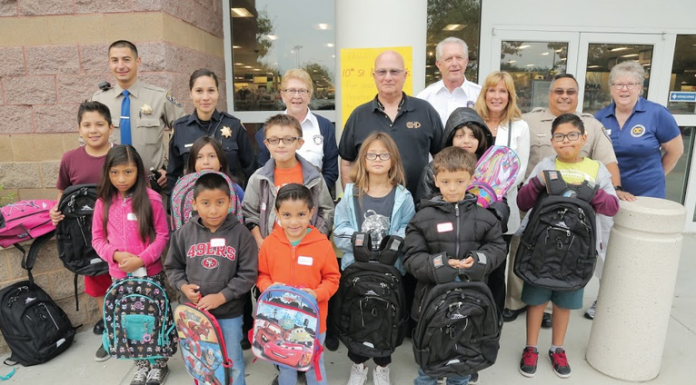
Bleary-eyed and wearing sleepy grins, dozens of local students came out to Kohl’s Department Store early Saturday morning to get a leg-up on their first week of classes thanks to the efforts of a Gilroy service organization, local retailers and law enforcement.
Tovar Enjoys Lots of Support
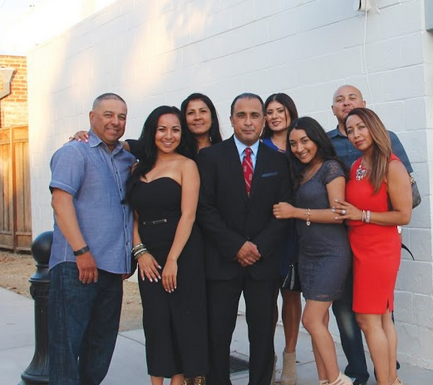
GUSD board president in council run Fred Tovar, a first-time Gilroy City Council candidate and current president of the Gilroy Unified School District Board of Education, says he seeks to bring a spirit of inclusion to the city’s legislative body.“My biggest asset is I collaborate with people—no matter what end of the spectrum they are on. I want to ensure everyone is part of the process, whether it’s about land use or transportation. It can be a long process, but we owe it to the members of our community to make sure everyone is involved,” said Tovar, during an interview in downtown Gilroy on Aug. 20.“We may not agree, but we can work together to get to a decision we are both happy with. I love to talk things through with everybody.”Tovar said he’s not one to make “rubberstamp” decisions. During his eight years on the school board, he’s pushed for more discussion during meetings and further inquiry.“I’m not a micromanager and I believe in the talent we have, but if I have questions about something in our packet, I will go straight to the source and ask.”It was during his tenure on the board that saw the updating of aging facilities, new school construction, the successful passage of two school bond measures and inclusion of prestige programs like the Biomedical Science Academy at Gilroy High School and K-12 Spanish Dual Immersion Program.While talking to Tovar, the phrase “raising the bar” came up repeatedly. During his time on the school board, Tovar said he championed policies that pushed students and the district to do better.Born and raised in San Jose, Tovar moved with his wife, Patricia, and their two kids, Jordan and Ciarra, now 21 and 18 respectively, to Gilroy 10 years ago to be closer to his parents, Teresa and Carlos Tovar.Tovar has worked at the Stanford University School of Medicine for the last 15 years and is currently the director of student affairs and assistant director of admissions for the Stanford University School of Medicine Primary Care Associate Program.In this dual role, he supports students as they make their way through school and reaches out to prospective students, including those from underrepresented communities in rural areas like El Centro, Bakersfield and Salinas.“I want to build collaborations with counselors, different school administrators, but I also want to expose kids to the idea that they too can go to Stanford,” said Tovar, who each year invites a group of 30 to 40 Gilroy students to the university campus. Does his homework“Fred is a straight shooter,” said GUSD board trustee Mark Good, at Tovar’s campaign kick-off event last week at The Golden Goddess, a new spray tan salon in downtown Gilroy owned by his niece, Alexis Tovar. Tovar’s City Council candidacy has been endorsed by the entire GUSD board. “What he says in public, he says in private also.”Good, who is running for re-election to the board in November, called Tovar a “hard-worker” who listened and used good judgment.“There is a lot of reading and research that goes on when you are sitting on a board or city council, and you have to do it competently, which he does,” said Good. “He always does his homework, talks to people and then votes for what he thinks is right.” ‘We can do this’Over DJ music at the salon, Tovar’s campaign manager, Art Barron, offers the lowdown on the next couple months.“This is going to be a grassroots campaign,” he said. “We’ll have volunteers getting out the vote, registering new voters, knocking on doors, fundraising.”Barron, who helped Tovar with his first successful run for the school board in 2008, said they also plan on holding a number of events or speaking engagements so the larger Gilroy community can learn more about Tovar, who has already received endorsements from Mayor Perry Woodward, Councilmember Peter Leroe-Muñoz, and Rebeca Armendariz, a city planning commissioner and founding member of the Community Agency for Resources, Advocacy and Services, which this year presented Tovar with a Community Champion Award.“Fred is for smart growth and is a big supporter of our downtown businesses,” said Barron. “He wants to work with all small businesses and help new ones get started.“He will be the voice of the community,” Barron added.
Gilroy Dispatch Returns to Downtown

The Dispatch has returned to downtown after a hiatus of nearly 30 years, and is now located at 64 W Sixth St, the site of a former internet cafe and next to Garlic City Auction.
More Flower Power

Downtown Gets New Begonias, Twinkling Lights Fresh bright red begonias in new hanging planters greeted thousands of visitors to the 15th Annual Garlic City Car Show in downtown Gilroy last Saturday courtesy of the city of Gilroy and a one-time expenditure of just over $1,000 dollars.As pretty as the more than 160 classic cars and trucks showcased along Monterey Street and side streets were the 50 hanging flower baskets, grown and arranged by family-owned and operated Kawahara Nurseries of Gilroy and Morgan Hill, part of a two-day effort to spruce up the district.Moises Rodriguez and Gilberto Bucio of city contractors BrightView Landscaping, were seen affixing the new planters on Aug. 18.The city also purchased twinkling lights for the trees that line Monterey Street in a move the city administrator said was consistent with the City Council’s goal to revitalize downtown.A group of volunteers donning orange vests helped string up the lights and later unpacked boxes and shelved books for the soon-to-open BookBuyers bookstore at the former Dick Bruhn’s Building.The all-hands-on-deck volunteer force and welcoming committee on Aug. 18 were sustained by sandwiches provided by Cafe 152 Bread Company on Fourth and Eigleberry streets.
Record Crowd at Party in the Park
“This has been the best year yet,” said Christine Vatuone, CEO/executive director of pregnancy resource center Informed Choices, one of 25 community-based organizations distributing information at Party in the Park at San Ysidro Park on Aug. 12.Featuring a climbing wall, jump house, live DJ music, dance performances and an assortment of games and prizes for the kids, the final installment of the fourth annual event series aimed to beat its previous attendance record set last month, when 650 people strolled, cycled or drove to the eastside 9-acre park.“Two hundred and fifty was our largest attendance before,” said Brian Hames, coordinator of the event, which aims to create safe, community spaces in neighborhoods with a history of gang activity.“We want to raise awareness and provide information on the many resources that are available to people,” said Hames, adding the event was modeled after Los Angeles’ Parks After Dark and is similar to Viva Parks! in San Jose, a series of free public events that focus on health and wellness resources, physical activities, and community engagement.In a half-circle of tables around the handball courts were representatives from agencies including CalWorks, Planned Parenthood, Santa Clara County Re-Entry Resource Center and clinics providing free health screenings.Getting a jump on Attendance Awareness Month in September, employees of Gilroy Unified School District were also on hand, reminding parents to get their children back to school on the first day of classes and promoting “Challenge Five”—encouraging students to have less than five days of absence per year.Jennifer DelBono, GUSD program administrator for school climate and student attendance said the district is looking at ways of partnering with local businesses to incentivize student attendance and hopes to launch a program soon.“We have such incredible partnerships in Gilroy,” she said.Gilroy resident Michael Martinez said he’d been going to Fifth Street Live downtown on Friday nights this summer but decided to come to the park with his seven-year-old son, Brayden, now smiling widely with his new balloon hat and pirate sword, after seeing a flyer at soccer signups.Over at the face-painting booth, Hollister residents Emma Torres and husband, Gabriel, with their three kids, Emily, Andrew and Bianca, looked through their goodie bags.“There is a lot of good information about the local nonprofits,” said Emma, who saw the event notice in Out and About magazine and decided to check it out. “We all run into people that could use this type of help and if we have these resources, we can pass it on to them.”
Rod Kelley Principal Luis Carrillo Retires
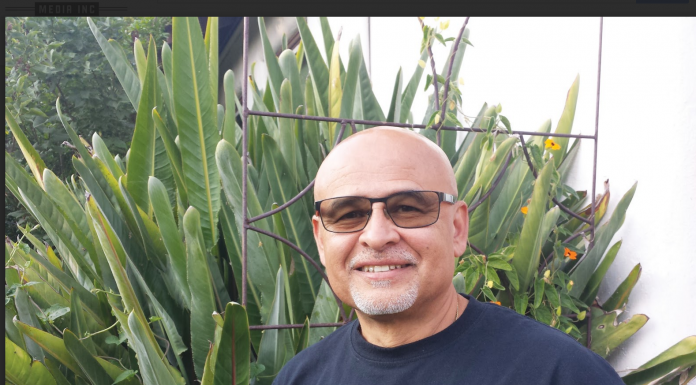
For the first time in years, Luis Carrillo was absent when the new school year started this week.
Robot Making in Gilroy
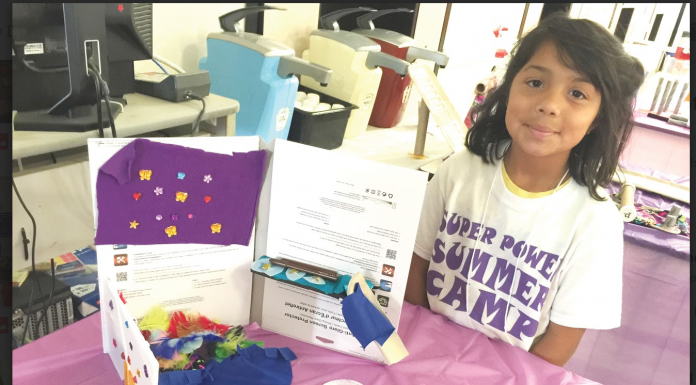
Whether it was creating a robot, a rolling vehicle, a design constructed of paper or a marble maze roller coaster, each of the 220 students participating in the first annual Thingamajig Convention Challenge had fun and discovered the joy of inventing.
A Veteran Newspaper Woman’s Farewell to the Dispatch
What an incredible quarter century I have spent working for these community newspapers. Twenty five years spent learning, teaching and contributing to producing your local newspaper. I had several mentors over the years, who each had many more years here than I have racked up. They taught me so much about each department, how it works and how they all fit together. Thank you to each and every one of you (you know who you are) for investing in me and making me better. Much of my work was behind the scenes, planning and organizing, making sure everything came together on deadline. I loved every minute of it!