





Now You Can Take the Train to the Garlic Festival
Ride the garlic trainSome big changes on the rails for the 2016 Gilroy Garlic Festival, coming July 29-31. You want the good news first or the bad news?Here’s the good, since you have been such good readers. For the first time there is a train that can take as many as 1,000 people to the festival from San Jose, or from as far north as San Francisco.The festival has chartered a special passenger train that will leave San Jose’s Diridon Station at 10 a.m. and arrive in Gilroy at 11 a.m. There will be buses to bring passengers from Gilroy’s station to the fest. The train leaves Gilroy at 5 p.m. It costs $25 above the $20 admission for the festival, which is a steal if you consider how it beats the traffic and parking.But here’s the catch: you have to buy tickets in advance at the Gilroy Garlic Festival website. There are 800 seats on the train and room for 200 people to stand. Grab a seat quickly!Here’s the bad news. For the first time the festival is charging $10 for parking and there’s no parking near the festival. You will have to park at a site on Day Road or at Gavilan Community College and take free buses to the Christmas Hill Park site.Festival organizers say the cost of running the buses for free has left them bone dry, financially. The $250,000 they expect to raise from parking should offset the bus charges and allow a good chunk of the $3 million they expect to gross to go to local charities. The festival has raised $11 million since 1979.Each of the 4,000 volunteers who works at the festival earns money for the for one of 150 charities of their choice.More good news: on Friday, July 29, South Valley locals can take $5 off the admission price and locals can also buy a three-day pass for $30. That includes residents from Morgan Hill to Aromas and Hollister. You can only buy those tickets at the gate with proof of residence.You can ride a bicycle to the fest and save all transit fees. There is a free bike valet that will keep your wheels secure.Festival organizers have drawn 85,000 to 135,000 people over the years, depending mostly on the weather.Among this year’s new highlights are a Kansas City-based barbecue contest, with a $7,500 purse for the best cooking, some big-name country bands and a revamped children’s area.
Gilroy Funeral for San Jose Police Officer
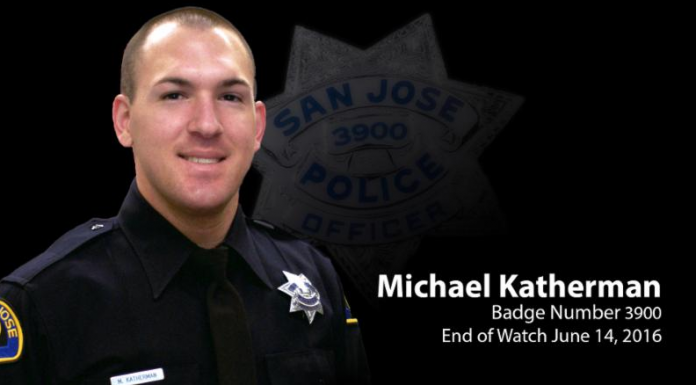
San Jose Police Officer Michael Katherman, who was killed on duty June 14 when a minivan struck his motorcycle at 4:22 p.m., will be buried Tuesday in Gilroy and residents will line overpasses and streets in his honor.
A Lion’s Share of New Wines
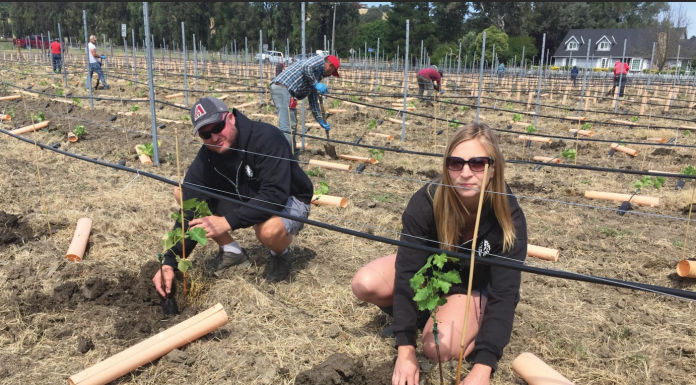
Whether you prefer red or white, the secret to a tasty wine is a meticulously planted vineyard, and a five-year wait.
‘Lend Me a Tenor’ Opening Night at the Limelight
Be prepared to laugh in support of a worthwhile cause at Lend Me a Tenor, Limelight Actors Theatre summer comedy and annual fundraiser for Parkinson’s Disease research.
Gavilan Names Kathleen Rose New President
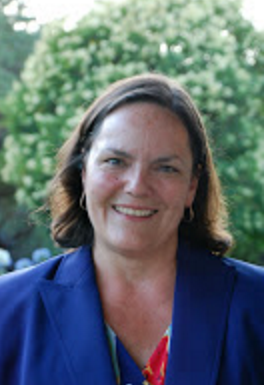
From Gavilan's Press Release:
At their meeting on June 14, 2016, the Board of Trustees of Gavilan Joint Community College District named Dr. Kathleen Rose as the next President / Superintendent of Gavilan College. The appointment includes a two-year contract with compensation of $239,000 in...
Rock 4 Chemo
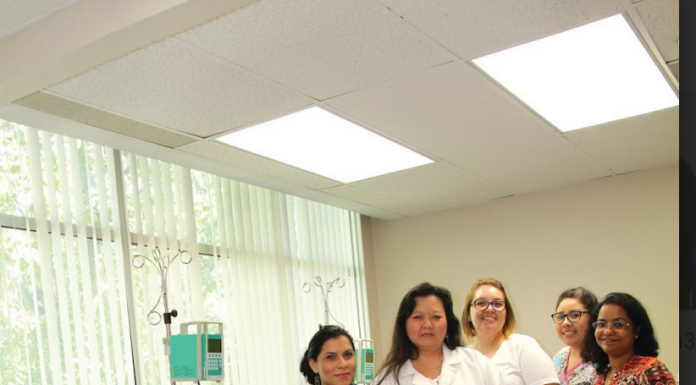
Before her cancer diagnosis last year, Raquel Herrera, did not give much thought to the disease.
Gilroy Gardens is Lighting up the City
Gilroy Gardens has become an outpost for exotic Chinese artists who have set up a village and kitchen while they do six weeks of work preparing for an international art exhibit that will be displayed at the park for six months.
Gilroy District Rings with Original Metal

Tired of the same old cover bands? Saturday is a night to support original music played by area musicians at Gilroy’s District Theater. San Jose’s MobLand headlines. The melodically metal band is releasing a new CD, which fans who buy tickets for the show will get for free at the door.MobLand is a four-piece featuring singer Rayne, guitarist Alan Kuczer, bassist Bryan Lujan and drummer Bill Mickesh. They’ve been compared to Scorpions, Def Leppard, Led Zep and Foreigner, with a mix of metal, rock and catchy tunes. We hear some Alice in Chains in there too.According to their bio: “After jamming with some local rockers for several months, Alan met Rayne (former singer of the Burnpool and White Noiz) through a Craigslist ad. In the first jam session, it was clear they made a powerful and cool guitar/vocal combination.”They take metal to some surprising places, like a cover of Billy Joel’s “Big Shot,” you have to hear.Also on this triple header is MAXX12, a San Jose band that doesn’t just bring hard rock, but has a whole apocalyptic world view. Check out the trio’s bio, which places it in a world where every nuclear reactor on the planet malfunctions and the survivors unite: “From the blackened sand of a fallen land, from a slaughtered people rises hope! Enter now the metal warriors, defenders of the MAXX12 Nation.“Rooster crows fiercely at dawn’s light awakening our sleeping minds, Mongoose quickly strikes the snake long cold in the grass coming to steal the warmth of our homes.”We said original, right? Yes, it’s good to see bands doing something new and not the same old covers.The third act of this triple crown is San Francisco’s Bradford, a name to which we are partial. They are a solid heavy-hitting five piece, whose members are Bret Bradford, vocals; Mark Randall, rhythm guitar; Tom Spencer, lead guitar, Scott Garbutt, bass; and Bill Morrissey on drums.They sound like a modern version of Van Halen and with some Pearl Jam thrown in. These are the kind of bands you used to have to drive to San Jose or Campbell to see, but they are right in our backyard at the District Theater. Don’t miss it.The show goes from 8-11 p.m. Saturday. Tickets are $10, a steal of a deal.
‘The Biggest Game in Town’ Gilroy Movie Premiered Saturday
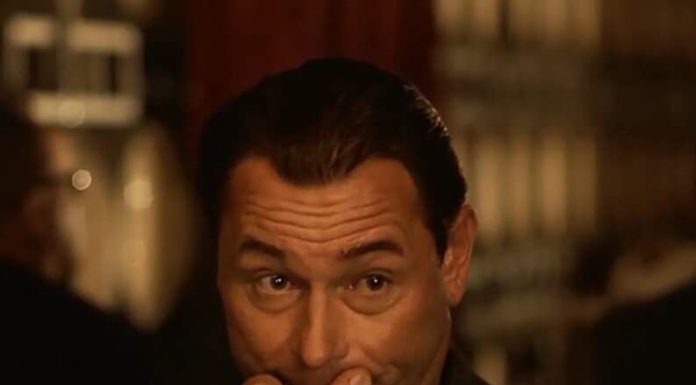
Director John Nava knows his way around poker tables. He once sat at one with a chef, a Mafia boss, an Elvis impersonator and a Stanford student and he put all his money in on one bet. He lost.The Stanford student who won got up and thanked him for paying for her textbooks for the year, cashed in her chips and left. His misfortune led Nava, who has worked at Sigona’s Farmers Market in Redwood City and Palo Alto for 37 years, to write the script for The Biggest Game in Town about a bunch of colorful poker players trying to defeat the best player in the country with every cent they could muster—and more—on the table.Nava pitched it to Gilroyans L. Mattock Scariot and her husband, Nils Myers, whose 152 West Productions has made corporate and children’s movies for the past decade. They loved it, and the trio, all in their 50s, went all in on their biggest dream, devoting two and a half years of weekends and $30,000 of Nava's money into making it.From the applause and howls of laughter during its debut Saturday at Monterey’s Golden State Theater, this time Nava won. They sold more than 600 tickets at $30 each and got it viewed by buyers from some big film festivals.“In a way, everybody who’s in this movie is the biggest game,” said Nava, who was raised in Morgan Hill and lives in Hollister. “We’re an indie film that cost $30,000 and we’re going to festivals competing against movies that are going to be $200,000 to $1 million. We’re real indie and everybody who was in it donated their time and no one got paid.”In keeping with the poker theme, Nava bought the camera used for the film with winnings from a poker game a week before shooting began. He In his off time working in produce, Nava, a film devotee who made the western Handsome Stranger 22 years ago, created demo reels for aspiring Hollywood actors in San Francisco. He would write and direct the clips and each of them got jobs. One of them, Eric Zivot, who played in an episode of the TV show Jag and was in movies, Mob Story in 1989 and The Alarmist and Two Voices in 1997, returned to the Bay Area to take a leading role in The Biggest Game.The other actors are locals who perform like seasoned pros in the movie. Morgan Hill’s Steve Caposio is a natural ham who showed his bacon as the winner of Food Network’s Cutthroat Kitchen earlier this year. The movie’s lead, Jayson Stebbins, is simply stunning. He’s a Morgan Hill mortgage broker with a lot of local community theater experience, who comes off as an everyman schlub with million-dollar dreams and 10 cents to his name. He is like a mix of Vince Vaughn and Ben Stiller.Joe Barra, who played the casino manager, was an insurance broker for State Farm, and died before the movie came out. An accomplished theater actor, his dream was to make a movie, and he did. Nava paid tribute to him during the premiere.When Scariot told the audience at the premiere that she wouldn’t choose Hollywood’s best over the actors they had, you can believe it. Although you could also see this script, with its wry, dark humor, being picked up by Hollywood and brought to the cineplexes everywhere. The movie has the wackiness of The Hangover with some of the tension of Ocean’s 11. That’s no surprise given that Nava’s two favorite movies are The Wizard of Oz and the Godfather. He has allusions to both in this.The decision to risk it all on a dream resonated with Scariot when she read Nava’s script. Its lead character, Atticus Cane, is a disappointed, but hopeful, 40-something on a quest to compete in a legendary poker game started by the “original Texas gamblers,” spoken to him in reverent tones over the years by older pal, Manfrotto.Many poker nights with the guys later, the desire to play at this high-stakes game, with a $100,000 buy-in becomes an obsession for Atticus, consuming both his waking hours and subconscious.“Everyone in the film is Atticus—we are all in our 40s and 50s—and we all have that dream of making it in Hollywood, so I felt really tied to that character,” Scariot says. “I think most middle-aged people feel that at one point in your life, you say: ‘I just have to take a risk, I’ve just got to do it. I’ve got to just put it out there and see what happens.’”Nava says the bedroom conversations between Atticus and his wife about chasing the big time poker dream echo the ones he’s had with his own wife about chasing his dream of making films.Reviews from those leaving the premiere, which included food and a band with an Elvis impersonator, were positive.“It’s exciting to have Gilroy folks actively involved in the arts and putting something together,” said Gilroy City Council member Roland Velasco. “There’s a lot of Gilroy people here that came to show their support.” While he only plays poker himself every once in awhile, Velasco said it was “fun to watch the dynamics between people—and that is what you saw in the film.”Robert and Sarah Caposio, the son and daughter-in-law of one of the film’s highlights, the irascible, “Diamond Dave,” were ecstatic after the film. “We thought the movie was hilarious,” said Robert. “I was laughing the entire time.”Sam Bozzo, longtime community supporter and member of the advisory board of Pinnacle Bank, gave it a thumbs up. “What a wonderful undertaking and there was such a cross-section of people involved,” he said. Steve Caposio chartered a bus to bring friends and family to the premiere.South Valley residents worked for free and donated locations to the movie. Fox Creek Ranch in Hollister let the crew film a western dream sequence there. While others were asking $25,000 to write a score, San Jose musician David Santos traded two months of work for fruit and cheese. Morgan Hill developer Frank Leal donated locations and helped feed the crew.Artist Heather Apgar, 17, made one of the movie’s posters. The other was made by Ralph Noe, who also plays witness protection killer Vic Manfrotto.“This is really a case of a community coming together and sharing everything they have to make a movie,” said Nava, who spent three hours of his “glamorous” day after the debut cleaning the theater, while other cast and crew were at a party.“That’s the other side no one sees,” he said. “After the show everyone leaves and it looks glamorous, but we have to stay and clean the trash.”Scariot and Myers of 152 West Productions have made a name for themselves with professional and inspiring corporate videos for the likes of Sigona’s Farmers Market, Jabil Trinidad, Dental Concepts and Cal State University.They met in Southern California, where Myers was a film student and Scariot a costume designer. When they had children, they decided to move back to Gilroy, where Scariot was raised. The kids are grown now and her son, who works at the House of Bagels, has a sandwich named for him. Scariot is also on the city’s arts commission and has been working to grow the Gilroy Arts Center. They also run a summer program that teaches kids how to make movies.While hitting the big time with the film would mean Hollywood, said Scariot, an invitation to appear at a film festival or a good placement on a streaming service like Hulu or Amazon, would also be terrific.“The key is to get placement in the front of streaming services like Amazon, Netflix, Hulu. [Otherwise] it can just disappear,” she said. “If we go to film festivals and win awards they would market it better and get that better placement.”There is also hope that if The Biggest Game in Town wins enough favorable exposure, distributors would be interested in 152 West’s previous titles. Currently one of their films has an agent and is distributed overseas.“It would be great to be in the theaters,” she said. “That would be winning the biggest game in town.”