

Planner Tom Fischer in run for Gilroy City Council
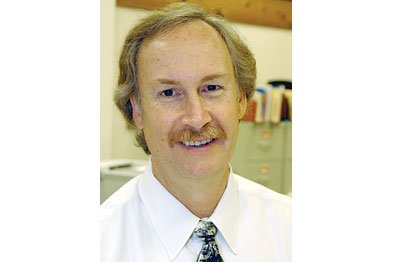
“One of the things we hear from the public all the time is that their voices are not being heard by their elected officials, but when you look at election results, a lot of the public are not participating and if you don’t let your elected officials know your concerns, they are left to make decisions based on their own instinct,” said City Council candidate Tom Fischer.A retired plumber and member of the city’s Planning Commission, Fischer was on the commission when the 721-acre, 4,000-home development north of Gilroy was brought forward for consideration. He heard a lot of voices then.“A lot of people see the growth and they don’t like it—so that’s one consideration. The other is you need growth to sustain a viable community.”While he was against the project that ultimately gave rise to Measure H, on the urban growth boundary initiative Fischer prefers to keep mum.“I have not taken a position on Measure H. I’m going to remain neutral throughout this campaign season.”Fischer, along with the rest of the Planning Commission, rejected the 721-acre mostly housing proposal last December before it was successfully appealed by the City Council along a split vote. The project was ultimately withdrawn.While he thought the ability to develop a large swath of land in one stroke was good for planning purposes, he had concerns. Mainly, he felt the environmental impact report was not complete and that the applicant could not offer a satisfactory development schedule.“And I think they circumvented the system,” Fischer said. “They were operating outside the normal bounds which is mainly why I voted against it.”He added: “I think that growth is a very personal issue for most people and this is a way for their voices to be heard. For me, I think it’s time for public officials to stay quiet. I want to know what the public wants; that is how I handled myself on the Planning Commission and that’s how I’ll serve on the City Council. I want public input, I want to know what they think. They are the ones that have to live with this stuff.”A member of the high speed rail committee, Fischer said the city needs to start planning in earnest for the state-mandated train. As for the new rail system going through downtown, Fischer said:“I like to look at the bigger picture and it really needs to be downtown. It’s where it has to be. In the overall scheme of things it will ultimately benefit downtown but it will be very disruptive while it’s being built and it’s our responsibility as civic leaders to determine the least disruptive way to get that train in here so it can benefit everybody.”Fischer believes Gilroy should take a more active role in addressing environmental issues. He thinks its great that the city has joined Silicon Valley Community Choice Energy, the regional cooperative that will purchase cleaner electricity on behalf of its commercial and residential customers to help decrease greenhouse gas emissions.He said the city should also join the Santa Clara Valley Open Space Authority.“We are the only city not in the Open Space Authority,” he said, “I don’t believe anyone has brought that up and if I’m on the council I will see why it is we are not participating. Environmental issues are very important and we need to look at them very seriously.”Concerning downtown revitalization, Fischer said a few other things need to get done first. “We need to get the high speed rail plan done, the general plan done, and then look at the Downtown Specific Plan and really evaluate it. Then you get feedback from not just the businesses downtown, but also the residents that live in the area.“He added: “We need to re-envision what the downtown looks like, and the tricky part is how to pay for it.”Fischer said that with street maintenance costs, a new fire station at Glen Loma that needs to be equipped and staffed, and unfunded liabilities for pensions, the city will probably not have the money needed to fund big improvements in the downtown district.“We really need a grassroots effort to put a bond—like the library bond—on the ballot to make specific improvements that are needed downtown. If there are specific things you want to accomplish, the public will get behind it.”
Council candidates release campaign donations
Campaign donations are public record, so City Council candidates were recently required to submit to the City a complete list of their donors last week.
A New Plan for Homelessness
The people who run Gilroy’s cold weather shelter are changing direction, making the center a refuge that provides services, rather than a place for quick stops. Jan Bernstein Chargin, who runs the Compassion Center, explains why this could help and what other new services will be available. 1. What is the new admittance policy at the Gilroy Armory Cold Weather Shelter? Why did that come about and what are the aims of the change?A: Through this winter, the Gilroy Armory Cold Weather Shelter has been "first come, first serve" each night. People would leave in the morning not knowing if they would have a place to sleep the following night. In order to ensure getting a space, therefore, people had to line up early, and carry all of their belongings with them, every day. This makes it hard to look for work, go to school, or work on long-term solutions. We have asked that, starting next year, the shelter be operated on a case management basis -- with associated day services and a referral process. Once admitted, individuals will know they have their spot assured for the season, and will be able to work towards their goals for stability, jobs, and housing. Another change we have requested is that homeless individuals from South County be given preference for the spaces at the shelter. This year, for the first time, the North County shelter was operated on a referral basis, only accepting referrals from North County agencies. That left the Gilroy shelter as the only one in the county operating as a first-come, first-serve countywide shelter. The police department believes this had detrimental impacts on the community.2. How could "tiny homes" be used to address home insecurity in Gilroy? What are the challenges in implementing such an initiative? What is the status of "tiny homes" in Gilroy?A: Communities around the nation are starting to consider and develop "tiny homes" as one of the ways of addressing homelessness. The benefits are that they can be used for short-term shelter or longer-term housing at a much lower cost than traditional construction. They can offer the privacy and autonomy that is impossible in a typical "shelter" configuration, as well as an attractive community setting. The challenge is to identify and get through all of the regulatory obstacles. Because this is such a new approach, our codes and ordinances have not yet caught up with it. The City of Fresno has recently adopted an ordinance addressing Tiny Homes that could be a starting point for Gilroy. We are planning an open house for our prototype Tiny Home (see photos on our Facebook page) [ https://www.facebook.com/gilroycompassioncenter/ ]Gilroy Compassion Center. (Date to be announced.) The Gilroy Housing Advisory Committee ( I am a member) has asked if we could bring the Tiny Home (currently located at Los Banos RV, where it was built) for the May 16 City Council meeting. I am working to see if this will be possible. This first Tiny Home is funded by Santa Clara County.3. Please provide a comment on the Compassion Center moving to a new location in June. Do you expect to provide similar services?A: We are hoping to be able to announce our new location very shortly. We are indebted to Jim Currier, owner of Flowstar, for his generosity in providing us a building to use rent-free for the first five years of our existence. Without Jim, there would be no Gilroy Compassion Center. However, now that he is selling the building, we are looking towards the future in a new location. We hope to be able to provide most of the current services: mail and message center, HMIS (County database), referrals, transportation assistance, clothing, hygiene supplies, bathrooms, daytime respite from the streets.4. We always hear that localities up north are "transporting" or "bussing" or in some way, migrating homeless folks to south county and Gilroy, especially. What do you say to this? How does closing a shelter in San Jose or clearing a homeless encampment in another jurisdiction impact homeless populations in Gilroy?A: The majority of people who are homeless in Gilroy at any point in time are long term residents, formerly HOUSED in Gilroy. Many of them grew up here, went to school here, had businesses here! The second-largest group is from Morgan Hill / San Martin. That being said, in the winter when the armory has been open, we have often seen many individuals who come to Gilroy to access the armory.However, it should also be remembered that homeless Gilroy residents also go to San Jose and Morgan Hill to access shelter, housing, transitional housing, and other services. There is no year-round shelter in Gilroy, no women's shelter, no year-round family shelter,-- for these services our residents must often go to other cities.5. I was told at Destination:Home that there are currently new housing projects underway in San Jose, as adding new housing units is critical in addressing homelessness in the region. Do you expect that new housing being constructed north of the county will impact homeless populations here in Gilroy? Do you know of any plans to construct new housing for the home insecure here in Gilroy?A: Disclosure - I am a board member for Destination: Home. Our Community Plan to End Homelessness calls for the construction of 5,000 additional units of affordable housing. We know that the best way to END homelessness is with permanent housing. In order to succeed, we need every community to participate. San Jose has made a strong commitment and is getting started on several new projects. Although Gilroy has several low-income projects in the pipeline, they will still be too expensive for most of the people who are homeless. We need a lot more housing that is affordable for people at the lowest end of the income scale -- what is called Extremely Low Income. These are households whose primary source of income is SSI, other benefits, or minimum wage. The need is so great that it will take years of construction before we "see" an impact -- however, we know how much it means to our clients when they get housing, and we have certainly seen people housed in San Jose when units have become available.6. What are the needs of the Compassion Center? I see that a golf tournament is coming up in June -- how do you stand in donations? How much support do you receive from the city of Gilroy?A: Money! We gratefully accept donations and encourage friends and supporters to support our first Golf tournament on June 24. Money is an ongoing need, so that we can keep the doors open. We have two grants from the City of Gilroy -- one from the Housing Trust Fund and one through CDBG ( Community Development Block Grant). Together these will provide roughly $48K for the Day Center next year. The Day Center operates with just one paid staff member, our Program Director Daleen Pearce -- all the rest are volunteers.We have also received grants from Santa Clara County -- $10K for the Tiny Home, and roughly $90K this past winter to help 21 homeless families with motel vouchers and case management. We were also recently granted a contract to put together a proposal for Nontraditional Housing -- we will be really working through the plan to create a Tiny Homes Village in Gilroy (and also one farther north.)Needs include volunteers, both in the trenches and on the Board of Directors and Advisory Board, and donation of the supplies we use every day.7. I see a gofundme.com fundraising campaign for tents for the homeless in Gilroy. What are the merits in this type of activity? The county rejected a proposal last year to extend stays in county parks for the homeless, with supervisor Wasserman publicly saying the parks intended use was for recreation - not housing.A: The Almost Home Camping program began as a pilot project in 2014-- Due to the cost and logistics it is a very small program -- two to four campsites at a time (there are hundreds of campsites in the county park system so the impact is negligible.) Many people don't realize that staying in campgrounds is a strategy often used by homeless people whether or not the Compassion Center is involved. Our campers have provided referrals for help to many of the homeless they have met at the campgrounds. Because there is no year-round shelter in South County, and it is illegal to camp outside of the campgrounds, there really are not many better options yet.Although the request for extended stays was rejected, we are still able to help people use the campgrounds under the same criteria and cost as any other camper -- no more than 14 days at any one park within a 45 day period, and no more than 14 days at any one park between Memorial Day and Labor Day. The moves are frequent, and the situation is far from ideal, but it provides access to showers and sanitation, a safe and legal place to sleep, and transportation to jobs and appointments in town. Through this program, children have been able to attend school, people have been able to seek and maintain employment, and make other progress towards self-sufficiency. Some of our campers have moved on to permanent housing while others have upgraded to RV's and private campground memberships. The program is funded privately by individuals and churches, and the money, (many thousands of dollars), has gone to the County Parks in the form of camping fees. We continue to seek land to develop a dedicated campground -- if that happens, we will no longer need to use the park campgrounds.8. Anything else you'd like to add.A: As we move forward, looking at alternatives, like campgrounds, Tiny Homes, shelter operations, I am hoping that we can keep the conversation compassionate and respectful. When we talk about homeless people we are talking about mothers, fathers, children, sisters, brothers, daughters and sons. People who are homeless have family members and friends who are not homeless. Children who are homeless attend local schools. In any gathering, at any meeting, and certainly on any social media page, there are people who have been homeless, or who have loved ones who are or who have been homeless. Hateful language makes it difficult for people to speak from their experience, and to work together on solutions.
Council shoots down habitat plan
Several members of the Gilroy City Council said Monday they
UPDATED: Gilroy public employee union set to strike
GILROY—Mayor Don Gage is unflinching at a public employee union’s threat to strike for two days next month, following an impasse reached during negotiations that began six months ago. In response, a union representative said Wednesday future strikes could be avoided if the city agrees to a few concessions.
Police Officers Association sends out stinging mailer on council
After weathering a hiring freeze, shedding $1.1 million in wages
Council picks General Plan committee members
City Council picked their team of 25 General Plan committee members during their regular meeting Aug. 5.