

66.6 F
Gilroy
February 22, 2026

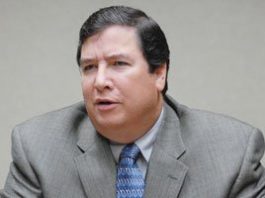
Meet the candidate: Paul Kloecker, Gilroy City Council

Gilroy Dispatch: Please briefly describe your background and experience. Why do you believe you’re qualified for this position? 

Gilroy Public Library mural tour to be held

Gilroy Public Library-goers may get an eyeful of art before hushing into six-inch voices— not before the city’s public art officials get a good look.

Rosen edges current boss for DA seat

After a neck-and-neck race, prosecutor Jeff Rosen edged out his

Bond measure offers rebates for greener vehicles

T. Boone Pickens, the Texas billionaire oilman who says he wants

Bracco joins Woodward in early bid for mayor

With two Gilroy City Council members now declaring their

Do new schools matter?

In mailers to thousands to Gilroy homes, in speeches, in endorsements by politicians and wealthy businessmen and on signs all around town, voters have been told that passage of the $170 million Measure E bond proposal on Tuesday’s ballot will ensure Gilroy kids get a good education by building modern schools with state-of-the-art technology.But a Dispatch review of school rankings and research data suggest the jury is still out on whether new facilities make a significant difference in some measures of academic standards.In Gilroy, school rankings appear inconsistent on the question and suggest that factors such as poverty play a bigger role than facilities when it comes to classroom achievement.Christopher High School, the district’s $158 million showcase, was built with 2008 bond money and non-voter approved $33 million in Certificates of Participation, repaid from the general fund. Its state academic ratings are high, 8 out of 10 compared to all California high schools and 7 among schools with similar demographics.But Gilroy High School, an old facility with some recent modernization, ranks at 4 among all high schools and 5 among similar schools in the state.Glen View Elementary School was completely remodeled last year with about $7 million from 2008’s $150 million Measure P, money still being repaid by taxpayers.Glen View in the past has lagged in test scores and in recent tests that pattern continues. The school ranked 4 on a scale of 1 to 10 compared to schools statewide.Compared to schools with similar demographics it ranked 3. And in terms of how it serves low-income students, who make up most of its student body, it also ranked at 3.Gilroy Prep School, the only charter school in the Gilroy Unified School District, ranked at 10 among California schools, 9 in how it helps low-income kids and 6 compared to similar schools.At GPS, technology of the kind Measure E would pay for helps students. Personal computers allow students to interact immediately with teachers, and allow teachers to monitor in real time whether students understand what’s being taught.When it opened in 2011, GPS was put in a collection of old portables at South Valley Junior High School. And while the school has since had some upgrades paid for by bond money, its scores from the beginning have been among the state’s highest.GUSD officials, including assistant superintendent Alvaro Mesa, have said comparisons with a charter school aren’t fair and that differences between schools such as Glen View and Gilroy Prep have more to do with the percentage of low-income students than facility conditions.GPS has always focused on low-income, underserved families, with school officials sometimes knocking on doors in low-income neighborhoods to recruit students.About 55 percent of GPS students are on a free and reduced cost lunch program, an indication of those families’ low-income.The figure at Glen View is a lot higher, Meza said.Asked to comment on whether spending millions on school facilities and really matters in classroom achievement, schools superintendent Debbie Flores issued this statement:“The district has not stated that Measure E is needed to improve education, but rather to help maintain the high-quality of education currently provided to all local students. If Measure E does not pass, additional monies from the general fund would need to go to shoring up our older facilities and ensuring they continue to meet safety standards for students. This would take needed funds away from educational programs. Also, the district believes that equitable facilities should be provided to all students.”In the newest Yes on E mailer, Gilroy businessman and Chamber of Commerce 2016 Man of the Year for 2016 Joel Goldsmith put it this way: “Nothing in our community is more important than educating our young people, and that is best done in modern facilities.”Mayor Perry Woodward wrote in the mailing that passage “will help sustain the high quality of education provided to our children and allow us to modernize and build facilities to better support instruction needs.”When it comes to Gilroy’s oldest—South Valley and Brownell—and its newest—Solorsano—middle schools there is almost no difference in their state rankings.Here’s now the rankings show up on greatschools.org, which tracks state school standings nationwide.Brownell and Solorsano ranked 7 and South Valley 6 when compared to all California middle schools.Compared to middle schools with similar demographics, Brownell outranked Solorsano, 7 to 6, and South Valley was at 5.Compared to how well the schools meet the needs of low-income students, Solorsano ranked 6 while the others had 5.At the California Policy Center, a think-tank that digs into school bonding, researcher and author Kevin Dayton said Tuesday, “I am not aware of any peer-reviewed study, or any study for that matter, that has proven that a bond measure and facilities improvement results in better test scores. To think that a new building is going to make children be better mathematicians or thinkers is absurd.”However, in a 2010 study the 21st Century School Foundation (at http://bit.ly/24jfAVL) in Washington D.C. found that “Recent research continues to point to a small but steadily positive relationship between the quality of a public school facility and a range of academic and community outcomes.”Among its cited research one study found that, “In schools with poor facilities, students attended less days on average and therefore had lower grades in English Language Arts and Math standardized tests. Attendance was found to be a full mediator for grades in ELA and a partial mediator for grades in math.”Another cited study found a “4-9 percent difference between students in schools in worst/best condition; 5-9 percent difference between students in oldest/newest schools; 4 percent difference in graduation rates between students in schools in worst/best condition and between students in oldest/newest schools.”Dayton is critical of the political processes behind school bond sales.“At every stage of the process, interests that will benefit from bond sales can take advantage of a system that favors passage of a bond measure,” he wrote in 2015. “Some issues of concern include use of public funds to develop campaigns to pass bond measures, significant political contributions to campaigns from interests likely to benefit from construction, involvement of college foundations as intermediaries for campaign contributions, and conflicts of interest and alleged pay-to-play contracts.”He went on, “Few Californians realize how much debt they’ve imposed on future generations with their votes for bond measures meant to fund the construction of new and modernized school facilities.“From 2001 to 2014, California voters considered 1147 ballot measures proposed by K-12 school districts and community college districts to borrow money for construction via bond sales. Voters approved 911 of these bond measures, giving 642 school and college districts authority to borrow a total of $110.4 billion.”Dayton’s study can be found here: http://bit.ly/1TY7qAC.In its latest round of campaign finance disclosures, the Yes on E group, Friends of GUSD Supporting Measure E, listed more contributions from companies outside Gilroy that do business with the school district.They include Val’s Plumbing & Heating of Salinas, $2,500; Total Securities Concepts Division of TSCS, Inc., of Prunedale, $2,500; and Palace Business Solutions of Santa Cruz, $500.Those are in addition to more than $30,000 in contributions already received from a half-dozen of the school district’s biggest contractors, some of whom have worked on previous bond projects, including the Seward L. Schreder Construction of Redding. That firm did more than $14 million in bond-related projects with GUSD from 2011 through 2015 and is Measure E’s biggest financial supporter at $10,000.In its campaign filing report, the pro-E committee listed spending of $2,107 for 400 yard signs and $5,753 to print and mail flyers to 10,000 Gilroy homes.It also lists a $2,279 reimbursed to Jaime Rosso for money he spent out of his own pocket for campaign literature, banners and sign lumber before the committee had its own account, he said. Rosso is the spokesperson for the committee and a longtime GUSD school board member.

Can we keep millennials in Gilroy?

Gilroy officials have made a priority of keeping millennials–people in their 20s and 30s–in town after they graduate from college. The challenge is daunting, according to a survey of Gavilan students, who say the city is boring, too expensive and doesn’t have adequate housing.

Gilroy Just Says No to Cannabis

On Monday, Gilroy joined a growing number of jurisdictions across the state that have banned the cultivation of marijuana.In a unanimous vote—with no discussion from the dias or objection from the public—the City Council passed a new zoning ordinance which prohibits the cultivation, processing, delivery and dispensing of marijuana within city limits.The ordinance, which was introduced at a Planning Commission session in December and had its final reading at the council meeting on Monday, makes no distinction between the cultivation of marijuana for commercial and personal use.The state’s Compassionate Use Act of 1996 and Senate Bill 420, known as the Medical Marijuana Program Act (adopted in 2003) allows an individual, a qualified patient, a primary caregiver, or a member of a legal cooperative to possess a specified amount of marijuana with a doctor’s recommendation.In 2010, Gilroy passed an ordinance prohibiting medical marijuana dispensaries.A trio of bills, known as the Medical Marijuana Regulation and Safety Act (MMRSA), was signed into law by Gov. Jerry Brown in October, establishing a regulatory framework and licensing authority for the state’s rapidly growing medical marijuana industry. In response, cities and counties across the state have been scrambling to put their own regulations on the books in order to maintain local control.The rush was prompted in part by a March 1 deadline for local zoning rules that the author of the Assembly bill now says was a mistake.According to the city’s reading of the legislation, under AB 243, “if a local agency does not have an ordinance in effect by March 1, 2016, that either expressly prohibits or expressly regulates the cultivation of medical marijuana, the California Department of Food and Agriculture will be the sole licensing authority for such uses, and may issue such permits for locations within Gilroy.”In a press release, Assemblymember Jim Wood (D-Healdsburg) said, “Nobody intended to give local lawmakers such a short timeline to develop regulations for an industry as complex as medical cannabis.”Wood introduced a bill last week that would remove the March 1 deadline and delete the authorization of local jurisdictions to prohibit the cultivation, storage, manufacture, transport, provision or other activity by patients and caregivers otherwise exempt from state regulation. On Monday, AB 21 as amended passed the state Senate and will go on to the Assembly and then to the governor for his signature. Gov. Brown has said he supports the deadline “fix.”Yet it seems no legislative action can come soon enough to impede the banning trend that is sweeping the state. California Norml, the state’s largest advocacy group pushing for marijuana reform, estimates that nearly 160 jurisdictions have put bans on the books or are considering bans on commercial and/or personal marijuana cultivation.In unincorporated areas of Santa Clara County, commercial cultivation of marijuana is banned. The Patient and Caregiver Medical Marijuana Cultivation Ordinance regulates cultivation by three or fewer qualified patients and primary caregivers for the patient’s personal medical use and prohibits distribution.“There is a wave of communities looking at banning cultivation, which is an unfortunate side effect of regulations,” said Mike Adams, a grower from Nurturing Seed Farms in Mendocino County.Adams was part of a panel discussion on cannabis at the EcoFarm conference in Pacific Grove on Friday. The well-attended panel was the first of its kind for the agricultural conference, which focuses on sustainable, organic and ecological farming techniques.Adams sees the cultivation of cannabis as an opportunity for small-scale farmers to bolster their revenue and gird them from the risk of operating a small farm. He said that with small-scale farming you are “basically taking a vow of poverty.”Calling cannabis the “number one cash crop,” Adams said in his eight years in California he can confidently say that cannabis growers are doing financially better than those growing kale.Yet, with the trend of cultivation bans sweeping the state, it is hard to predict how things will pan out for people interested in growing cannabis.Since 2004, when SB 420 established the medical marijuana program in the state, a patchwork of municipal ordinances has popped up as local jurisdictions attempted to address key issues like land use and public safety. Most ordinances dealt primarily with dispensaries and brick and mortar stores, not cultivation.All that changed with the signing of MMRSA. While most of the provisions of the law do not fully take effect until 2018, the rush by local jurisdictions to put their own regulations on the books has left growers, industry watchers and patient advocates in a state of shock.In an open memo to local governments, medical marijuana patient advocacy group, Americans for Safe Access, stated that banning the personal and commercial cultivation of medical cannabis since the adoption of the MMRSA is “an unnecessary step that is harmful to patients and may deprive the cities and counties of the proven benefits of regulation: reduced crime, fewer complaints, greater clarity for all stakeholders (especially law enforcement), tax revenue, and more.”Researchers from cannabis industry investment firm The ArcView Group found that the U.S. market for legal cannabis grew 74 percent in 2014 to $2.7 billion, up from $1.5 billion in 2013. According to the Washington Post, the cannabis industry will be worth $35 billion by 2020.    

First St. sewer project causes confusion

Dirty dishes and dirty clothes may be piling up in First Street homes and restaurants for a few days. Gilroy city officials today were attempting to clarify communications to business owners and residents about the First Street sewer project that began Aug.1 appeared to have...

SOCIAL MEDIA

10,025FansLike
1,472FollowersFollow
2,589FollowersFollow