
Car Thefts Up: Some Tips to Help

Gilroyans have had 210 cars stolen this year, up 60 percent over the last five years in the city, something police attribute to the decrease of prison sentences for property crimes.There were 125 cars stolen in the first three quarters of 2011 and the number has increased steadily, with 154 taken in the first three quarters of 2012; 175 in 2013; 174 in 2014; and 199 in 2015. The 210 stolen so far this year covers one less month than the others because the numbers for the whole quarter weren’t yet compiled.“The interesting thing is you look at AB 109, which gave early releases to prisoners and lenient sentences for property crimes, and you see it coordinates with the increase,” said Gilroy Police Department Sgt. Jason Smith.AB 109, signed by Gov. Jerry Brown, dropped the overcrowded state prison population by 25,000 over two years. Nonviolent felons without prior serious or violent offenses were sent to county jail, rather than prison. In 2014, the state passed Proposition 47, which reduced sentences for thefts of property valued at less than $950, and cut sentences for drug use, which Smith suggested put more criminals on the street.“You look at the numbers and there’s been an uptick since then,” he said. “I’m not saying that’s it, but I definitely think it contributes to the numbers.”Gilroy Police say most of the cars aren’t hot-wired, but have keys in them or hidden on the outside of the car. Some have been left running to warm up in cold weather or cool in hot weather.“Car thefts are crimes of opportunity,” Smith said. “People leave their keys in the door; they leave them running or have a spare key attached. Thieves know about those spare keys and can find them quickly.”Most of the cars are older models, with less effective computer security systems. Hondas from the 1990s are the most popular. Thieves can use a key they know how to shave to fit those cars.“It’s harder to steal a car without the key,” Smith said. “You have to know how to override a computer system.”To make matters worse, Gilroy has the 17th highest car insurance rates in the state, according to a study by ValuePenguin.com.The average yearly premium in Gilroy is $1,882, or 13 percent above the $1,661 average price in California. For comparison, San Joseans pay $1,393; Los Angelenos pay $1,624 and San Franciscans pay $1,783.Some tips from GPD to keep your car safe: Know your license number. Have it written down or take a photo of it with your phone camera. Many people forget their license number and can’t get it to police right away to help them find the car.Don’t leave your car running unattended, day or night. Car thefts occur at all hours.Don’t leave windows cracked open and park in well-lighted areas at night.To avoid having items stolen from cars—which is becoming more common in shopping areas like the Outlets—don’t leave goods you’ve bought in plain sight. Thieves are canvassing the area, looking especially at rental cars, where tourists store stuff, breaking windows to make a quick steal and finding valuables such as passports.Install an alarm system.
Bonds between women
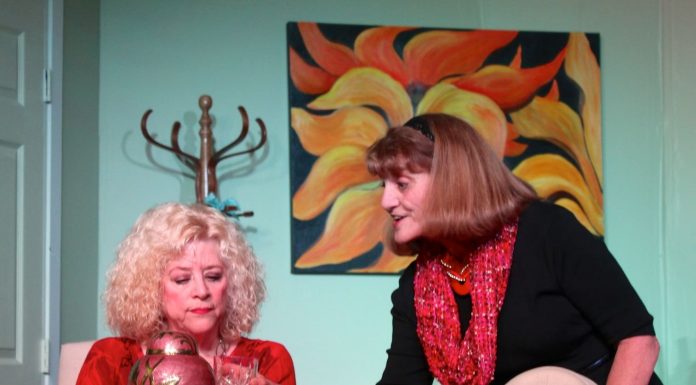
It would be hard to find a sillier, funnier way to spend a couple of hours at the theater than by seeing Exit Laughing, presented by Limelight Actors Theater in Gilroy.The comedy, written by Paul Elliott, is best appreciated without much knowledge of the plot beyond the basic setup: Four women in Birmingham, Alabama, have spent the last 30 years deepening their friendship around the bridge table. When one of them dies, the other three mourn her death in an unusual way, involving the “theft” of the urn containing her ashes.Actually, there’s not much plot beyond that, but the story offers some sweet reflections of the importance of friendship (and love) within the gentle comedy.The three surviving friends—Connie (JoAnna Evans), Leona (Rosalind Farotte) and Millie (Christy Wait)—gather at Connie’s home after the funeral. The liquor flows (with Leona happily pouring drinks) but things take an absurd turn when Millie, who is a bit of a ditsy blonde, turns up with the purloined urn for one last bridge game.Over the course of the evening, the three women celebrate their friend’s life and their friendship. There’s some clever, sharp dialogue involving why they are all single, with some of it focused on Connie’s uptight daughter Rachel (Tina Elder-Flores), a college student bemoaning her lack of dating success after being stood up by a classmate (“That girl’s on her own private rollercoaster,” says one of the women).Things get even sillier when a “policeman” (a charming Brennan Perry) starts knocking on the door.The whole business has the feel of a sitcom, perhaps a mashup of Golden Girls andDesigning Women, but in the hands of director Kevin Heath and the entire cast, who all give performances that create the feel of real bonds between the women, the show fulfills the promise of its title.Exit Laughing, by Paul Elliott. Directed by Kevin Heath. Presented by Limelight Actors Theater at the Gilroy Center for the Arts. Playing Nov. 11-13, 18-20 and 25-26. limelightactorstheater.com
Get Involved Now in Your City Government

Open seatsThis week you had a chance to vote for the people you want to run your city. Now you have a chance to get out and run things yourself.Gilroy has openings for people to serve on city boards, which make policies and recommendations to the City Council about how things should be in the city. For people interested in politics, it’s an excellent first step toward higher office. For people who just want to serve their community, it’s one of the most important things you can do. It’s also tremendously educational.Terms start in the new year and the deadline to apply is Dec. 12. Documents are available at the City of Gilroy website.Here are the openings:The Arts & Culture Commission has one opening on the seven-member board, which advises on all things to do with local art and performance. Meets the second Tuesday of each month at 5:30 p.m.The Bicycle Pedestrian Commission has two open seats for people to study and advise on matters of two-wheeled transportation. The five-member commission meets the fourth Tuesday of each month at 6 p.m.The Building Board of Appeals has two of five seats open on a commission that hears construction and building appeals. It meets as needed.Community and Neighborhood Revitalization Committee has three of seven open seats. It studies needs and strategies for making neighborhoods better. It meets the third Wednesday of each month at 6:45 p.m.Historic Heritage Committee has one of five seats available to work on preserving Gilroy’s history. It meets the third Wednesday of each month at 5:30 p.m.Housing Advisory Committee has four of nine seats open to study housing matters. It meets the second Wednesday of each month at 6 p.m.The Planning Commission has one of seven seats open. More than any body apart from the City Council, this one determines how Gilroy will look. It meets the first Thursday of each month at 6:30 p.m.The Library Commission deals with the library and meets the second Wednesday of each month at 7 p.m. It has two of five seats open.The Parks and Recreation Commission has two of seven openings to determine all things about parks and fun. It meets the third Tuesday of each month at 6 p.m.The Personnel Commission has one of five seats available to handle city staff matters. It meets the second Monday of the month at 5:30 p.m.The Physically Challenged Board of Appeals has two of five seats open. It deals with ways the community can help those who are physically challenged. It meets the second Tuesday of each month at 10 a.m.The Public Art Commission has two of seven openings to work on matters of public art. It meets the fourth Wednesday of the month at 5:30 p.m.Don’t just talk about what you want to see in the city: make it happen here.
Abortion protesters claim they were harassed
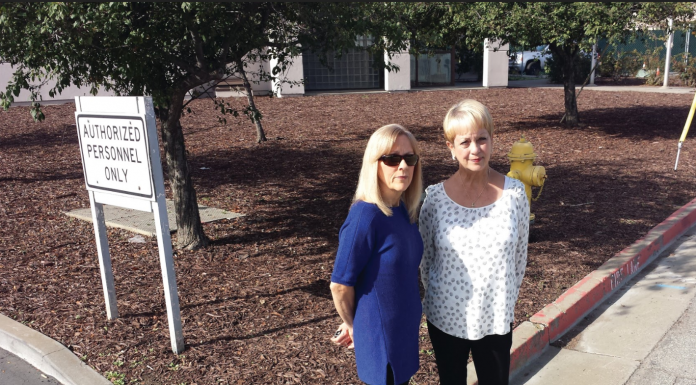
Two women who were part of a peaceful prayer vigil say they were harassed, intimidated and lied to, and a California Highway Patrol officer trampled their First Amendment rights, because they inadvertently stood on state property to pray the rosary in the shade.
All in the family

As the days get cooler and the nights start earlier, thoughts drift to autumn flavors, like the indomitable pumpkin spice, nutmeg and cinnamon that perk up our coffees and desserts.
Editorial: The Upside of the Election
It’s hard not to think that Gilroy and the state of California are in a different country than the one that swept in a strong Republican, anti-government agenda.Gilroyans took a hard liberal bent and chose to cut sprawling growth out of the city limits and focus on downtown development. It elected a slate of slow-growthers and tossed out those who tried to sneak by a 4,000-house project that would have increased traffic, raised public service expenses and made its developers $3 billion.County voters favored Hillary Clinton by 73 percent. They beat back the “no tax” trend by increasing fees on cigarettes to fund health programs and increased sales tax to improve transportation. They raised money for the homeless. They funded schools. They pushed back on the exorbitant prices charged by drug companies.Those are huge positives in a national election that seemed to rip the fiber of the country apart.California’s voting trend this time around suggests that if you want to return to a time when America was great, you can look to the 1950s to the 1970s, when people were proud to pay taxes to improve their country. Tax rates on the rich were as high as 90 percent. The rich were still incredibly rich, but they were willing to do their share. Then came the trickle-down theory, which never quite trickled down. This week local voters took bold steps back to the days when people were far more willing to take responsibility for their circumstances and were willing to pay to make thecounty and state great again.Americans may never again experience a campaign season like the one that ended Tuesday—or might they all be like this from now on?The historic nature of the election, the first one where Americans got to vote for a woman as the presidential nominee of a major party, was almost lost during 16 months of daily scandal and insults.News outlets on both ends of the political spectrum, from Fox to MSNBC and innumerable blogs in between, kept Americans hooked, transforming those who were never politically expressive into keyboard pundits, posting their thoughts on Facebook and Twitter.While Barack Obama’s presidential runs in 2008 and 2012 were touted for their use of data and technology, social media came into its own during election 2016, invigorating the electorate like never before.Sure, some Facebook friends were lost in the shuffle, but now as the dust settles, Americans should look to harness some of that energy and enthusiasm and continue to find ways to participate and engage with our nation’s brazen and brow-beaten democracy.Here’s one suggestion: start attending your local City Council and municipal commission meetings. Make it a habit. Usually, the only time people go is when they have a problem, a mission, or are on the agenda. A crowded council chambers says something to elected officials: We are here, we are watching, we care.Better yet, take some time and join local commissions. Become the solution. Get involved. Take control of your government.Both Trump and, during the primaries especially, Bernie Sanders decried our nation’s “rigged” system, basically saying that ordinary citizens have no hope whatsoever of changing the course of their own lives let alone the country’s.Don’t get fooled, get involved.
Velasco elected mayor, growth control wins
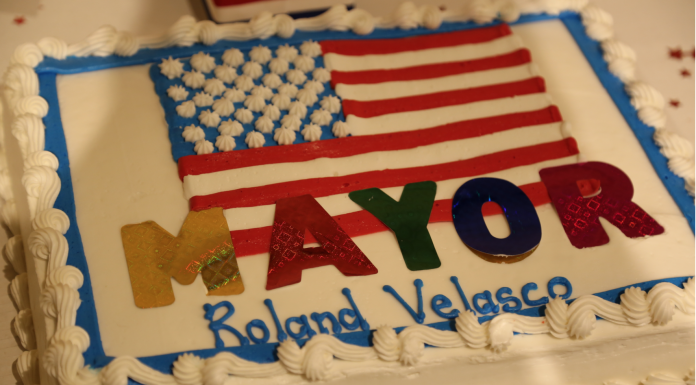
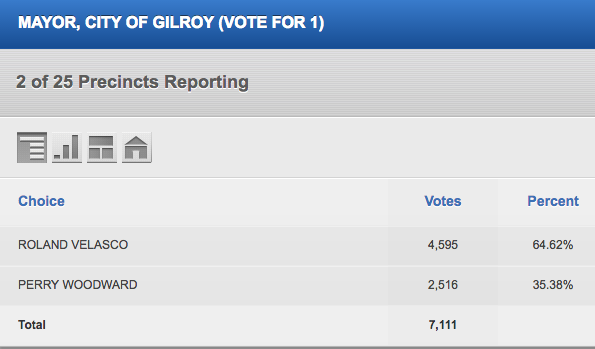
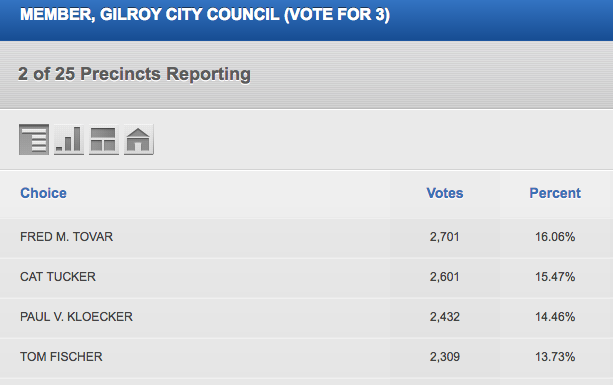
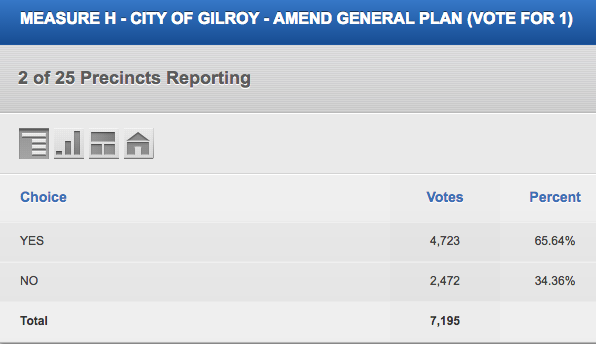
In a crushing rebuke to Gilroy’s pro-growthers, Councilman Roland Velasco defeated Mayor Perry Woodward and a tough urban growth boundary initiative was passed by voters.Velasco pulled in 66 percent of the vote to Woodward’s 34 percent. The anti-sprawl measure, which requires residential development beyond the designated boundary to go before voters, did even better with 65.8 percent of the vote.Woodward, who was appointed mayor in January following Don Gage’s December 2015 resignation, was the architect of a plan to convert 721 acres of farmland into more than 4,000 new homes. The plan infuriated residents, who organized a petition drive to place the Measure H growth control initiative on the ballot.Velasco voted against the North Gilroy Neighborhood District plan when it came before the council but he opposed Measure H because he felt it would tie the hands of future councils. The growth restrictions, which will force the city to grow within city limits rather than expand its boundaries will be in force through 2040. The Gilroy Chamber of Commerce, which led the opposition to Measure H, endorsed Velasco.“The community was very frustrated over the tone coming out of the mayor's office. They did not appreciate adding 4,000 homes to Gilroy outside of the general plan process,” Velasco said at a victory party at the Old City Hall restaurant as he led in early results. “What we need to focus our energy on is economic development, not more housing. I think that sort of message really resonated with people. They want safe, strong neighborhoods, they want more jobs here in Gilroy.”Two new council members and one incumbent led the seven-person field for three open seats. Anti-growth advocate Fred Tovar and incumbent Cat Tucker, who has served nine years and is the only woman on the council, won seats. Paul Kloecker, a planning commissioner who opposed the 721 acres, tracked ahead of fellow planning commissioner Tom Fischer for the third spot by 91 votes, with four precincts left to count.Ebay executive Daniel Harney, who was appointed in January to fill Woodward’s council seat after Woodward was appointed mayor, trailed in sixth place.Council members must now appoint a community member to fill the seat vacated by Velasco for the next two years.At several election night parties across Gilroy, local candidates and their supporters sipped wine, and ate hors d’oeuvres as the results came in.At First Street Kitchen & Cocktails early in the evening, Harney remained hopeful, but said, “I plan to apply for the fourth position to serve out the remaining two years.”Harney, a naturalized citizen (from Canada) who voted in his first general election on Tuesday, spent much of the last two months hitting the pavement and speaking to Gilroy voters. “It’s a lot of hard work. I think I underestimated how much effort was required to do it. I hit over 3,000 homes over the course of the election season, participated in seven forums and different engagements. So it was really draining physically. It’s been a really tough campaign season.”Big winners of the night, Gilroy Growing Smarter—the coalition behind Measure H—were enthusiastic as the measure maintained its early lead throughout the night.“We are excited. It’s a great time,” said Joe Lovecchio, who started the 3,000-strong Facebook group, Gilroy Community for a Better Downtown, and was an early supporter of the anti-sprawl measure. “I can’t believe that all this hard work has finally paid off. We are excited and can’t wait to see what happens after.”He said the experience of putting a citizen-led measure on the ballot, a first for Gilroy, was a “real eye-opener” about the necessity of staying involved in local government. “As community members we need to be involved. We need to be active. Let’s work together to build the community we want.”At Velasco’s election night party, City Councilman Dion Bracco, who was not up for re-election, voiced surprise over the local and national results. “We kind of get drowned out when we have a big national election. I think it hurts us because people don’t pay attention [to local issues]. We can see that in how some of the council candidates are stacking up.”He added: “The national stuff is just out there—it’s nothing that anyone expected.”As for Measure H, though it was widely panned by the current City Council, Bracco struck a conciliatory tone.“We serve at the pleasure of the voters and we will live with those boundaries. One thing in the city we always show is we can take on any challenge.”The downtown arts center, which has been in a state of limbo for the last several years as plans for its expansion have stalled at City Hall, was brought up by multiple candidates for City Council the last couple months as a way to revitalize downtown.“I’ve known Roland for a long time and he has always been an arts supporter,” said L. Mattock Scariot, local filmmaker and member of the Gilroy Arts Alliance, which operates the city’s downtown arts center. “He has always said we need to get things moving, not just talk. So I’m just waiting for him to get in there and take those next steps and make some things happen. It’s only a matter of time until we get a bigger arts center, more public art out in Gilroy and just build a better, more artistic community.”At Fred Tovar’s election night party at The District Theater, music was pumping and lights were flashing on the dancefloor as the former GUSD school board president maintained his lead in the City Council race the entire night. “It’s his time. Gilroy is going to be very lucky to have him,” said sister-in-law Tiny Tovar. “When you are confident and ready to make a change, people will follow.”Surrounded by supporters, Tovar said: “It feels good. All the hard work, walking every precinct in Gilroy. My 12 years in public office paid off. The community understands I am here to listen and that I am ready to fight for Gilroy.”Also at The District was Rachel Perez, who won a seat on the Gavilan College Board of Trustees: “I’m feeling really good. Without my committee and supporters, I probably would not be here. We walked every street in Hollister and canvassed all of Gilroy and a lot of San Martin.”She added: “I really want to give people in the three communities I am serving a real voice at the college and make it a place the community is proud of and to do the right thing for students.”