

On May 6, 1947, my grandfather, Clarence Boyer, walked into the Princeton, New Jersey office of Albert Einstein. He approached the woman behind the desk and asked to speak to the man who changed the way we think of time and space.
“Do you have an appointment?” she asked.
“No,” he said, “but I have traveled here all night by train from Dayton, Ohio, and I have a question I’d like to ask him, just one.”
Shaking her head, she rose to consult the physicist. “OK,” she said when she returned, but be brief.
So, there it was. He was going to meet the great man after all. He was there as a minister in the Brethren in Christ Church, one deeply concerned about the threat of atomic weapons. Two years earlier two nuclear bombs had obliterated first Hiroshima then Nagasaki. Now the world had just learned that the Soviet Union had the bomb too.
Einstein looked exactly like all the photographs, his wild mass of white hair forming a halo around his head.
“Take a seat,” the world renowned thinker said. “My secretary says you have a question for me.”
Instead of answering, Clarence took out a small sheet of paper and handed it across to the scientist. “I have a formula for you, Dr. Einstein,” he said, trying not to sound as nervous as he felt. “I wonder if you could tell me what you think of it.”
The paper he handed to Einstein said this: “MAN + ATOMIC POWER + A REASONABLE AND HUMANE ATTITUDE = SAFETY OF MANKIND.”
Einstein studied the paper for a moment then lay it on his desk. He said, “The first thing I can tell you is that you can take out atomic power from the equation. As long as you have ‘a reasonable and humane attitude’ you are assured a safe human future no matter what. Atomic power doesn’t affect the outcome either way.”
True to his word, Clarence ended the interview quickly after that. As he walked back to the train station to take his second overnight train, this time back to Dayton, he pondered Einstein’s response. At first, it puzzled him but then he saw that Einstein must be correct.
A reasonable and humane attitude could deal with anything. But then he thought, “Why didn’t I ask him what constitutes ‘a reasonable and humane attitude?’” This failure bothered him the entire trip home.
As I reflect on this brief encounter of nearly 80 years ago, what strikes me most is how much has changed. There is so much more threatening us now than bombs and missiles, although nuclear destruction remains a serious risk.
More troubling than the threats themselves is that all hope of any sort of “a reasonable and humane attitude” is now long dead. It died in the last decade. With masked troopers in American streets, with Americans treating other Americans with suspicion and hatred, with the return of blatant racism and antisemitism, with our leaders threatening to bomb an entire civilization “back into the stone age,” words like “reasonable and humane” seem the vestige of another age.
Today, we need something more basic to survive. We need faith.
We need to return to our oldest and most lasting hope, the one we place in a power greater than ourselves. We need to return to prayer. We need to return to our faith communities.
Most of all, we need to rediscover the love for one another that they all teach. In other words, we need to return to God. And, frankly, we need to do it soon.
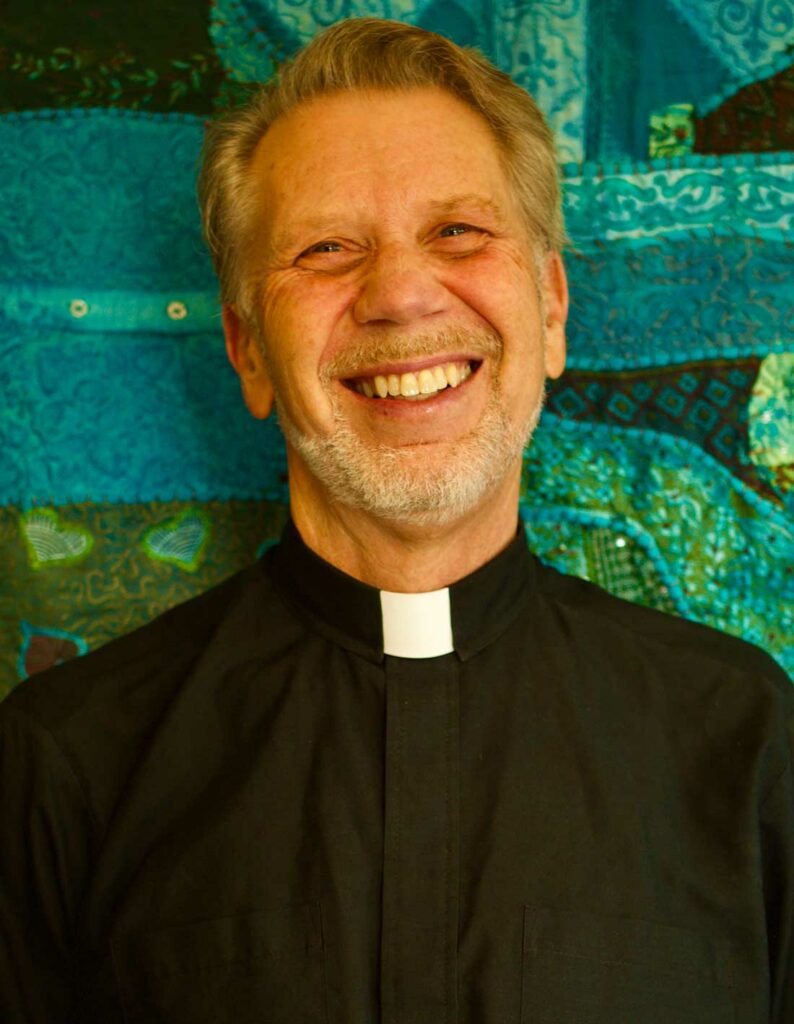
Rev. Dr. Ernest Boyer is Priest in Charge, St. Stephen’s Episcopal Church, Gilroy, and an active member of the Interfaith Clergy Alliance of South County. He can be reached at bo**********@***il.com.