




Discovering hidden hiking gems
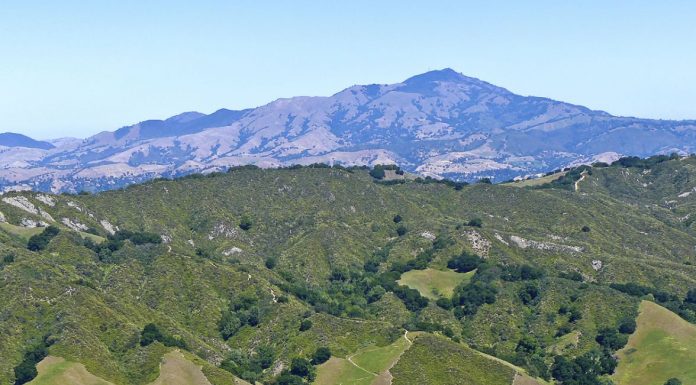
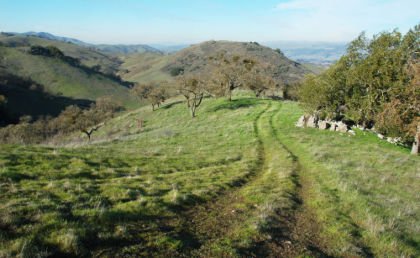
Over the many years I have lived in the Bay Area, I have overlooked the East Bay for hiking. I viewed the Amador, San Ramon and Livermore Valleys simply as corridors leading to the Sierra and other destinations beyond. But a recent visit to Las Trampas Regional Preserve chipped another bit of ignorance away and further opened my eyes to the East Bay's hidden gems.As you drive north on Interstate 680 through Danville and Alamo, Las Trampas Ridge follows you on a parallel path out your driver-side window. Just over the ridge is Bollinger Creek cutting a valley between Las Trampas Ridge and Rocky Ridge beyond. These two ridges and the adjoining valley comprise Las Trampas Regional Wilderness—at 5,342 acres, one of the largest East Bay Regional Parks.As I turned off Crow Canyon Road onto Bollinger Canyon Road, I was struck by how quickly the urban hubbub was forgotten in a bucolic setting that seemed many miles from the hustle and bustle I just left. Rather than a succession of modern day McMansions, Bollinger Canyon hid worn barns and ranch buildings that filled my mind with visions of an earlier California.The park staging area is in the bottom of the valley by Bollinger Creek-Las Trampas Ridge on one side, Rocky Ridge on the other. I talked with a friendly hiker in the staging area who knew the park well, and on her advice, I chose a moderate 4.5-mile loop that began on the Elderberry Trail at the foot of Rocky Ridge. The trail edged up through a forest of oaks, bays and buckeyes until I popped into open grassland and got my first hint of the views to come.Two miles out, I reached the Rocky Ridge View Trail 800 feet above the valley floor. Few hilltop roosts deliver a reward for a hiker's heart-pounding effort as grandly as the crest of Rocky Ridge. For the next two miles, I walked along the ridge crest that dropped steeply away from me on both sides. To the east, a crystal clear Mount Diablo rose above Las Trampas Ridge. To the west, across a huge expanse of protected watershed land, the view stretched from Mount Tamalpais down the length of the bay. But for lingering fog and haze, I would have seen the San Francisco skyline on one side and no doubt the Sierra on the other.The landscape of Central California changes steadily with each desiccating step inland. Only a few miles from the virtual rainforest habitat of the coastal redwood forests, oak woodlands predominate then give way to drought tolerant chaparral. I have rarely seen a habitat transition as stark as the one between this park's two ridges. Rocky Ridge was an inviting open grassland that still clung to spring's green, while across the way an impenetrable and forbidding thicket of chamise, buckbrush and other chaparral shrubs carpeted Las Trampas Ridge.Few Bay Area trails match Rocky Ridge View Trail for stunning spectator value. Mt. Diablo, Round Valley and now Las Trampas Regional Wilderness have upended my sour perception of the East Bay. I am discovering that there are not only parks with amazing trails and vistas, but country roads that twist through the hills and fool me into believing I am far, far away from a busy urban area. Ron Erskine is a local outdoors columnist and avid hiker. Visit him online at www.RonErskine.com, his blog at www.WeeklyTramp.com or email him at [email protected].
Theater Review: A musical evolvement of history

Composer Andrew Lloyd Webber and lyricist Tim Rice released an album in 1976 in London of a show-to-be called “Evita.” By early 1977, the album took the world by storm and by the time “Evita” premiered in London in June of '78, everyone was humming "Don't Cry For Me Argentina."
What do Gilroyans want the city to look like circa 2040?
Shani Kleinhaus and Mike FerreiraGuest Columnists What should the City of Gilroy look like in 2040? Should it sprawl over thousands of additional acres of farmland? Or should growth be compact and transit oriented?This future is being considered now, as Gilroy is developing the “Gilroy 2040 General Plan” to guide the City’s growth patterns for the two decades ahead. Already, a lot of work has been done resulting in the release of a report that presents three alternatives. All the three would convert agricultural land to urban use: the first retains the existing General Plan boundaries and would allow the development of 1645 acres of agricultural land; the second “Orderly Growth” alternative would allow expansion of the current urban footprint by 2077 acres; and the third “Compact Growth” alternative would reduce the currently allowed development, but allow the development of 230 acres.All three alternatives allow development in oak woodlands, riparian and other sensitive habitats that lie within the city limits. All three have build-out capacity for housing, population growth, and jobs that exceed all but the highest projections for Gilroy by 2040. The General Plan Advisory Committee (GPAC) has recommended that the City proceed with the most ambitious and sprawling alternative (“Orderly growth”) for many of the Plans focus areas.But do residents aspire to a sprawling and congested metropolis as they think of Gilroy’s future? Based on sentiments expressed by participants of a February Gilroy community workshop and on responses to an on-line survey – the answer is– NO.Instead, the community clearly respects open space and the rural surroundings of Gilroy, and assigns a high priority to the conservation of these resources. The Loma Prieta Chapter of the Sierra Club and Santa Clara Valley Audubon Society recently sent a joint letter to the Gilroy Planning Department, Planning Commission, and City Council, urging the city to curtail sprawl and to preserve sensitive habitats.In our letter, we asked Gilroy planners and decision makers to prioritize quality of life for residents and the ecological health of the community and its surroundings. Growth should be efficient - vertical rather than horizontal - and development should be transit-oriented to minimize greenhouse gas emissions. Lands outside Gilroy’s current footprint should be valued as an ecological resource, and urban development in native habitats and agricultural lands should be avoided.We duly note that we owe the Gilroy Dispatch an apology for one of our comments in our letter. We erroneously stated that the Dispatch had not covered the workshop and on-line survey results. To the contrary, an article by David Lima (April 3) discussed these and highlighted deficiencies associated with the GPAC’s support for the highest development alternative in most of the focus areas where open space is at jeopardy.We know that residents of Gilroy and southern Santa Clara County depend on the Dispatch for information about local issues. We are pleased to see that this tradition continues, and look forward to future articles that will help readers engage as decisions are made about the future of the community. Shani Kleinhaus is the Environmental Advocate for Santa Clara Valley Audubon Society. Mike Ferreira is the Conservation Committee chair of the Sierra Club Loma Prieta Chapter and serves on the Executive Committee of the chapter. They wrote this piece for the Dispatch.
Coach shows spirit on, off fields
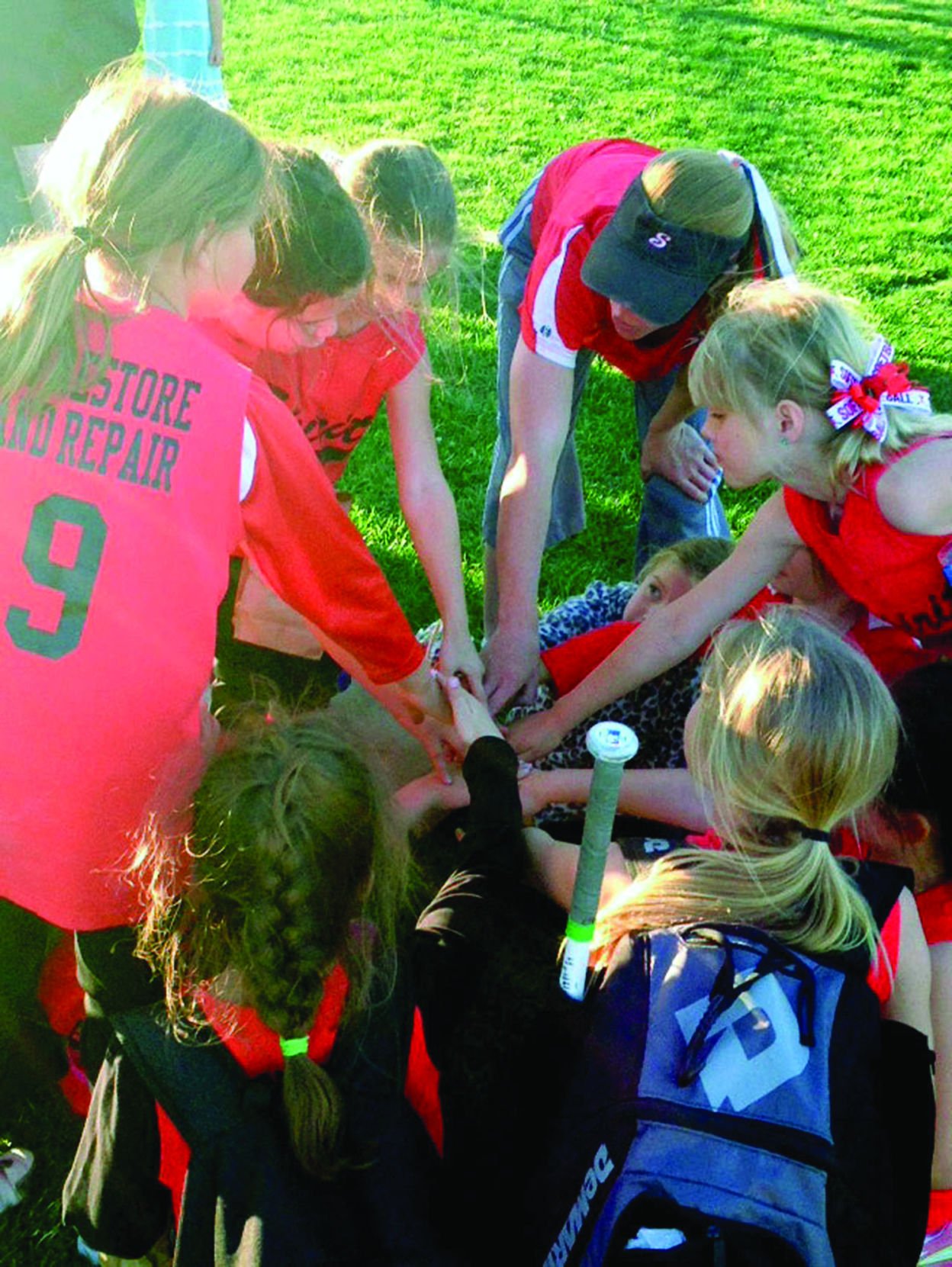
On a recent windy Saturday afternoon, an energetic group of girls ages 5-8 met on a field at San Martin/Gwynne Elementary School in Morgan Hill.

How did he transfer into Gilroy’s Christopher High?

Today I was reading about Audrie Pott in the Dispatch and the article indicates one of the people who assaulted her goes to Christopher High. Last month I had to show proof of residence for my child who will be starting high school in the fall. I found this unnecessary. I have lived in the same location for 20-plus years. My question is, does the person who assaulted Audrie Pott still live in Saratoga and was allowed to transfer to CHS or does he now live in Gilroy in the CHS district. None of the newspaper stories indicate he actually lives in Gilroy.
With a little help, Gilroy’s downtown could be heavenly
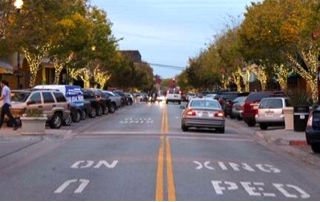
Do you know where the photo below was taken? Does it looks a lot like Downtown Gilroy, with the exception of the lights in the trees? Notice the one lane of travel in each direction, mid-block crossings, angled parking (all full) and real street trees that aren’t those pathetic crepe myrtles that are planted everywhere.