
City denies request for names of disability retirees
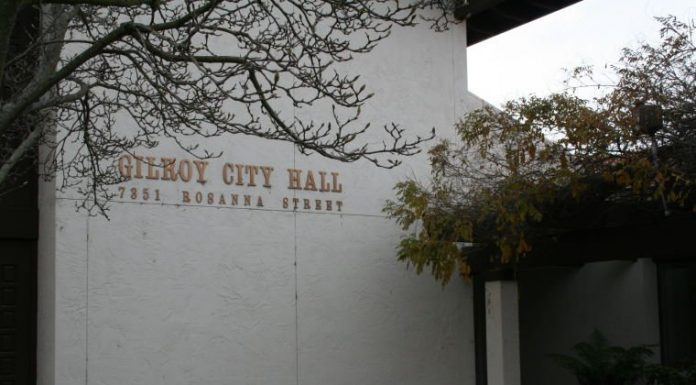
Last week, the City of Gilroy denied this newspaper's request for the names of police and fire employees who have retired with disability benefits.
UPDATED: Bullet train CEO makes stop in Gilroy
After the CEO for the California High-Speed Rail Authority met
Do new schools matter?
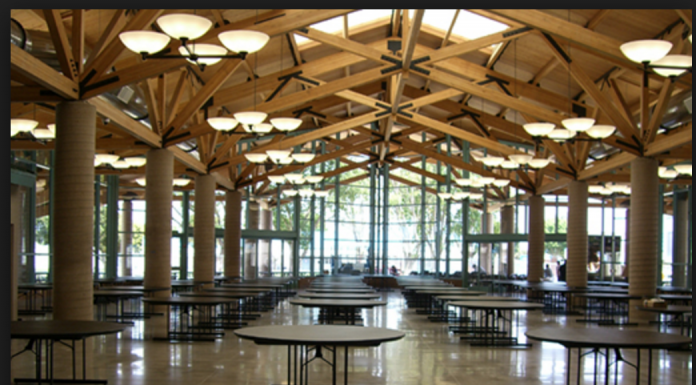
In mailers to thousands to Gilroy homes, in speeches, in endorsements by politicians and wealthy businessmen and on signs all around town, voters have been told that passage of the $170 million Measure E bond proposal on Tuesday’s ballot will ensure Gilroy kids get a good education by building modern schools with state-of-the-art technology.But a Dispatch review of school rankings and research data suggest the jury is still out on whether new facilities make a significant difference in some measures of academic standards.In Gilroy, school rankings appear inconsistent on the question and suggest that factors such as poverty play a bigger role than facilities when it comes to classroom achievement.Christopher High School, the district’s $158 million showcase, was built with 2008 bond money and non-voter approved $33 million in Certificates of Participation, repaid from the general fund. Its state academic ratings are high, 8 out of 10 compared to all California high schools and 7 among schools with similar demographics.But Gilroy High School, an old facility with some recent modernization, ranks at 4 among all high schools and 5 among similar schools in the state.Glen View Elementary School was completely remodeled last year with about $7 million from 2008’s $150 million Measure P, money still being repaid by taxpayers.Glen View in the past has lagged in test scores and in recent tests that pattern continues. The school ranked 4 on a scale of 1 to 10 compared to schools statewide.Compared to schools with similar demographics it ranked 3. And in terms of how it serves low-income students, who make up most of its student body, it also ranked at 3.Gilroy Prep School, the only charter school in the Gilroy Unified School District, ranked at 10 among California schools, 9 in how it helps low-income kids and 6 compared to similar schools.At GPS, technology of the kind Measure E would pay for helps students. Personal computers allow students to interact immediately with teachers, and allow teachers to monitor in real time whether students understand what’s being taught.When it opened in 2011, GPS was put in a collection of old portables at South Valley Junior High School. And while the school has since had some upgrades paid for by bond money, its scores from the beginning have been among the state’s highest.GUSD officials, including assistant superintendent Alvaro Mesa, have said comparisons with a charter school aren’t fair and that differences between schools such as Glen View and Gilroy Prep have more to do with the percentage of low-income students than facility conditions.GPS has always focused on low-income, underserved families, with school officials sometimes knocking on doors in low-income neighborhoods to recruit students.About 55 percent of GPS students are on a free and reduced cost lunch program, an indication of those families’ low-income.The figure at Glen View is a lot higher, Meza said.Asked to comment on whether spending millions on school facilities and really matters in classroom achievement, schools superintendent Debbie Flores issued this statement:“The district has not stated that Measure E is needed to improve education, but rather to help maintain the high-quality of education currently provided to all local students. If Measure E does not pass, additional monies from the general fund would need to go to shoring up our older facilities and ensuring they continue to meet safety standards for students. This would take needed funds away from educational programs. Also, the district believes that equitable facilities should be provided to all students.”In the newest Yes on E mailer, Gilroy businessman and Chamber of Commerce 2016 Man of the Year for 2016 Joel Goldsmith put it this way: “Nothing in our community is more important than educating our young people, and that is best done in modern facilities.”Mayor Perry Woodward wrote in the mailing that passage “will help sustain the high quality of education provided to our children and allow us to modernize and build facilities to better support instruction needs.”When it comes to Gilroy’s oldest—South Valley and Brownell—and its newest—Solorsano—middle schools there is almost no difference in their state rankings.Here’s now the rankings show up on greatschools.org, which tracks state school standings nationwide.Brownell and Solorsano ranked 7 and South Valley 6 when compared to all California middle schools.Compared to middle schools with similar demographics, Brownell outranked Solorsano, 7 to 6, and South Valley was at 5.Compared to how well the schools meet the needs of low-income students, Solorsano ranked 6 while the others had 5.At the California Policy Center, a think-tank that digs into school bonding, researcher and author Kevin Dayton said Tuesday, “I am not aware of any peer-reviewed study, or any study for that matter, that has proven that a bond measure and facilities improvement results in better test scores. To think that a new building is going to make children be better mathematicians or thinkers is absurd.”However, in a 2010 study the 21st Century School Foundation (at http://bit.ly/24jfAVL) in Washington D.C. found that “Recent research continues to point to a small but steadily positive relationship between the quality of a public school facility and a range of academic and community outcomes.”Among its cited research one study found that, “In schools with poor facilities, students attended less days on average and therefore had lower grades in English Language Arts and Math standardized tests. Attendance was found to be a full mediator for grades in ELA and a partial mediator for grades in math.”Another cited study found a “4-9 percent difference between students in schools in worst/best condition; 5-9 percent difference between students in oldest/newest schools; 4 percent difference in graduation rates between students in schools in worst/best condition and between students in oldest/newest schools.”Dayton is critical of the political processes behind school bond sales.“At every stage of the process, interests that will benefit from bond sales can take advantage of a system that favors passage of a bond measure,” he wrote in 2015. “Some issues of concern include use of public funds to develop campaigns to pass bond measures, significant political contributions to campaigns from interests likely to benefit from construction, involvement of college foundations as intermediaries for campaign contributions, and conflicts of interest and alleged pay-to-play contracts.”He went on, “Few Californians realize how much debt they’ve imposed on future generations with their votes for bond measures meant to fund the construction of new and modernized school facilities.“From 2001 to 2014, California voters considered 1147 ballot measures proposed by K-12 school districts and community college districts to borrow money for construction via bond sales. Voters approved 911 of these bond measures, giving 642 school and college districts authority to borrow a total of $110.4 billion.”Dayton’s study can be found here: http://bit.ly/1TY7qAC.In its latest round of campaign finance disclosures, the Yes on E group, Friends of GUSD Supporting Measure E, listed more contributions from companies outside Gilroy that do business with the school district.They include Val’s Plumbing & Heating of Salinas, $2,500; Total Securities Concepts Division of TSCS, Inc., of Prunedale, $2,500; and Palace Business Solutions of Santa Cruz, $500.Those are in addition to more than $30,000 in contributions already received from a half-dozen of the school district’s biggest contractors, some of whom have worked on previous bond projects, including the Seward L. Schreder Construction of Redding. That firm did more than $14 million in bond-related projects with GUSD from 2011 through 2015 and is Measure E’s biggest financial supporter at $10,000.In its campaign filing report, the pro-E committee listed spending of $2,107 for 400 yard signs and $5,753 to print and mail flyers to 10,000 Gilroy homes.It also lists a $2,279 reimbursed to Jaime Rosso for money he spent out of his own pocket for campaign literature, banners and sign lumber before the committee had its own account, he said. Rosso is the spokesperson for the committee and a longtime GUSD school board member.

Updated: Council narrowly decides to close City Hall on Fridays

City offices will be closed to the public on Fridays that are
Gilroy tourism snags a big city funding boost
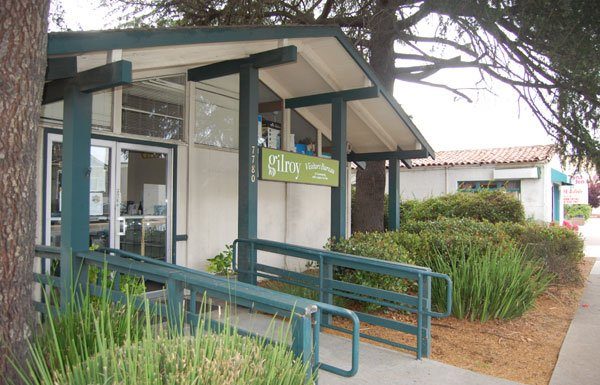
Gilroy will soon be known for much more than its garlic if the
Highway 129 Will Be Closed for Five Days
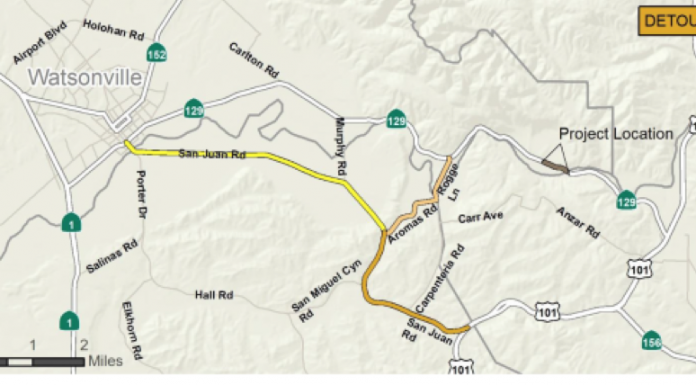
A major curve realignment project near Aromas will continue on a ½-mile section of eastbound and westbound Hwy. 129 near the Santa Cruz/San Benito County line with a five-day full closure beginning Sunday, April 30 at 9 pm until Friday May 5 at 11 pm.