

Gilroy growth initiative qualifies for November ballot
Gilroy’s urban growth boundary (UGB) initiative has more than the required number of signatures needed to qualify for the November ballot.
City helps on unsafe buildings
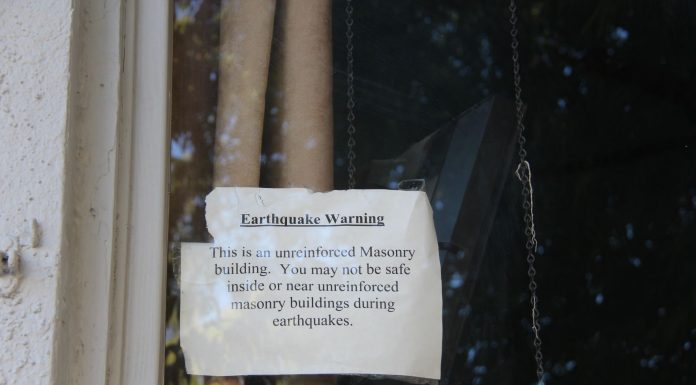
In a move that has been lauded by downtown property owners and the association that represents downtown businesses, the city’s stance on unreinforced masonry (URM) buildings is about to get a little more flexible.“The city’s goal is to get all [of the URM buildings] under compliance so that we can move forward, get them all occupied, and downtown hopping,” said Susan Ostrander, interim development services manager.“We are starting to get more interest in downtown,” she continued. “A sign of the economy in turnaround.”Currently, there are 15 URM buildings downtown, she said, all at different stages of compliance with the city’s current URM ordinance to ensure earthquake safety.“Some have never been occupied, some have been vacated. Some are working on planning permits toward getting their facades done, while others have completed the planning stage and entered in the building permit stages for retrofit work,” she said.At its last meeting, the City Council moved forward with staff recommendations to make the city’s URM ordinance easier for downtown property owners to comply with, in order to make the necessary upgrades to their buildings while ensuring public safety.The state’s URM building law requires local jurisdictions such as Gilroy to inventory all potentially hazardous buildings and establish a local program to mitigate the hazards. In 2006, Gilroy amended its URM ordinance to require one of two levels of mitigation: a “mandatory” minimum retrofit or a “voluntary” full retrofit.What turned out to be contentious, and according to Ostrander’s staff report, “counterproductive,” was a rule in the ordinance that mandated a URM building that has been vacant for 24 hours remain unoccupied until a minimum or full retrofit is completed.“The 24-hour requirement has resulted in high vacancies among the URM buildings,” according to the report presented to the council.Ostrander, working with concerns presented at recent URM Task Force meetings, suggested changing the 24-hour time period to 120 days continuous vacancy before the retrofit requirement kicked in. Staff also recommended the city accept bonds at 100 percent for URM retrofit activities, instead of the standard 200 percent.Most important, the amended ordinance gives city building officials discretion in issuing a temporary certificate of occupancy to eligible vacant URM buildings prior to the building being retrofitted.“We wanted the ability to—in certain circumstances when health and safety is not at risk—allow temporary occupancy during retrofitting,” said Ostrander. “Buildings that have been vacant for a long time are losing rental income and can’t pay for a retrofit—there is no winning in that situation.”Gary Walton, downtown property owner and member of various URM committees over the years said it was “unfortunate” it took the city 10 years to get back to what state law required.“No other city in the state prohibits tenants from occupying a URM building after 24 hours being empty,” he said, adding that he understood the city’s original intent was to get the repairs done, but the strict timeframe and the inability of owners to occupy their buildings while retrofitting, was a high barrier to those who didn’t have the ready capital to make the required changes.“You have to be reasonable,” he said.None of Walton’s downtown holdings are URM buildings.“Ten years of non-economic activity can mean up to $1 million in lost revenue,” said Jose Montes, owner of four buildings downtown, including the old Dick Bruhn’s location—home of the soon-to-open used bookstore, BookBuyers.“So technically you already lost your building since you’ve lost more in rent than what your building is worth. And you are still paying property taxes and insurance. Not to mention the cost of damages to the [now vacant] building and penalties.”The city has come a long way since an earlier version of the ordinance placed a $60,000 fine on each URM building out of compliance.“Back then we had 25 URM buildings downtown and you could either pay the fine or tear down the building for $45,000,” recalled Walton. “It would have torn out the heart of downtown. So they brought down the fee to $15,000.”That was in 2011, the last time the ordinance was amended. Less than a year ago, the city was issuing arrest warrants to out-of-town URM property owners for non-compliance.The tough tactic, spurred by former mayor Don Gage, left some rancour between downtown property owners, local lawmakers and city staff, especially when it turned out official letters from the city never got to the property owners in question.“We’ve been making progress in bringing owners to the table over the last three years,” said Walton, who also serves on the board of the Downtown Business Association, which sent a letter of support to the city regarding the ordinance amendments.“They didn’t understand the difficulty they created by removing the stream of income property owners could have used to make improvements.”Walton added: “There are some things they did right and others they did wrong, but it’s done. You can’t change the past, only change the future, and this is a good first step in doing something positive.”For his part, Montes is excited about the changes.“I see new staff, a new City Council and mayor, a new city administrator and they all realize that new steps needed to take place before we got downtown going again,” he said.The first reading of the amended URM ordinance will take place at the next City Council meeting on Monday, June 20.
Loving Funky Gilroy
Downtown Gilroy’s getting a bookstore and the town is abuzz.Crazy, right?Maybe not.When we heard how excited people were about a used bookstore relocating here, we shook our heads. A used bookstore? Is that going to save our struggling downtown? We already have a Barnes and Noble in the big box store ghetto on the other side of the freeway. And let’s face it, while we love books, they are not the big force driving business they once were. They are like the hit rock band that now plays county fairs. Lovable, but not in their economic prime.But then we had a vision.A day doesn’t go by when we don’t hear someone say that Gilroy’s downtown doesn’t have the class of Morgan Hill’s and they wish we had the outdoor chain restaurants that have taken over our northern neighbor and made it a destination. We’ve watched it happen in Campbell and Willow Glen, which have grown from sleepy, antiquated downtowns to hot night spots.And, yes, Gilroy could do the same. Why it hasn’t is a mystery.But maybe it shouldn’t. Maybe there’s another tack. Maybe we should play on our strengths.Gilroy has the genuine feeling of an old, quaint town with locally owned businesses you can’t find anywhere else.Maybe we need to celebrate that and market it more. We’re not just the Garlic Capital of the World, which is a big drawing card, but we are also one of the last real California towns. We keep it real. Yeah, we have chain stores, but we keep them on the other side of the tracks.Take a stroll on Monterey Road downtown and you will find an archery store; a funky, lovable bowling alley with a restaurant that serves food from around the world; a great Mexican bakery and several Mexican restaurants that are like a trip south of the border; a sewing shop; a pottery studio and store; two exquisite American food restaurants in historic buildings; an auction shop; a high-end kids resale shop; garlic specialty shops and restaurants; a classic car shop; amazing antique stores; and soon, a high-end used bookstore.It’s all a great start and it should be marketed better.The owner of Garbo’s Collectibles once told us that he took out ads in Los Angeles for his business and was shocked by how many people came here, loving the city’s old California feel. What many locals see as underdeveloped and embarrassing, outsiders praise for its authenticity.So what else can we do to improve it?We need more public spaces downtown. Mayor Perry Woodward is pushing for an amphitheater where the billiards hall is now and that’s a good step. But what we really need are places to bring kids to after they see a concert or play there.We need a museum downtown, or an attraction that will bring in families. We need more benches and more shade, so people can stroll and stop. We need more outdoor dining. We need more ice cream and pizza shops for families.We also need someone with the vision to bring it to life. We’ve got the history, the local shops and plenty of empty storefronts to fill. We need more activities to attract people downtown, like farmers markets and concerts. We can be proud of the good things we already have. We have a vibrant mix of local shops and cultures, Mexican and American, that is pure and real and not tacky.This isn’t Napa or Disneyland. It’s an agricultural and historical city with things you won’t find anywhere else.
‘Lend Me a Tenor’ Opening Night at the Limelight
Be prepared to laugh in support of a worthwhile cause at Lend Me a Tenor, Limelight Actors Theatre summer comedy and annual fundraiser for Parkinson’s Disease research.
Gilroy Getting a Tourist-Worthy Book Shop
A Clinton is running for President and Donald Trump is all over the media headlines, in this crazy world where old is new again, the ’90s are back, and downtown Gilroy is getting a bookstore.
Black pioneer remembered
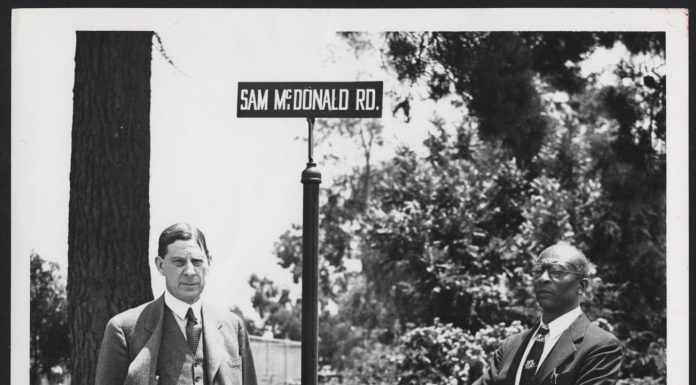
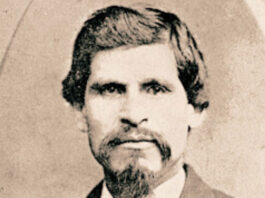
It’s been more than 150 years since Union soldiers landed in Galveston, Texas, to officially declare slavery abolished, a long two and a half years afterPresident Abraham Lincoln signed the Emancipation Proclamation into law. It was Friday, June 19, 1865, the first celebration commemorating an end to slavery, which would later become known as Juneteenth.Still, the majority of Americans are unaware of Juneteenth and its relevance in African American culture. Only in the last 50 years, following the civil rights movement, has its observance seen a resurgence.Despite having legal rights as “free citizens,” the obstacles blacks faced would continue.Living in a post-slavery era didn't mean blacks had an even playing field. And yet there are stories of prominent African Americans having overcome great odds.One gentleman named Sam McDonald is an example of such success. McDonald was born free in 1884 in Monroe, Louisiana, and was part of one of the first African American families in Gilroy.In an interview at the Gilroy Historical Museum, Gilroy native Mack Sacco shares the life of this black pioneer in Gilroy and his experience knowing McDonald while he was a child in the 1940s. As Sacco grew into adulthood and finished a career in working in nonprofits across the globe, he became more intrigued by the personal story of this man he once knew in his youth. Sacco recalls a man who made an indelible mark on his life, although he’d known him only a short time. The excitement with which he recalls McDonald is palpable.McDonald’s father, a Methodist minister, decided to try his hand at agriculture and arranged to move from Louisiana in 1890 to pursue sugar beet farming in Southern California with his wife and two sons.After intensive monoculture left the region’s soil depleted, they planned to head north to Gilroy in 1897. McDonald’s mother had passed and he traveled along with his father and brother to find new beginnings. They took up in Old Gilroy, near Soap Lake, an intermittent lake in what is now known as the Pajaro River floodplain. They were among the first black families to live in Gilroy. But, Sacco says, their stay in Gilroy was brief. After their crops went bust, they made ends meet by working at the old Gubser Dairy off Frazier Lake Road. McDonald also learned much about dairy farming and raising horses during his time in the South Valley. The McDonalds stayed in the area for three years and they were well-received by the community. McDonald enjoyed an education up to the seventh grade, which was the extent of his formal schooling, according to an autobiography in the Stanford Press publication, Sam McDonald’s Farm.The family headed toward Washington. When the trio crossed the border into Oregon, McDonald, then 16, told his father and brother that he wanted to stay in California. It was there that he left them and returned to make his life in the Santa Clara Valley.McDonald had trouble finding work because he was so young and “at once became 21.” He got a job working on a steamboat that would travel in and around the Sacramento area. Eventually, McDonald made his way back to the Santa Clara Valley and Sacco says he heard they were hiring at the horse farm at Stanford University. McDonald became a teamster and in 1903 began working as a ground superintendent at Stanford.He was known as an expert at preparing the surfaces of athletic areas, says Sacco. “He was like a consultant. He would consult all over the United States.”McDonald’s contribution to athletics was far-reaching; it’s still visible today in the signature criss-cross pattern mowed into lawns so well known to football fans.Sacco, who met McDonald when he was a patient at the Stanford Home for Convalescent Children, says McDonald had a strong relationship with the “Con Home,” as it was called. Sacco had been treated for rheumatic fever and lived in the home from age five to age eight. From 1947 to 1949, Sacco recalls McDonald came in to see him everyday and would spend hours visiting with the children.“People would come in and do lots of projects with us and [McDonald was] one of the people that would show up and talk to us and sing to us.”McDonald lived on the Stanford campus for the rest of his life, Sacco says. He got permission to build on the property and he lived there when he was a grounds administrator. Sacco remembers McDonald had about 400 sheep that would help maintain the grounds, where he also operated a dairy.“He was just one of those people that just stood out,” he says. Sacco fondly remembers partaking in a barbecue every year on campus and that McDonald would prepare and serve lamb. McDonald had planted a victory garden to feed the children in the “Con Home.” Any of the proceeds from the barbecue would help support the children.Sacco says that there were so few blacks in the area at the time and McDonald gained people’s respect. He was the first African American appointed as an administrator of a major university. He was responsible for all of the athletic grounds. “At one point they gave him a part-time job for security at the games and he would hire off-duty police officers to be at the games and keep order,” says Sacco.During his career at Stanford, McDonald also purchased over 400 acres in La Honda, where he was an active community member on the weekends. McDonald was also a steward of that acreage and wanted to maintain it as an animal refuge. He created a wildlife sanctuary and refused to allow logging on his property.McDonald was well liked and visited with many dignitaries, even Stanford graduate, President Herbert Hoover and the first lady, Lou Henry Hoover, who, McDonald writes, would meet with him to discuss gardening and farming.McDonald was held in such high esteem that in 1941, a road was named after him on the Stanford campus. While he was alive, Stanford President Ray Lyman Wilbur praised McDonald’s popularity. "I wouldn't want to run against Sam for president because I'd be sure to lose," he said.McDonald is remembered as a smart business person, who lived as a modest man and died a bachelor.It’s people like Mack Sacco who have maintained a legacy—a present-day connection to the past—and whose work allows us the chance to preserve our local history. They provide a view through a window in time to the everyday lives of historical figures.In Santa Clara Valley, in McDonald’s day, the color line was not absent, but it was far more subtle than in the South. In San Jose and the valley as a whole, de facto racial discrimination, while without legal standing, was institutionalized and pervasive. This included redlining, which kept African Americans restricted to certain communities. Still, according to UC-Santa Barbara scholar Clyde Woods who wrote: Black California Dreamin': The Crises of California's African-American Communities, professionals and entrepreneurs like McDonald, made up a small portion of the African American community that was unparalleled in the United States.This year marks the 35th Juneteenth celebration for the city of San Jose and the 66th anniversary for the celebration in San Francisco.Milan Balinton, executive director for the African American Community Service Agency in San Jose, which puts on the Juneteenth celebration as part of bayareajuneteenth.org, says the festival originated as an African American community event, but that he considers it a festival for all people seeking freedom. He says that through the civil rights movement, African Americans established themselves as selfless pioneers, “today we try to make way for senior citizens, women, children and all people to pursue the American Dream.”
Celebrating summer with Friday night music
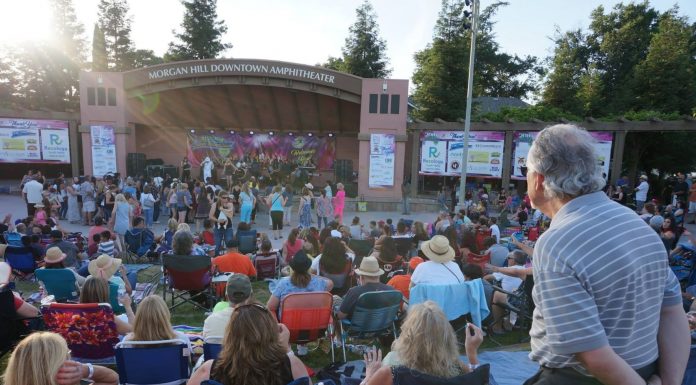
A steady stream of music is coming to the South Valley this summer. Fifth Street Live returns to downtown Gilroy Friday, June 17 and Morgan Hill’s annual Friday Night Music Series returned June 3.
Keeping kids busy this summer
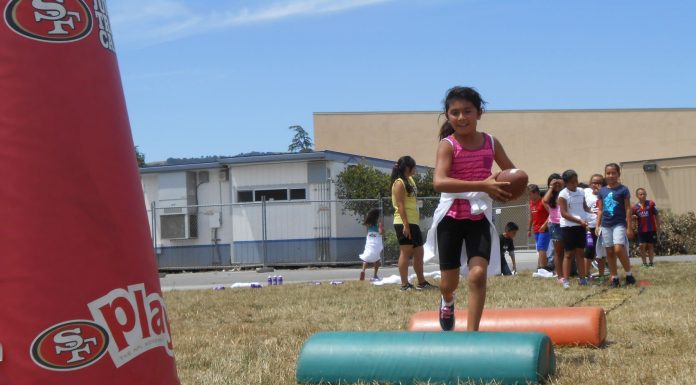
The long lazy days of summer are here and so is summer vacation. For parents searching for ways to keep their kids entertained, help has arrived. The South Valley offers exciting summertime events for kids of all ages.
Son helps link US opens for Cordevalle
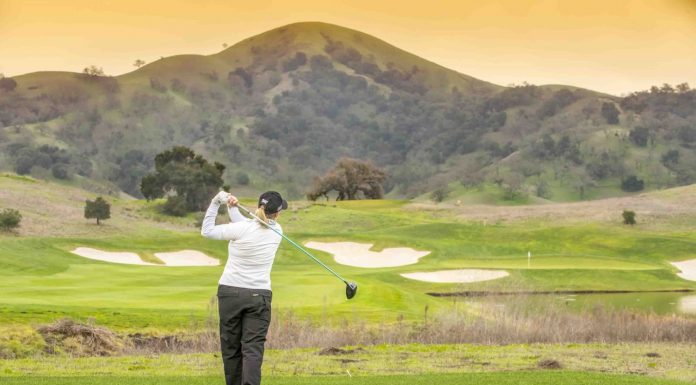
Cordevalle’s Bob Marshall has plenty on his plate to get the course ready for the US Women’s Open next month.
Gavilan Names Kathleen Rose New President
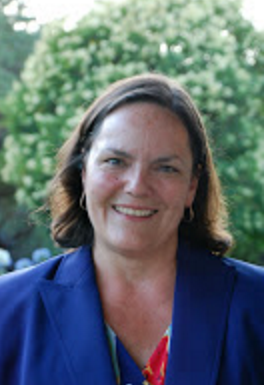
From Gavilan's Press Release:
At their meeting on June 14, 2016, the Board of Trustees of Gavilan Joint Community College District named Dr. Kathleen Rose as the next President / Superintendent of Gavilan College. The appointment includes a two-year contract with compensation of $239,000 in...