





47.4 F
Gilroy
April 28, 2026

Nimble Thimble is a Gilroy Hit

In Silicon Valley, life seems to be all about the high tech, speedy, and modern. However, at the Nimble Thimble in downtown Gilroy, owner Linda Williams finds a balance between the old school and the high tech through the art of quilting.

Locals who Were Overcharged for Years, Finally Get Their Tax Refund

Christmas came a day early for Gilroy homeowner Erin Cerdan as she was handed a check for $27,836.14—more than a decade’s worth of overpaid taxes—from County Assessor Larry Stone.“I’m ecstatic,” said Cerdan, an administrative assistant at Pacific Point Christian School who welled up with tears talking to the press. “I invited all my neighbors over. Because we’re a family in this neighborhood. We built our homes together and we were all struggling together for a while there.”Stone, a politician’s politician, orchestrated a media event on a slow news day for the giveaway, like a Publisher’s Clearing House ad, minus the giant check and balloons. “You don’t usually see the assessor giving away money,” he said to the cameras before walking up to Cerdan’s door in the Los Arroyos neighborhood.He was only allowed to go back four years of assessments, but got a special order from the County Board of Supervisors to make up the money for those who had been shorted longer and pay interest on it. Cerdan bought her home in 2002.“We regret this error. It was an innocent error but we have the obligation to make it right,” he added, giving a tearful Cerdan the money. Some 216 Gilroyans will also get checks over the next weeks for a total of $3.3 million as a result of reporting errors that no one has been blamed for.The Los Arroyos neighborhood includes “sweat equity” homes, where the owners helped build the two-story ranch houses in return for below market rate mortgages. Others got a low rate on the condition they wouldn’t sell their home at market rates. The trouble occurred when they were taxed at full market value. Neither the builder, South County Housing, which has built hundreds of other low-income homes without the same problem, nor the city, let the assessor’s office know that these should be taxed at their lower value.Cerdan, whose husband Gabriel works two maintenance jobs from 8 a.m. to 11 p.m. to afford the house, said the money will take the pressure off him and allow him to spend more time with the family. It will also help pay down some debts.She was the first to notice that her taxes had jumped higher than she was led to believe when she bought the house. Her mortgage payment jumped over $300 a month and was told by the bank that it was for property taxes. Further calls told her that all the neighbors were having their rates raised. When she told them it was a sweat equity home, the county didn’t have paperwork to prove it.Cerdan began organizing the neighbors, some of whom had to choose between buying food and paying the high taxes, and contacted officials including Gilroy Mayor Don Gage, who she thanked for his help.“I don’t blame anyone,” she said. “Fate happens. Nobody’s perfect. Government’s not perfect,  but like Larry said, when a problem does come you try to get it resolved as quickly as you can. I believe they did that.“Cerdan gave Pot of Gold chocolate bars to officials and neighbors to celebrate.“All of us were having a hard time with everyday life. That’s everybody,” she said. “I’m not saying just people with low incomes are the only ones. Things happen in life. I had a lot of medical things come up and I kept charging, charging charging. And with the mortgage, I thought we might lose our home, the home we built. So I just kept at it, contacting people and getting the word out.”The next question is how much tax the families will have to pay on the refunds. Stone couldn’t answer that and advised them to speak to tax experts.

Local Reps Resolutions

For the edition published on New Year’s Day, it seems fitting to ask several notable Gilroyans for their New Year’s resolutions.

Gilroy Cruizerz look tough but are here to help

You may have seen the Gilroy City-Style Cruizerz out on the town Wednesday nights, roaming the streets on their personally modified beach cruisers and listening to loud music. At first glance they look like a typical biker club, decked out in leather and shirts with the club logo emblazoned on the back, but the Cruizerz are a force for good in Gilroy.

Money and Musical Chairs

On Monday, the Gilroy City Council will appoint the city’s new mayor. Within weeks, it will fill a council vacancy and consider a general plan in a community that is deeply divided over how big and how fast Gilroy should grow.The process highlights some flaws in the City Charter-defined procedure, which prescribes that one of the remaining council members be named as mayor.Three of the council members, Peter Leroe-Muñoz, Dion Bracco and Roland Velasco would have to give up the last three years on their council terms to serve less than a year as mayor, then run for office again two years earlier than they would have had to otherwise.The three remaining members—Cat Tucker, Terri Aulman and Perry Woodward—all have terms that expire in 2016. Of those three, Woodward seems the most ambitious of the bunch. He ran for mayor before and dropped out when Don Gage entered the race.Woodward, who says Gilroy shouldn’t listen to outsiders, led the effort to raise campaign contribution limits from $250 to $750 and maximum expenditures from $26,000 to $53,000. That, paradoxically, is likely to increase the influence of special interests, such as out-of-town developers, over the concerns of average Gilroy homeowners, for whom $750 is a big check to write.Woodward also chaired the commission that voted to abandon compact development, add 5,300 homes on annexed farmland and make Gilroy one of the county’s largest cities. Not everyone in Gilroy wants to see that happen.If residents are unhappy with the choice of the next mayor and the policies he or she espouses, the timing of Gage’s resignation leaves them little recourse. They can’t exercise their right to recall the mayor or the appointed replacement councilmember because the earliest possible recall election date would be the date of the next regular election. So the appointed mayor and the newly appointed swing vote (the current councilmembers voted 3-3 on the annexation) will serve for the majority of 2016.This is obviously a watershed moment for Gilroy, and the critical decision is being made following a series of political and legal maneuvers. A chair’s been pulled out of the circle and the music has started.Passing a new general plan under these circumstances, and over the objections of the Planning Commission, could well taint the document that will shape the city’s future over the next 25 years and beyond.Gilroyans should pay close attention to who will be named mayor on Jan. 4, as well as the process to fill the empty council seat and the growth options in the new general plan. The stakes are very high.

City Council looks at 2040 general plan Monday
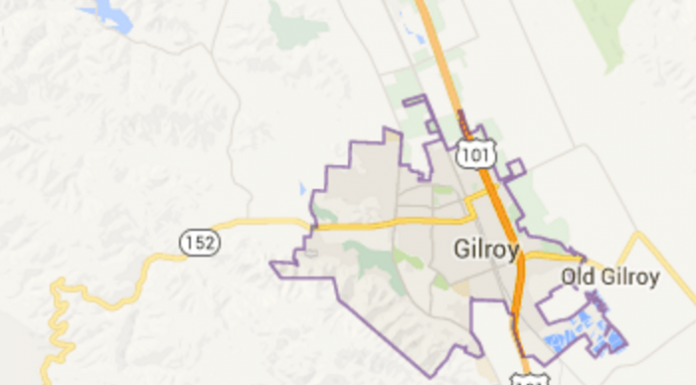
Gilroy’s City Council will be looking at the year 2040 at its first meeting of 2016 on Monday, when it starts the lengthy process of approving a new general plan.

Planners approve 202-unit townhouse project

A property developer and city staff disagreed pointedly at a Planning Commission meeting Dec. 3 over the fairness of requiring the company to rebuild seven intersections around its planned townhouse complex in southwest Gilroy.The Planning Commission passed the requirement as part of a package of resolutions approving the construction of Imwalle Properties’ 202-unit complex. The company must install traffic signals and add lanes to intersections to accommodate increased traffic expected in the area as a result of the project.The city estimated the development’s traffic impact not in isolation but in combination with those of other projects in progress in the area, including the Hecker Pass and Glen Loma developments.“We’re one of all the projects coming into the southwest quadrant of Gilroy, and yet we’re being asked to fix all these intersections and pave the yellow-brick road for all the new projects coming in,” said lead developer John Razumich. “It’s a bit of a challenge for us.”Building the improvements would add $7 million before reimbursement to the cost of the project and extend it by three to four years, Razumich said. It is difficult for a smaller company like Imwalle Properties to find financing for the extra cost, he said.City planners had previously proposed charging the company only for its share of the construction cost and improving the intersections itself, in accordance with a study prepared by consulting firm RBF. However, commissioners questioned whether the report adequately estimated the project’s effect on traffic in the area, so planning staff hired another firm to conduct a second traffic study.The second study, by Hexagon Consulting, essentially agreed with the first but recommended that the developer build the improvements. Imwalle Properties would be reimbursed for its construction, minus its fair share.The developers did not dispute the necessity of the improvements but rather the fairness of having to construct them on their own. The obligation imposes an almost impossible financial burden that is out of proportion with the amount of new traffic caused by their development, Razumich said.“Our impact came out the same, but what has changed is we’ve gone from paying $1.6 million and doing the work adjacent and near to our site to needing to fix intersections that are over four miles away that are under state jurisdiction, that are under county jurisdiction, that we’re simply not set up for, we’re simply not capable of.”Collecting impact fees would not be adequate to cover the cost of building the improvements, said Kristi Abrams, the city’s chief planner. Improvements are needed to compensate for the cumulative effects of surrounding projects expected to open in the future, she said. Since the developers for those projects pay their contributions at different times depending on when they are approved, the fund does not contain all the money needed to finance improvements for cumulative impacts.“If the applicant does not mitigate their impacts, paying a fair share does not mitigate the impacts because it does not get the improvement complete,” Abrams said.The traffic-impact fund is currently running a deficit, Abrams said. Revenue fell below liabilities during the Great Recession, when applications stopped coming in.Abrams said the developers misunderstood the nature of the impact fund. Impact fees are collected to cover improvements for traffic increases throughout the city, so a project’s impact cannot be effectively calculated for individual intersections, she said.“There are all kinds of trips throughout the city that are just not at that location they’re identifying,” Abrams said. “If you wanted to follow their philosophy, then you would need to figure out where those trips are all day, every day, seven days a week and figure out all those little percentages throughout the entire city. So that kind of analysis doesn’t work for the city of Gilroy.”The city council’s final vote on the project has not yet been scheduled. Imwalle Properties will continue to discuss how to complete the improvements with city staff and city council members before then.

Resolve Within Reason

 No sooner do I turn on the TV on the morning of January 1st, coffee cup in hand, than I’m walloped by the blitz of self improvement commercials. What was okay 24 hours ago, clearly will not be tolerated today.

Last Minute Steals and Deals at the Outlets

You might think that with all the expensive, designer named stores at the Gilroy Outlets, that there’s not much affordable for last minute holiday shoppers.

SOCIAL MEDIA

10,025FansLike
1,500FollowersFollow
2,589FollowersFollow