





Supe and Wineries Join the Battle Against PG&E

Opponents of a PG&E substation in rural Gilroy or Morgan Hill have picked up powerful allies in their fight against the big utility, including growers and wineries.Santa Clara County District 1 Supervisor Mike Wasserman said for the first time Monday that he’s opposed to the five rural sites on PG&E’s list of eight possible locations in his district.And while the county has no jurisdiction over PG&E sites—that’s up to the California Public Utilities Commission—the utility is required to consult with the county, whose view the PUC can consider.PG&E says the substation and new transmission lines are needed to keep up with power demands in the region and that they continue to review all sites. The preferred site and two alternatives will be picked in February and will be announced publicly by the end of March, a spokesperson for the utility said.Residents near sites on Sycamore Avenue and Day Road and three on Watsonville Road in South County have banded together to oppose the rural locations.They cite serious safety, well water quality and environmental concerns, including the potential impact on sensitive riparian habitat and at least one federally protected species, the steelhead trout.The county’s agricultural community appears unanimous in its opposition, too, along with a conservation group, Coastal Habitat Education and Environmental Restoration, or CHEER.Cheer formed a legal defense fund, hired a lawyer to oppose PG&E and has raised thousands of dollars for the battle, which it says it will take to federal court if necessary.“I am recommending against these five sites for the numerous environmental reasons I stated previously,” Wasserman said in an emailed response Monday to the Dispatch.Opponents of the rural sites have argued that only three locations in the city of Morgan Hill, including existing PG&E facilities should be considered, but Wasserman said that “At this time” he is not recommending any other sites.“County staff conducted an initial screening and numerous analyses are on-going and for all we know, more information may come forward and more sites might ultimately be considered by PG&E.” Wasserman said.Wasserman is half of a two-member committee of the Santa Clara County Board of Supervisors reviewing the substation matter.Called the Housing, Land Use, Environment and Transportation Committee, or HLUET, it recently received a staff report recommending that only the more urban Morgan Hill sites be considered. Staff recommended that the committee forward its recommendation to the full board for consideration.David Cortese, president of the board of supervisors, is the other HLUET committee member. He said Tuesday that the matter will now go directly to the whole board, following cancellation of HLUET’s Jan. 19 meeting because its members attended the funeral of a mutual friend.The next full board meeting is Monday, Feb. 6.Asked if he supports the staff recommendation, Cortese said in an emailed response, “Not sure yet. Would like to hear public testimony.”Reaction among PG&E critics to Wasserman’s position was swift and positive.“That is great news, I welcome his support [and] I am greatly encouraged by this,” said Nigel Peacock of Gilroy.Peacock is part of a residents’ steering committee convened at a Jan. 13 meeting at Kirigin Cellars winery of about 50 opponents of a substation at any of the five rural country sites.Kirigin owner Dhruv Khanna is another steering committee member.“I applaud supervisor Wasserman on his position,” Khanna said, adding, “PG&E should expand use of its existing [Morgan Hill] substation.”Use of the southern locations would be “the most destructive of the environment,” with the destruction more severe the further south the site, he said.In the meantime, the board of directors of the Santa Clara County Farm Bureau has unanimously agreed that the substation should not be built anywhere near the region’s wine trail.And the county’s wineries have weighed in, registering their opposition in a Jan. 5 letter to PG&E and cc’d to Wasserman.Wasserman helped create the Santa Clara County Wine Trail, the South County lop of which winds through the area and along each of the rural roads cited, including the bucolic and historic Redwood Retreat Road west of Gilroy.“We are very concerned, in particular about some of the sites along Watsonville Road,” said Wineries of Santa Clara Valley president Karen Seeker of Seeker Vineyards in San Martin. The group represents 27 wineries.“A substation would have big impact not only on our wineries but also the overall nature and beauty of that area,” she said Tuesday.
Alarm info on Councilman’s house

Gilroy City Councilman Dion Bracco filed a public records request last month for information on mayoral opponent and Councilman Perry Woodward's private home security system, including billing records and whether police have ever responded to his Eagle Ridge residence for false alarms, according to documents obtained by the Dispatch.
Split council rejects more sign law talks
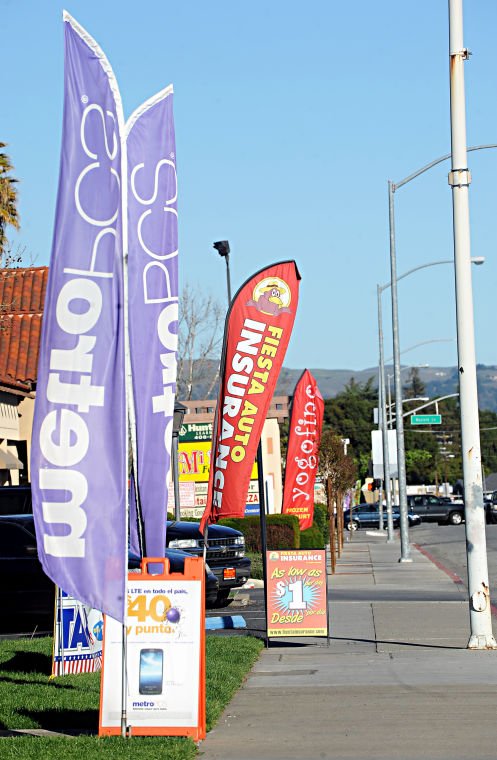
GILROY—On a split vote, the Gilroy City Council Monday handed a defeat to business leaders seeking to ease restrictions of advertising banners.
G-Town: The County’s Fastest Growing City
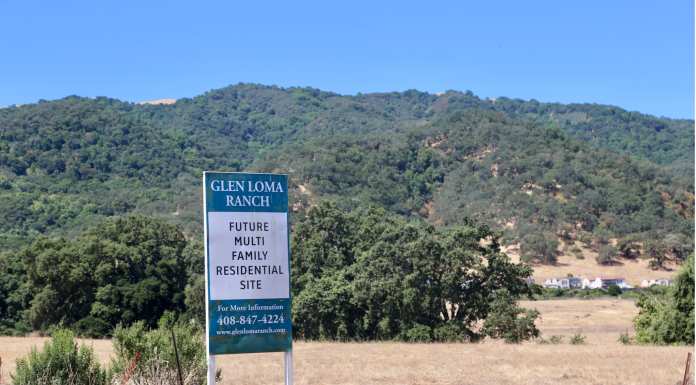
Gilroy is the fastest growing city in Santa Clara County with 1,159 new residents in 2016, according to a demographics report released by the California Department of Finance New State Population Report.
How much would you pay to chart Gilroy’s future?

The process to create a blueprint for how Gilroy will grow in the next 20 years was halted last year when the citizen-led initiative to place an Urban Growth Boundary around the city started gathering momentum. Now that Measure H is the law of the land, city leaders aim to get General Plan 2040 back on track, while calling for greater community participation.“A lot of things in the pipeline will follow the adoption of the General Plan,” said Mayor Roland Velasco. “The sooner we get this done, the sooner we can get back to other items.” At a joint study session with the planning commission last week, the city council chose the most comprehensive--and expensive--of three options submitted by city staff on how to resume the lengthy process, which determines not just land use policy but everything from transportation to public safety. City administrator, Gabe Gonzalez told the council, it was not so much impacts over the next five to 10 years that need to be reexamined, but what will happen to the city 10-plus years from now when land for new development becomes harder to find and fees collected from developers the city relies on to create new transportation infrastructure dries up. The Urban Growth Boundary reduced the area of land for future residential development by 450 acres/4,344 dwelling units and for non-residential development, by 327 acres, which equates to approximately 5,900 jobs, according to an independent report the city commissioned last year, at a cost of $150,000.When GP 2040 was paused in April 2016, pending the results of Measure H, the city had already spent nearly three years and $854,398 (of a $1,063,112 total budget). Staff estimates the additional analysis and community input will take 24 to 36 months to complete and cost $677,000. In 2015, the city council approved the establishment of a fee surcharge to help pay for future updates to the general plan and combined with what is remaining of the original budget, city staff estimates the city council may need to approve $268,000 in General Fund monies to pay for the shortfall. Follow the process at www.gilroy2040.com.
Volunteers needed to clean Miller Slough

GILROY—As trash piles up in a Gilroy slough, citizens have stepped up to clean the channel that has city and water officials pointing fingers of responsibility while neither takes action.
Updated: Caltrain considers ending service to Gilroy

Caltrain has proposed cutting service to South County, raising