
Upcoming City Council Meeting, July 10, 2017
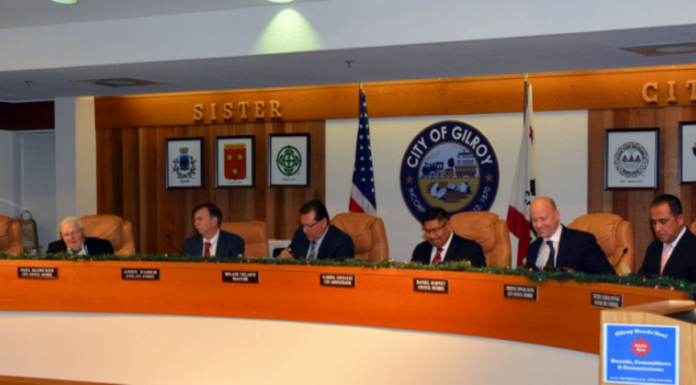
With the July Fourth holiday squarely in the rearview window, the Gilroy City Council gets back to work on Monday night, July 10 at 6 p.m. Below is a peek at the upcoming agenda, which can found at cityofgilroy.org:
Train service extended
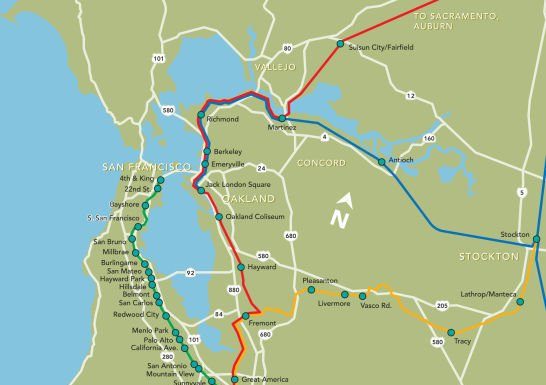
South County economic developers are cheerleading Monterey County's plan to bring train service from Salinas to San Jose, with stops in Gilroy, Morgan Hill and eventually Castroville and Pajaro.
Former Dispatch editor honored with proclamation
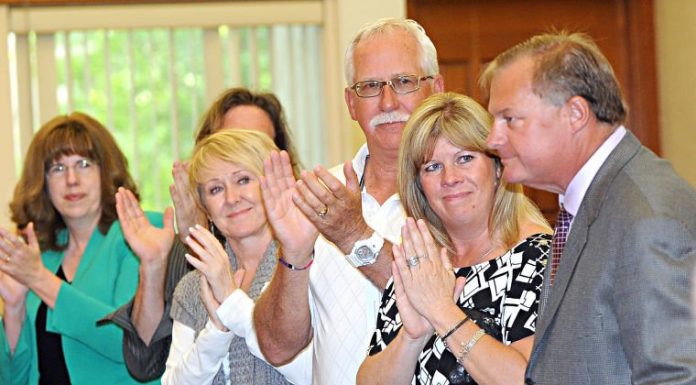
Gilroy council chambers were packed Monday night, more than they have been in nearly five years, as former Gilroy Dispatch executive editor Mark Derry was recognized by the city he continues to call home.
Quick election guide; send in your tough questions for candidates
We want to hear your toughest questions for this election’s candidates. Send in the burning questions you’d like to ask the candidates point blank and we’ll ask them as part of our series of election stories before Nov. 6. We’ll field the most exacting questions to ask of the mayoral, city council and school board candidates.
Gilroy’s St. Mary goes medieval for a day

St. Mary School seventh-graders were transported to 1562 at Queen Mary of Scotland's banquet as part of an intensive social studies lesson on medieval times.
City hires two new police officers
Two new police officers for the Gilroy Police Department, Adam Moon and Raul Razo, will be introduced at the Sept. 16 City Council meeting.
The financial roller coaster of Gilroy Gardens

True or false: The City of Gilroy owns a tourist attraction business called Gilroy Gardens Family Theme Park. That’s false.
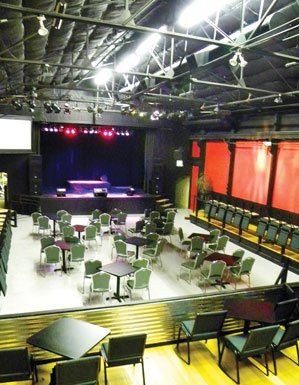
Mayor: We’re not trying to keep people from dancing
Hey, Gilroy, so you think you can dance?
Planners approve 202-unit townhouse project
A property developer and city staff disagreed pointedly at a Planning Commission meeting Dec. 3 over the fairness of requiring the company to rebuild seven intersections around its planned townhouse complex in southwest Gilroy.The Planning Commission passed the requirement as part of a package of resolutions approving the construction of Imwalle Properties’ 202-unit complex. The company must install traffic signals and add lanes to intersections to accommodate increased traffic expected in the area as a result of the project.The city estimated the development’s traffic impact not in isolation but in combination with those of other projects in progress in the area, including the Hecker Pass and Glen Loma developments.“We’re one of all the projects coming into the southwest quadrant of Gilroy, and yet we’re being asked to fix all these intersections and pave the yellow-brick road for all the new projects coming in,” said lead developer John Razumich. “It’s a bit of a challenge for us.”Building the improvements would add $7 million before reimbursement to the cost of the project and extend it by three to four years, Razumich said. It is difficult for a smaller company like Imwalle Properties to find financing for the extra cost, he said.City planners had previously proposed charging the company only for its share of the construction cost and improving the intersections itself, in accordance with a study prepared by consulting firm RBF. However, commissioners questioned whether the report adequately estimated the project’s effect on traffic in the area, so planning staff hired another firm to conduct a second traffic study.The second study, by Hexagon Consulting, essentially agreed with the first but recommended that the developer build the improvements. Imwalle Properties would be reimbursed for its construction, minus its fair share.The developers did not dispute the necessity of the improvements but rather the fairness of having to construct them on their own. The obligation imposes an almost impossible financial burden that is out of proportion with the amount of new traffic caused by their development, Razumich said.“Our impact came out the same, but what has changed is we’ve gone from paying $1.6 million and doing the work adjacent and near to our site to needing to fix intersections that are over four miles away that are under state jurisdiction, that are under county jurisdiction, that we’re simply not set up for, we’re simply not capable of.”Collecting impact fees would not be adequate to cover the cost of building the improvements, said Kristi Abrams, the city’s chief planner. Improvements are needed to compensate for the cumulative effects of surrounding projects expected to open in the future, she said. Since the developers for those projects pay their contributions at different times depending on when they are approved, the fund does not contain all the money needed to finance improvements for cumulative impacts.“If the applicant does not mitigate their impacts, paying a fair share does not mitigate the impacts because it does not get the improvement complete,” Abrams said.The traffic-impact fund is currently running a deficit, Abrams said. Revenue fell below liabilities during the Great Recession, when applications stopped coming in.Abrams said the developers misunderstood the nature of the impact fund. Impact fees are collected to cover improvements for traffic increases throughout the city, so a project’s impact cannot be effectively calculated for individual intersections, she said.“There are all kinds of trips throughout the city that are just not at that location they’re identifying,” Abrams said. “If you wanted to follow their philosophy, then you would need to figure out where those trips are all day, every day, seven days a week and figure out all those little percentages throughout the entire city. So that kind of analysis doesn’t work for the city of Gilroy.”The city council’s final vote on the project has not yet been scheduled. Imwalle Properties will continue to discuss how to complete the improvements with city staff and city council members before then.