




Gilroy Cruizerz look tough but are here to help
You may have seen the Gilroy City-Style Cruizerz out on the town Wednesday nights, roaming the streets on their personally modified beach cruisers and listening to loud music. At first glance they look like a typical biker club, decked out in leather and shirts with the club logo emblazoned on the back, but the Cruizerz are a force for good in Gilroy.
City Council looks at 2040 general plan Monday
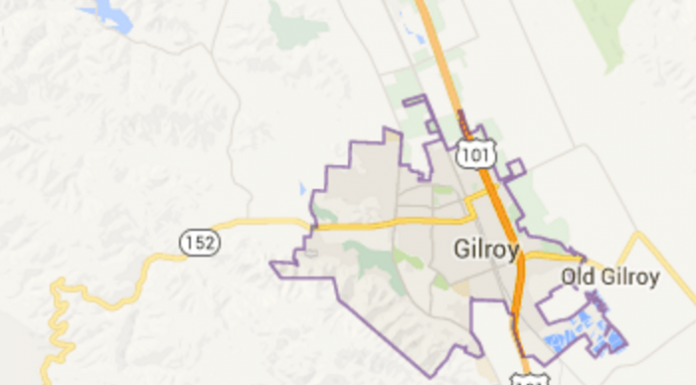
Gilroy’s City Council will be looking at the year 2040 at its first meeting of 2016 on Monday, when it starts the lengthy process of approving a new general plan.
Last Minute Steals and Deals at the Outlets
You might think that with all the expensive, designer named stores at the Gilroy Outlets, that there’s not much affordable for last minute holiday shoppers.
Despite the drought, the county’s only olive oil producer had a great year
Jeff Martin may be the only local farmer not complaining about the drought. Not only is he the only one growing drought-resistant olives, but his Frantoio Grove olive oil was picked among the top three in a statewide competition, causing a rush of holiday sales.“We didn’t really have drought consciousness back in 2004 when I put this together,” said Martin, 63, a longtime developer and active Gilroy resident.“I’m a really happy olive farmer. I used to build houses and I asked if I could put them back further on the lot. What I didn’t use, I had to commit to keeping permanent open space. I wanted a permanent crop and I thought about olives. Three or four hundred years is nothing for an olive tree. That’s pretty permanent. There’s so many damned grapes in the world, I thought I’d plant olives.”So he attended classes at UC-Davis to study the industry. He planted in 2004, started making oil in 2010 and now he’s packing and shipping bottles at $31 apiece. The oil gets its name from the robust Tuscan Frantoio olives he offers.Martin, who has been in the news recently as the principal owner of the 721-acre property being considered for new homes north of town, said he loves farming and driving his tractor while listening to NPR. He built the olive mill at 11811 Monterey Rd. this year, after wading through a maze of red tape. He’s the only olive farmer in Santa Clara County and one of about 400 in the state. He sells Frantoio Grove locally at Rocca’s and LJB Farms in San Martin and online at www.frantoiogrove.com.He didn’t know his oil had been honored in a Los Angeles tasting until a friend called him. Frantoio was named among the top three overall in the state out of 800 contestants and was picked as the best of show in the category of robust oils.“I felt great!” he said excitedly. “A gold medal is achievable just for making good olive oil, but best of show! I was shocked. Are you kidding me?”Some 90 percent of the world’s olives are grown without added water, said Martin, making them a good crop for the local Mediterranean climate. Olive trees survive in parts of Spain or North Africa that are even dryer than Gilroy.In the U.S., olive oil has been experiencing a sort of renaissance, with tasting rooms popping up in city centers and olive bars becoming a staple at supermarkets throughout the country. While major olive producers like Italy and Greece remain the world’s top consumers of olive oil, according to a report released earlier this year from the International Olive Council, the United States has seen enormous consumption growth in the last 25 years.That is good news for the producers of olive oil in California. Today, there are more than 35,000 acres planted in the state for the production of extra virgin olive oil, according to the California Olive Oil Council (COOC).The council estimates the state’s growers will produce an unprecedented 4 million gallons of extra virgin olive oil from this year’s harvest, up from 2.4 million gallons produced in 2014-15.The Dispatch caught up with Martin this week at his olive grove and mill in San Martin. Just last week he finished bottling a batch of his award-winning extra virgin olive oil. Since oil degrades rapidly once it comes into contact with light and air, Martin stores his oil in large food grade stainless steel tanks until it’s time to bottle.“Everything I bottled on the 12th is in somebody else’s hands now,” he said. A recent Los Angeles Times article touting Frantoio Grove one of the best extra virgin olive oils in California brought a spike in holiday orders.Martin said he planned on bottling another 50-100 cases the following day to keep up with demand.As consumers learn of the health benefits of using olive oil regularly—it’s rich in “good fats” and polyphenols—California producers will also benefit, because the health properties of the oil are at their best closest to the harvest date of the fruit.“This is such a different product than what you pull off the shelf,” said Martin. “If it came from Tunisia to Italy to New York to San Francisco to Gilroy to get on a shelf, it may have been made in Tunisia two years ago and then taken over to Italy to get a ‘Made in Italy’ stamp on it.”The major difference to consumers, though, has to be the flavor.They can taste if the fruit has sat out too long in the sun before it’s been crushed and if the equipment it past through was dirty, he explained.“They can taste any defect in the oil—and extra virgin has to have no defects.”
Gilroy Family Dies in Plane Crash
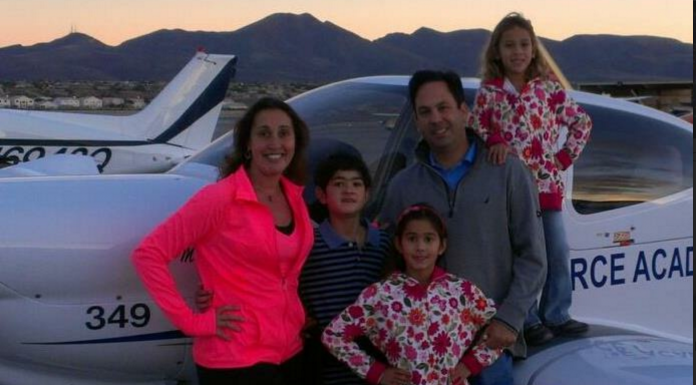
As Gilroy residents prepared for the winter holidays news of a fatal plane crash involving a local family sent shockwaves throughout the community.Gilroy residents Jason Thomas Price, his wife Olga Price and with their three children, Olivia, 9, Mary, 10, and John, 14, were killed when the small plane Jason Price was piloting crashed into an almond orchard outside Bakersfield on Dec. 19. News outlets initially covering the crash identified Jason Price as the pilot and his family as the passengers.At 4:26 p.m. that day, a Los Angeles air traffic control tower received a distress call from an aircraft, later identified by the National Transportation Safety Board (NTSB) and Federal Aviation Administration (FAA) as a Piper PA-32, single-engine, seven-passenger plane, according to the Kern County Sheriff’s Office.The family had left the Reid-Hillview Airport in San Jose and were on their way to Henderson, Nev., when the crash occurred. Emergency responders conducted a ground search and found airplane wreckage in the orchard near the intersection of Panama Lane and South Allen Road. Debris from the crash spanned a quarter-mile, according to the Kern County Sheriff’s Office. At press time, the NTSB and FAA had not concluded their investigation into the cause of the crash.Jason Price was a principle reliability engineer at Genesis Solutions, a position he held for five months according to his LinkedIn profile. His company released the following statement: “On behalf of Genesis Solutions and its employees, we express our deepest sympathy and condolences for Jason Price and his family. Jason was an associate of our organization and a valued and loved team member, friend, and contributor to our customers and the maintenance and reliability professionals we serve. We are mourning this tragic loss.”As news of the tragedy spread through Gilroy, residents who knew the family shared their heartbreak.Olivia and Mary were students at Luigi Aprea Elementary School, which had just closed for the winter holidays on Dec. 18. Misty Blythe, a fellow parent whose children went to school with the girls had just seen them at school.“Friday was the last day of school for all the kids,” said Misty Blythe via Facebook. “We [were] all saying goodbye and happy holidays, and see you next year.”Blythe shared a friend with Olga and had been to few birthday parties with the friendly mom.“It’s such a sad thing. They will be very missed. Olga was a good friend, awesome mother and loving wife.”
San Ysidro Santa Visit Draws Hundreds

Braving chilly temperatures, a long line of expectant children and their families formed down the center of San Ysidro Park last Saturday, eagerly awaiting their chance to meet and take a picture with old Saint Nick himself, the one and only Santa Claus, at the second annual Winter Wonderland and gift giveaway hosted by Victory Outreach Ministries with support from agency partners including the City of Gilroy, Gilroy Police Department, Santa Clara Federal Credit Union, Gilroy Youth Task Force and South County Task Force.