




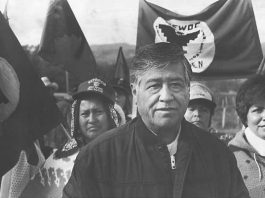
New Gilroy Hall of Famers

Elementary school students have a music program thanks to one Gilroy Hall of Fame honoree.Christopher High has a stunning new athletic complex thanks to another.One man filled the city with flowers and new breeds of seeds, and the fourth helped resolve one of the city’s messiest environmental problems and bring Gilroy Gardens to the city.Don Christopher, Dale Connell, Glenn Goldsmith, and Bob Kraemer were inducted into the Gilroy Hall of Fame on Saturday, the first honorees since the Chamber of Commerce suspended the annual awards in 1994.The awards’ “short break” ended with the pile driver-like persistence of Bob Dyer, 82, of R.J. Dyer Real Property Investments, Inc., who wanted the city to recognize “people who worked hard and spent the time to make Gilroy a better place.”Mike Sanchez cele-brated the rebirth saying: “Some would say, ‘not bad for down at the end of Silicon Valley.’ I would prefer to say, ‘well done, Gilroy, well done.’”Don Christopher, founder of the nation’s top family garlic producer and co-founder of the Garlic Festival, donated the land on which Christopher High School was built and provided money to construct its new athletic complex.He was inspired to donate after seeing the school’s subpar athletic facilities, said Gilroy Foundation executive director Donna Pray, who introduced him.Christopher also served on the Santa Clara County Sheriff’s Advisory Board and the County Planning Commission.“Don Christopher is a man who demonstrated his commitment to his neighbors and their shared community with consistency and purpose,” Pray said.Dale Connell was remembered as an ardent supporter of public education. A former president of the Gilroy Unified School District and a teacher himself, Connell donated $1.1 million to the district for music education.“Dale knew that it’s important that children learn not just with books but with instruments,” said Kurt Michielssen, a senior executive at Pinnacle Bank.Larry Connell accepted the award on behalf of his father, who passed away in 2013, and honored his philanthro-pic legacy. “When I was a couple years out of college, I had the idea that as a son it was my duty to climb a little bit higher than Dad climbed,” Connell said. “By the time I got past 35 I realized I wasn’t doing it. And at 81 I’m not sure I even came up to his bootstraps.”Glenn Goldsmith was honored for his philanthropy and generosity towardhis employees. The founder of Goldsmith Seeds (now Syngenta Flowers), a multinational flower breeder, he began the annual Rotary Flower Sale, which raises up to $50,000 for the Gilroy Rotary Club’s charities, said his son, Joel Goldsmith. Goldsmith operated a plant in Guatemala that employed thousands of workers. After learning that many employees at the facility were going without health care, Goldsmith built a clinic on site. He also provided eyewear.The younger Goldsmith recalled accom-panying his father to the country, where he learned how deep Glenn’s compassion ran. They witnessed blind children begging on the streets, and Glenn Goldsmith explained that their mothers had blinded them to make them more sympathetic.“When he said that, he did not say it with judgment or contempt,” Joel Goldsmith said. “He said it with empathy and sympathy for somebody who thought maiming their child was the best way to get ahead in life. It illustrates how he sees the world.”Glenn Goldsmith had a shock when he was alerted to a mistaken article by Jack Foley in the Dispatch that said he was deceased. Emcee Mark Turner couldn’t resist quoting Mark Twain’s famous line that reports of his own death had been “greatly exaggerated.”Goldsmith added: “I had to show up. I had to tell them I’m alive.”Bob Kraemer, a decorated Vietnam veteran, scout master and the first Mr. Garlic, was remembered as a selfless and unwavering problem solver.During an environmental scandal involving Gilroy officials and the city’s major agricultural companies, Kraemer set aside finger-pointing in favor of finding a solution, said Jay Baksa, former city administrator. Kraemer, who sat on the committee overseeing the agricultural industry, brought Gilroy’s four major agricultural companies together and led a coordinated response to help resolve the crisis.“What we learned about Bob at that time was, if there was a problem—and especially if it was a hard problem—get Bob Kraemer involved,” Baksa said.Former Gilroy mayor Al Pinheiro, who met Kraemer when they both worked at Gilroy Foods, praised Kraemer’s devotion to serving others.“There was no ‘in it for Bob’ kind of thing,” said Pinheiro. “It was all about the reasons why he got involved, whether it was the school district for the kidsor whether it was some other project. It wasn’t about Bob, it was about making a difference.”
Food Bank is Empty

St. Joseph’s Family Center has an ambitious plan to help struggling families this holiday season by serving turkey dinners to thousands of hungry people.But there’s a big bump in the road: South County’s largest food distribution agency only has 16 turkeys in its freezers.“We need turkeys desperately,” said Vicky Martin, the donation and pantry coordinator. “I’m a little nervous right now because Thanksgiving is creeping upon us quickly and with only 16 turkeys, our freezers are completely empty.”Usually, people or companies pull up to the entrance at 7950 Church St. from 9 a.m. to 5 p.m. and drop off needed food. This year, donations have slowed, perhaps because people think the economy is doing better. But in Gilroy, the need is higher than ever, said Martin.“It’s winter. You have extra expenses in the winter anyway and it’s predicted to be an El Niño year, so a lot of our migrant families and agriculture workers will be out of work during the rain.”St. Joseph’s, which serves thousands of Gilroy residents from its Church Street center, includes among its service programs transit passes for the homeless, help with employment for those looking to apply for a job, hot meals for the homeless, and a food pantry for both families and individuals.Every Monday it serves 600 families healthy produce, with no questions asked. Anyone who needs food can line up and get it. The pantry also stocks eggs, milk, bread and canned goods.The center is one of about 300 agencies supplied by the Second Harvest Food Bank of Santa Clara and San Mateo counties. St. Joseph’s asks for donations of non-perishable snack foods, fresh produce, and unprepared meats year round. For the holiday season, the center asks for turkeys, yams, and stuffing.Martin has seen slow beginnings to the donation season before and watched things pick up, but this year she’s really worried. She says she may have to buy turkeys for the first time.The agency has a tiny workforce compared to other food charities,” Martin added. It is one of the largest organizations in the county for distribution, but has only nine employees. Other, smaller agencies have 30-80 employees. Gilroy volunteers make up the difference.St. Joseph’s, like many community outreach centers that serve low-income households and the homeless, also asks for clothing, blankets and sleeping bags. Tents and tarps, used by the homeless to protect themselves from cold weather, are in especially high demand, Martin said
Local Wineries Host Passport Weekend
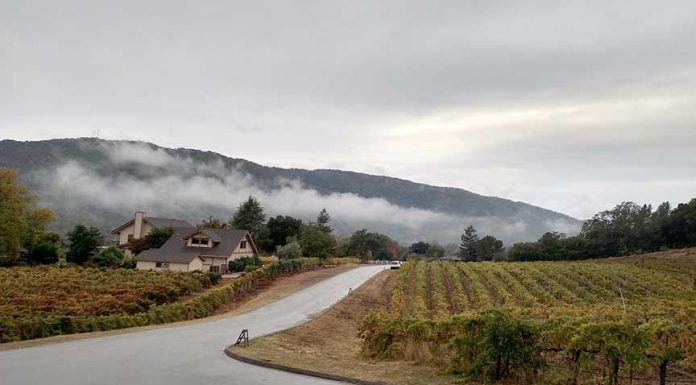
RAIN put a slight damper on attendance at Santa Clara County wineries during the region’s annual Passport Weekend wine tour on Nov. 7 and 8, but the region’s vintners see sunny skies ahead economically.
Downtown Troubles
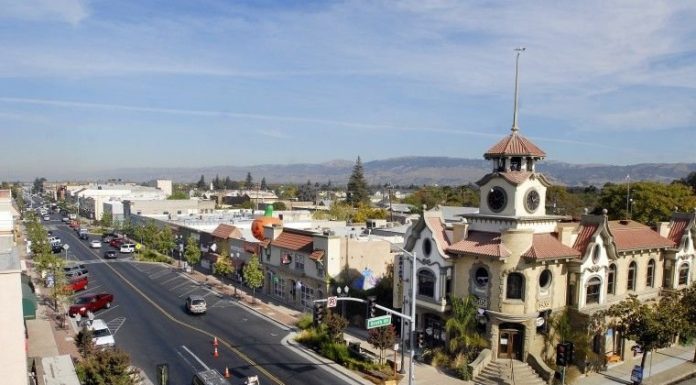
Ten years ago, Gilroy adopted a Downtown Specific Plan to transform the city’s core. The plan envisioned entry monuments, welcoming gateways, outdoor dining, nicely designed signage and beautified streetscapes in and around the historic district. It called for 1,576 new residential units and the “development of roughly one million square feet of new commercial building space.”The plan’s adoption capped a two-and-a half-year effort by a volunteer task force, city staff, elected officials and a consulting firm paid $180,000 to organize the process and draft the plan.Jose Montes, who owns four buildings downtown, started buying properties around the time of the plan’s inception and remembers it being an exciting time. A decade later, he says, “to be quite honest, they haven’t done just about anything.”City planners seem to have forgotten about the plan altogether, even though it’s a legal extension of the General Plan. The city has not formally reviewed its progress and has no schedule to implement the remainder of its provisions, said planning manager Susan Martin. She characterized the plan as a “working document” and cited accomplishments such as the development of the Heritage Bank and Allium buildings, the installationof streetscape improvements and banners and allowances for outdoor dining. It’s clear, though, that downtown still has a long way to go. The city lagged in implementing the “short range” accomplishments slated for the first two years. Then, two years into the plan, the economy crashed and the Great Recession brought everything to a halt. The city council changed and planning staff turned over. Economic incentives were withdrawn, retail vacancies grew and enforcement actions began. Property owners and investors lost their enthusiasm. At the midpoint of the 20-year plan, which runs through 2025, roughly a quarter of tenant spaces are vacant, and new development is at a standstill.The plan had mapped out development incentives, such as tax and fee waivers and loans. “I hope the plan will come back,” said Montes. “It’s important for the city, important for the downtown, and vital for investors.”Downtown property owner Gary Walton, who chaired the task force convened in 2003, called the 194-page document “a lot of paper.” “Like everything else they do, all too often reports sit on the shelf and gather dust,” he said.Things got off to a strong start in 2003, when city officials eliminated “development-impact fees" for housing construction. Then-city planning manager Bill Faus told the Dispatch in 2005 the incentive program “has already served its purpose quite well. We currently have 22 active projects downtown, and nine being discussed. What it has done is stimulate activity.” “Once we got rid of impact fees, the downtown took off,” recalls real estate developer James Suner, who was vice chair of the Downtown Specific Task Force and whose James Group built Carriage Park and Dos Acres. Without the economic incentives, he said, “it’s mathematically impossible to rebuild downtown.”Montes agreed: “Since the fee waiver left, no building has been able to be built.”The city’s insistence on maintaining the fees ignores the disproportionately higher burden they impose on smaller lots, Suner said. Economies of scale give larger developments an advantage over smaller ones, he said.There hasn’t been any new construction in the downtown core, and no new construction is planned, said developer Walton, who has owned 11 downtown buildings, including the interim library and arts center, the Lizarran Tapas Restaurant at the Old City Hall Building and the La Aldea apartment complex.Gilroy’s aggressive approach to earthquake safety contributed to a self-perpetuating cycle of economic malaise, he added. The city’s Unreinforced Masonry Ordinance, written in 2011, does not allow landlords to sign new tenants until expensive retrofits are completed.Landlords who are unwilling or unable to reinforce their buildings leave them vacant. High vacancy rates breed a perception of non-viability among potential investors, who stay away. Landlords, lacking investment or financing, cannot charge high rents, so they don’t make enough money to retrofit the buildings, he added.“It’s been a disaster,” Walton said.Mayor Don Gage acknowledges a lack of progress since the ordinance was passed, but places the blame squarely on property owners.“These people that own these buildings, they basically did nothing,” Gage said. “There were a few that did some things, and they’re actually still doing them. But others didn’t do it. And they use every excuse in the book. ‘I can’t afford it, the building isn’t worth it, the fees are too high, blah blah blah blah blah.’”The city’s enforcement of the URM ordinance was the only responsible way to prepare the city for an earthquake, which could leave the city liable for injuries in the event of a lawsuit, Gage said. The fines levied and legal action taken has instilled a sense of urgency among proprietors, who otherwise feel unmotivated to act, he said.“They didn’t want to spend the money until we started fining them and putting them in jail,” he said.“Property owners whwwo call for continued fee waivers are only trying to shirk their responsibility,” Gage said. The city cannot afford to subsidize businesses, which would gain access to public resources at the expense of the city.“They want everything for free,” he added.Walton thinks it’s time to “redo the plan.” He says, “they need to revisit it. The world has changed since the Great Recession.”“Why would you be satisfied with having the worst downtown in Santa Clara County and not be working 24/7 to reverse that?” asks Walton. “I don’t get it.”Dan Pulcrano contributed to this story.
Emerging Leaders: Mendoza, Valdez will help push Gav in 15/16

Gavilan’s two second-year leaders on the floor got two drastically different looks at the game a year ago.
Christopher falls to Branham but not without a fight for the ages

For a brief amount of time, it appeared as though Christopher would make a playoff comeback to be remembered.
Wild end to 2nd quarter, strong 4th sends Gilroy to win

Gilroy rode strong second and fourth quarters to defeat Pajaro Valley 29-19 on Senior Night Saturday.
Alvarez holds on 2-point conversion, Christopher falls 56-55 in wild game

On a night of insane offensive numbers, it was a defensive play that ended it.