



Study session on future of arts center, parking set for Monday
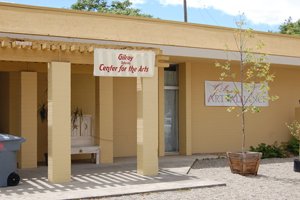
The Gilroy City Council will host a special study session Monday night at City Hall to talk options for a potentially new location for the city-owned Interim Center for the Arts on Monterey Street and plan for the addition of more parking downtown.
Gilroy’s Social Security Office closing 30 minutes earlier

Following a nationwide cutback to close Social Security Offices 30 minutes earlier, Gilroy's branch is now open to the public from 9 a.m. until 3:30 p.m.
Council signs off on half-percent pay hike for firefighters

After six months of negotiations, City Council voted 5-1 during its regular meeting Monday night to approve a half-percent pay raise for local firefighters.
Technology brings increased efficiency to Gilroy City Hall
The City of Gilroy has announced the introduction of new software by Accela that makes it easier for staff to prepare staff reports and agendas for the City Council and Planning Commission. The switch, which went live for the November 21st city council meeting, according to a press release, makes the process more efficient, less-time consuming and near paperless. Staff training on the new software package began in October and the result is a process that automates the entire staff report preparation, circulation and approval process for better workflow and productivity. The system then creates the agenda and meeting packet - completely eliminating paper. "What used to take 4-5 hours to accomplish with a manual paper process now takes 10 minutes to complete - with just a click of a button we have a council packet ready for distribution," stated City Clerk, Shawna Freels.
First Street Finally to be Fixed!!!!!
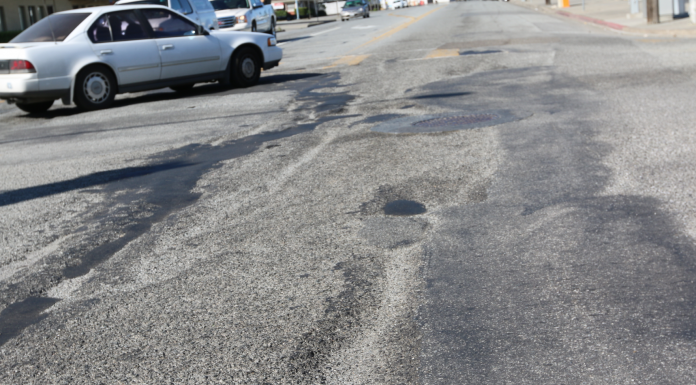
The landmine-like potholes on First Street are on the way to being fixed, years ahead of schedule and after years of complaints.Mayor Perry Woodward, with support from Councilman Dan Harney and former city traffic engineer Henry Servin worked out a clever system to have license registration fees that go to the state shifted quickly to Gilroy’s street of most need.Without their efforts, the work might not have begun until 2021, but it will now be finished—if the last hurdle is cleared—by the middle of next year.“It’s the worst street in town,” said Woodward. “This needs to happen. It should have never gotten this bad. It’s been neglected by Caltrans for so long, we have a crisis. I’m glad we will get this addressed when the rain stops.”The potholes on First Street are one of the biggest complaints by the city’s residents. The trouble is, the street—which is also known as Highway 152—is maintained not by the city, but by the state, and it isn’t as big a priority for them as it is for the locals.Caltrans didn’t even include the street on its current list of repairs and it couldn’t be added until 2020-2021. The three Gilroyans, led by Woodward, who sits on the Santa Clara Valley Transportation Authority board, are in the process of getting the board to front $5.5 million for the repairs, which will then be repaid by license fees, speeding up the process.The roadway will be worked on into the spring, as the state adds water, sewer and electric lines under it. Then, beginning in April, new pavement will be added.“It’s fantastic news,” said Harney, who is running for council in Nov. 8. “It s a big deal. If Perry and I hadn’t done that, we’d still be stuck where we were. The way it is now, we can’t even repave the potholes.”While the proposal has been approved by the VTA, it still needs Caltrans approval, which Woodward is working on. He is optimistic about that final step.The city also set aside $2.5 million to fix some of the other worst streets in town at last week’s council meeting. Those streets are being decided by a computer model that ranks streets most in need of repair.
Council mulling energy co-op
After kicking the can at its Feb. 22 meeting, the Gilroy City Council will again deliberate at its March 7 meeting whether to join Silicon Valley Community Choice Energy (CCE), a new multi-agency initiative that aims to cut the region’s greenhouse gas emissions by procuring cleaner forms of energy on behalf of its electricity customers.Led by the city of Sunnyvale, whose mayor, Glenn Hendricks, called the CCE one of the single most impactful strategies in that city’s action plan to meet targets for greenhouse gas reductions. The Silicon Valley CCE would purchase electricity on the open market for its customers, similar to a co-operative, instead of from PG&E.A recently released technical study of the CCE looked at three different program scenarios, two of which would lead to rate savings of 1 percent to 5 percent over time, while the third, which resulted in the greatest reductions in greenhouse gas emissions, would keep electricity rates at parity with PG&E.The investor-owned PG&E would continue to deliver the electricity and provide customer services. Energy bills would look similar, except for a notation showing electricity generated by Silicon Valley Community Choice Energy.The city of Sunnyvale, which serves as the project lead and fiscal agent, was joined by the cities of Cupertino, Mountain View and the county of Santa Clara in determining the feasibility of the project and facilitating the technical study, which also looked at other successful programs in the state.In addition to the four sponsoring agencies, Gilroy, Campbell, Los Altos, Los Altos Hills, Los Gatos, Monte Sereno, Morgan Hill and Saratoga all voiced interest in the CCE and together, the 12 jurisdictions would make up the service area.The technical study found that PG&E provides electricity to approximately 240,000 customers in the targeted region—90 percent residential, 10 percent commercial—consuming about 4 billion kilowatt hours of electricity annually.Although residential ratepayers make up the bulk of customer accounts, they only consume 34 percent of the region’s electricity. Sixty-five percent is designated as either commercial or industrial. The remaining one percent goes toward street lighting.The CCE would pool the electricity demand of the region’s 240,000 customers and procure a greater amount of energy from renewable sources than is currently offered by PG&E. The CCE also aims to provide competitive, potentially lower electricity rates for all customers while supporting new clean energy projects in the region.Customers would be automatically enrolled in the CCE program, although customers can choose to opt-out and stay with PG&E for bundled service.Other successful models the technical study looked at were programs in Marin and Sonoma counties and the city of Lancaster.The city of Gilroy is the last prospective member of the CCE to decide whether or not to join.A series of community meetings held last October in five of the jurisdictions, including Gilroy, showed 96 percent of attendees thought it was a good idea to create a locally controlled nonprofit to provide cleaner, greener electricity at competitive prices.Seventy-seven percent of attendees said their interest in the CCE was due to their desire to reduce their carbon footprint, while 88 percent said they were willing to pay a premium to have all of their electricity generated by renewable sources.At the Feb. 22 City Council meeting, councilmembers Cat Tucker, Dion Bracco, Terri Aulman joined Mayor Perry Woodward in voicing skepticism over the CCE, with Woodward saying it sounded almost “too good to be true.”Tucker worried about potential rate increases to Gilroy electricity customers, even though the technical study found no significant rate increases but rather potential savings of up to 5 percent over the course of the 10-year period.“Honestly, you don’t understand how much low-income families live in Gilroy. Our demographics are worse in all the county, even a $10, $5, $3 extra to PG&E could make a difference as to whether our soup kitchens have more people there in the week,” said Tucker during discussions.She also worried that the $150,000 Gilroy would have to approve to help cover startup costs, would prove unpalatable to an electorate clamoring for street improvements.Tucker said she was also wary of joining another regional body, fearing Gilroy would get short shrift in any decisionmaking.If Gilroy joined the CCE, the city would occupy a seat on the agency’s governing board and contribute to decisions on electricity rates and energy procurement.Waiting a year to join would jeopardize the city’s ability to contribute to these key decisions, argued Councilmember Peter Leroe-Muñoz.“Self-exclusion, taking ourselves out of the debate” would exacerbate any north-south divide, he said.Addressing concerns over potential rate increases, Leroe-Muñoz said he believed the plan, which he said really does aim to get lower rates for customers, actually works to alleviate a lot of those price pressures.“While there is no guarantee,” he told the council. “I like my chances a little bit better when I have a say in what those rates might be instead of leaving it up to someone else.”The council’s discussion of CCE continues on March 7.
Gilroy police execute search warrants for MediLeaf
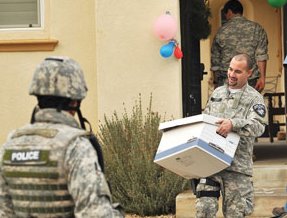
Dozens of undercover law enforcement officers from across Santa