Early voting begins for Nov. 4 statewide special election
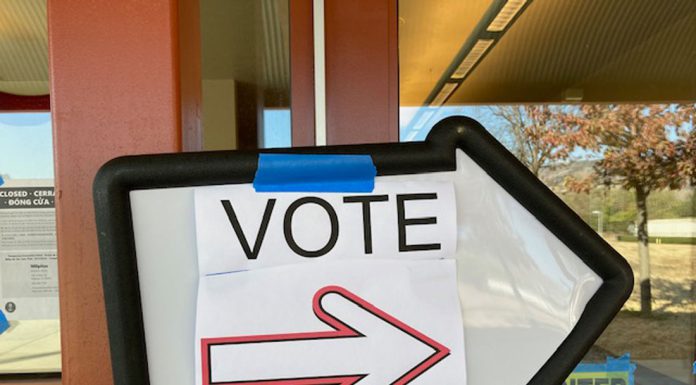
Santa Clara County voters can begin casting their ballots Oct. 6 for the Nov. 4 statewide special election. The short ballot includes choices for California Proposition 50, as well as a county sales tax measure and the assessor’s race.
The County Registrar of Voters has...
Haglund leaving post as city administrator
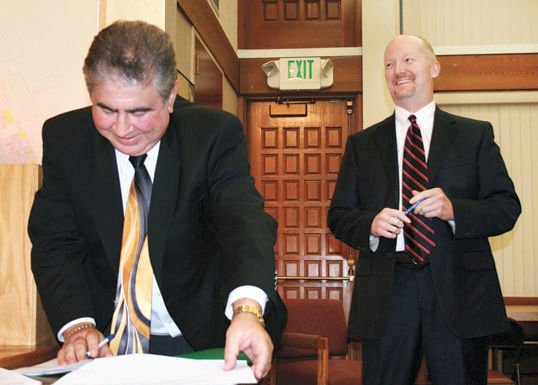
GILROY—After seven years as Gilroy’s city administrator, Tom Haglund will be leaving his post for the Sierras.
Council preview: purchase of Uvas Debell Park, payday lending ban, City audit released
The City Council has a full agenda for their regular meeting Monday night. Here's a few of the items your community leaders will be discussing:
Gilroy sees gain in sales tax receipts in first quarter of 2015

GILROY—Nearly 5 percent more sales tax revenue was collected in Gilroy during the first quarter of 2015 compared to the same time period last year, according to data recently released by the city of Gilroy. That growth surpassed the statewide gain of 3.1 percent.
Still Counting the Votes….

The Santa Clara County Registrar of Voters this week enacted automatic recounts in 10 contests in the county following the Nov. 8 general election, two of which were Gilroy races.Both the Gilroy City Council and Gilroy Unified School District Board of Trustees had three seats up for grabs. Because of the narrow margin of victory between the third and fourth place finishers in both races, they qualified for the automatic recount. The races’ top two vote getters are not affected.“I don’t think it will swing much, but I don’t know,” said Paul Kloecker, the former councilman who placed third in the current council race. “I will do my celebrating when I get sworn in.”The automatic recounts are based on unofficial semi-final results following the record-setting number of polling place, provisional, and mail-in ballots cast on Nov. 8, when nearly 83 percent of the county’s registered voters took part.In the City Council race, Kloecker received 5,471 votes, 95 more than fellow planning commissioner Tom Fischer, who got 5,376 votes. That is just a 0.24 percent difference, less than the 0.5 percent that triggers an automatic recount as mandated by the Santa Clara County Board of Supervisors earlier this year.A similar thing happened in the GUSD Board of Trustees race. Third place finisher BC Doyle, a former Navy SEAL, retired GUSD union leader and maintenance worker, received 8,439 votes, or 22.42 percent; while Paul Nadeau, director of operations of the nonprofit Navigator Schools, received 8,387 votes, or 22.28 percent. That is just a 0.38 percent difference.Nadeau, however, dropped out of the race before the election due to a potential conflict of interest because Navigator Schools operates a local charter, Gilroy Prep, which falls under the purview of the GUSD board. But his decision to drop out came too late to get his name removed from the ballot, leading him to garner thousands of votes. Nadeau said he would resign if elected and under the advice of counsel, run at a later time when it did not pose a conflict.The automatic recount, which started on Monday and will continue until the end of the weekend or whenever it’s completed, involves 150 county staff working from 8 a.m. to 6 p.m. at the county registrar of voters office.“This is only the second time automatic recounts have taken place,” said Anita Torres, communications representative for the county registrar of voters.The eight other county races involved in automatic recounts are: Cupertino Union School District Board; Palo Alto Unified School District Board; Los Altos City Council; Monte Sereno City Council; San Jose City Council District 8; Los Altos Hills City Council; city of Santa Clara police chief; and Measure Y in the San Jose Unified School District.Narrow margins of victory, where small number of votes separated the winner from the loser, had become commonplace in small local elections. County supervisors earlier this year felt that, to satisfy voter confidence and offer greater transparency, automatic recounts paid for by the county, would be enacted if certain criteria were met, Torres said.If the contest is in a district within the county and it is not for a state or federal office; and if the margin of victory is within 0.5 percent of the total number of ballots cast or 25 votes, an automatic recount is triggered.The automatic recount as authorized by the Board of Supervisors is limited in scope and involves recounting by hand machine-counted ballots only, said Torres. “A person can see voter intent, whereas a machine would not catch it and mark it as an over- or under-vote.”Before the Board of Supervisors action, a recount would have to be voter-initiated with the costs covered by the candidate.Fourth place City Council finisher Tom Fischer said while he does not expect the recount to change the election outcome, it has been “quite an experience.”The planning commissioner, whose term ends in 2018, said if he does not surpass Kloecker to take the third spot free and clear, he intends to apply for the council seat left vacant when mayor-elect Roland Velasco is sworn in Dec. 12.However, he pointed out, the City Council can decide to bypass the application process altogether and just appoint Fischer as the fourth top vote getter in the council race.“They can pretty much do what they want to fill that seat,” he said.The top vote getters in the City Council race were GUSD Board President, Fred Tovar and incumbent Cat Tucker. In the GUSD Board of Trustee race, Mark Good and James Pace took the top spots.The final results for the Nov. 8 election will be certified by the registrar of voters on Dec. 8, after all manual recounts and audits have been completed.
Poll: Most Californians want re-vote on high-speed rail
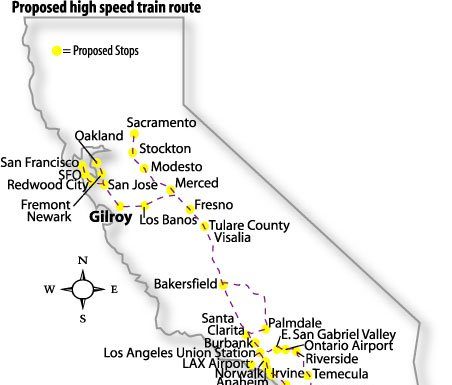
GILROY - California residents want another chance to weigh-in on the state's controversial and expensive high-speed rail project, according to a poll of 1,000 voters released this week. And if given the opportunity, the majority of them wouldn't vote to approve the project again, the poll shows.
Gilroy Welcome Center flush, for now
GILROY—Following a change of heart by Gilroy Mayor Don Gage, the Gilroy City Council voted unanimously to approve full funding for the Welcome Center for fiscal year 2016-2017—which amounts to $300,000 in city funds.
City hits a development wall
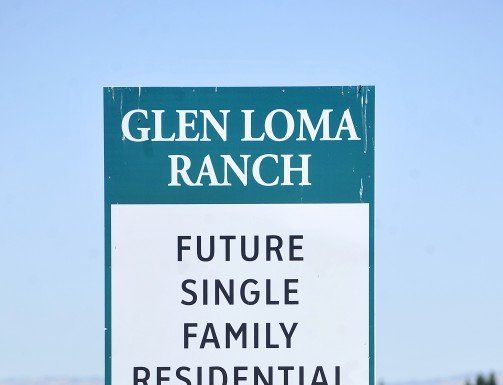
The Government Relations Committee gathered Friday to discuss the City of Gilroy Residential Development Ordinance (RDO) process during the Gilroy Chamber of Commerce’s regular meeting.