




A ban is a ban, so let’s get it done for the bobcats
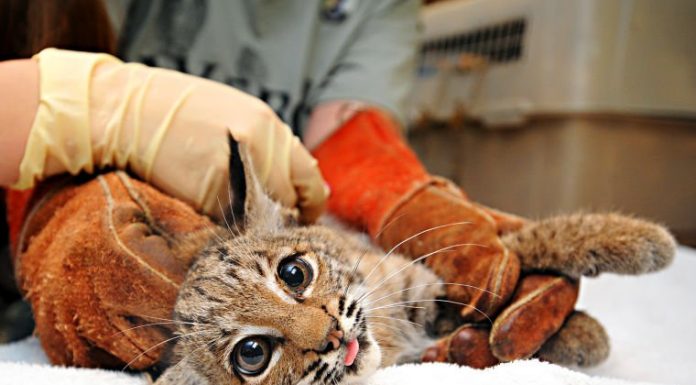
Californians, and perhaps South County residents in particular, should be aware of all the clawing going on in bobcat politics, and speak up before as many as 1,200 more are trapped for their beautiful, spotted pelts—most sold in China and Russia.South County is home to one of the state’s premiere bobcat rescue groups, the Wildlife Education and Rehabilitation Center (W.E.R.C.) in Morgan Hill founded by Sue Howell decades ago.Over the years, its volunteers have pioneered methods of caring for injured, sick and orphaned bobcats—such as teams of human surrogate mothers dressed in full-body bobcat costumes.At W.E.R.C., they know the bobcat’s importance in keeping nature’s balance. The animal feeds mostly on rodents, including ground squirrels that wreak havoc on farm and pasture lands.When the California Department of Fish & Wildlife (DFW) needed a protocol to instruct rescue groups statewide in bobcat care, it turned to W.E.R.C. In January 2003, that protocol, titled Procedures for Bobcat Rehabilitation, was ready and adopted. Its pages are filled with instruction in bobcat health care, bobcat diet, the orphaned bobcat and bobcat restraint. It has the voice of experience, dedication and compassion.Along with like-minded Californians, the folks at W.E.R.C. delighted on August 5 when the California Fish & Game Commission voted to ban the trapping of bobcats for their fur. More than 55,000 Californians had signed petitions or written letters in support of the ban.It seemed the commission was finally in step with what’s going on around the globe: people are in increasing numbers demanding a halt to killing wildlife for no reason other than sport or pelts or trophies.So, on Aug. 5, everyone believed the ban was a done deal. It was not.Citing bureaucratic requirements, the DFW, which carries out commission rulings, stunned animal welfare groups when it announced the ban couldn’t start until November 2016.That means during the coming trapping season, Nov. 25–Jan. 31, upwards of 1,200 bobcats will be trapped and killed and their pelts ripped from their flesh. And for what?When the ban was announced, Nicole Paquette, vice president of wildlife protection for The Humane Society of the United States said this:“In the wake of the tragic death of Cecil the lion, the public has never been more aware that killing an animal for its pelt is no worse than for a head and hide to decorate a trophy room. This decision is a much-needed step in the right direction . . . to protect California’s bobcats from this cruel and unnecessary practice.”So why, now, does the DFW seem intent on allowing one more killing season? Perhaps because of pressure from the hunting and trapping industries?The ban was enacted and so it’s in force, right? The question is up in the air and animal rights folk are asking the public to respond by writing to the DFW to demand that the ban go into effect immediately, as everyone expected.In a Letter to the Editor of the Dispatch, Eric Mills of Action for Animals in Oakland said allowing one more season of trapping is “not acceptable!”We agree. It’s bad enough that California still allows the hunting of bobcats. It’s far worse, and pointless slaughter, to allow another season of trapping when the ban has been ordered.If you have an opinion, you can write to Chuck Bonham, DFW director, c/o Resources Building, 1416 Ninth St., Sacramento CA 95814, or email [email protected], or phone him at (916) 445-0411.
Prep Roundup: Sept. 16

GILROY—The Mustangs field hockey team notched its first win of the year and it did it in grand fashion.
Coroner IDs victim in Sept. 4 hit-and-run

GILROY—Authorities have identified the victim of a fatal hit-and-run incident in Gilroy as Salvador Briseno Gonzalez, a 57-year-old homeless man, the Santa Clara County Coroner’s Office reported Wednesday.
‘Have A Sole’ 5K aims to help domestic violence victims

GILROY—This year’s Leadership Gilroy class was tasked with creating an event that not only benefitted the community but involved it, too. The 2015 group took the challenge one step further and tackled a growing problem in Gilroy: domestic violence and human trafficking.
DA declines to file charges in May 4 accidental shooting

GILROY—The Santa Clara County District Attorney’s Office has opted not to file criminal charges against a veteran Gilroy police officer following a May incident where his teenage stepdaughter shot herself in the leg with his personal handgun.
Prep Roundup: Sept. 15

The Gilroy girls golf team was three strokes shy of an upsetting Alisal Monday, but the Mustangs aren’t hanging their heads.
Prep Roundup: Sept. 14

Christopher recorded its third straight sweep, edging Mt. Madonna 25-23, 25-22, 28-26 Thursday in Watsonville.
Gavilan Roundup: Sept. 14

GILROY—Gavilan finished 1-3 at the Delta College Classic Saturday after facing some tough competition.
Prep Football: Live Oak jumps on Christopher early in 42-14 win

MORGAN HILL—Zach Heffernan waited patiently for his chance to make a contribution to the Live Oak football team. And on Friday night—a night when Live Oak’s big play makers were making big plays—Heffernan found a way to standout in a 42-14 win over Christopher.
Blue pig shot at Morgan Hill ranch
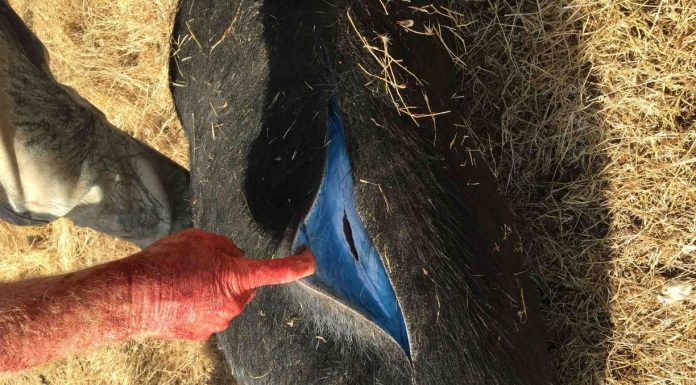
Exactly what caused a wild pig harvested in Morgan Hill to turn bright blue on the inside remains a mystery, but two state experts have a consistent and convincing theory.A reddit.com user by the name of “GlendilTEK” posted the discovery on the social media site Sept. 8, with a link to photos of the unusual pig. The user said his or her in-laws shot the wild pig on their ranch in Morgan Hill. The in-laws cut open the pig and found its fat was a fluorescent blue color throughout its body. The animal’s muscle and organs did not appear to be discolored, GlendilTEK noted.The reddit user has been seeking input from the online community as to how the pig turned blue on the inside, and even sent a sample to University California, Davis for research.A spokesman for the California Department of Fish and Wildlife said experts have “occasionally” seen previous cases of wild pigs exhibiting a similar discoloration of their insides. In those cases, it was determined the affected animals had likely consumed chemicals that contained a blue dye.“Pigs eat pesticides and rodenticides, and it stains the fat of the pig,” said Fish and Wildlife spokesman Andrew Hughan. “We recommend not eating the animal, and you should try to dispose of it so it doesn’t get back into the environment.”Robert Poppenga, a veterinary toxicologist with the California Animal Health and Food Safety at UC Davis, agreed the pig might have been exposed to an “anticoagulant rodenticide.”“These things have happened in the past,” Poppenga said.He added that the dye itself is probably not harmful to surviving pigs. But he doesn’t recommend letting scavengers get into an affected pig’s carcass.“I would probably dispose of the carcass if possible, where it’s not left out for other animals to feed on,” Poppenga said.Neither Poppenga nor Hughan are familiar with the specific details of the case of Morgan Hill’s blue pig.If the UC Davis lab receives a sample of the pig tissue from the Morgan Hill rancher, researchers could examine the item to determine a specific cause.Hughan added that Fish and Wildlife would like to speak to the rancher who discovered the discolored pig in order to obtain a sample that department staff can test on their own.This newspaper attempted to contact GlendilTEK for more information including the exact location of the blue pig, but has not heard back from the reddit user.