


In the autumn of 2018, eleven people were brutally massacred during Shabbat services at the Tree of Life synagogue in Pittsburgh, shattering our collective sense of safety. The trauma reverberated far beyond Pennsylvania, reaching directly into the Jewish souls of Morgan Hill, Gilroy and Hollister, and into our local temple, Congregation Emeth.
Just one week after the attack, Congregation Emeth gathered to celebrate a Bar Mitzvah. It should have been a day of pure joy, marking a young boy’s transition into Jewish adulthood. Instead, a heavy blanket of anxiety hung over us. During the week before, as Rabbi, I kept reassuring the parents and the celebrant that everyone would be safe, but they saw on my face my own concerns.
As we approached the temple, on the Saturday morning of the Bar Mitzvah, exactly one week after the Pittsburgh antisemitic murders, the fear dissolved into awe.
Standing in a protective line along the sidewalk was a human shield of local clergy, Buddhist monks and representatives of the Islamic and Christian communities. They were holding signs of love, linking arms and guarding our temple so we could pray in peace. They did not share our faith, but they shared our humanity.
As we approach the Jewish High Holidays—Rosh Hashanah, the Jewish New Year and Yom Kippur, the Day of Atonement—I often think of the interfaith community standing on the asphalt.
We need that solidarity today more than ever. The fear we felt in 2018 has not faded; it has intensified.
The Anti-Defamation League (ADL) tracked 6,274 antisemitic incidents across the United States in its most recent annual audit, marking one of the highest years on record since tracking began in 1979. Even more sobering, recent FBI hate crime statistics reveal that Jewish people—who make up just 2% of the U.S. population—were targeted in a staggering 63% of all reported religion-based hate crimes nationwide.
The High Holidays are a solemn season of intense self-reflection. At the heart of these days is the concept of teshuvah, a Hebrew word often translated as “repentance,” but which literally means “returning” or “repairing.”
Judaism teaches that when a wrong is committed, repair requires action. We must name the injustice, stand up to fix the breach and change the environment that allowed the harm to happen.
Too often, the burden of fighting antisemitism is left entirely to Jewish communities. We are expected to increase our security budgets, comfort our children and explain our trauma to the world. But the lesson of that Bar Mitzvah morning is that true teshuvah—the active repair of a fractured world—is a collective responsibility.
The interfaith community who guarded our doors did not wait for a perfect world to materialize. They actively built one on our sidewalk. They understood that an attack on one house of worship is an attack on the freedom of all people to live without fear.
During Rosh Hashanah, we blow the shofar, a hollowed-out ram’s horn. Its sharp, piercing blast is meant to serve as a spiritual wake-up call, shaking us out of our complacency. Our interfaith community answered that wake-up call before the horn even sounded.
As the Jewish New Year begins, their example remains our blueprint. We fight hate not by retreating behind higher walls, but by standing together outside them.
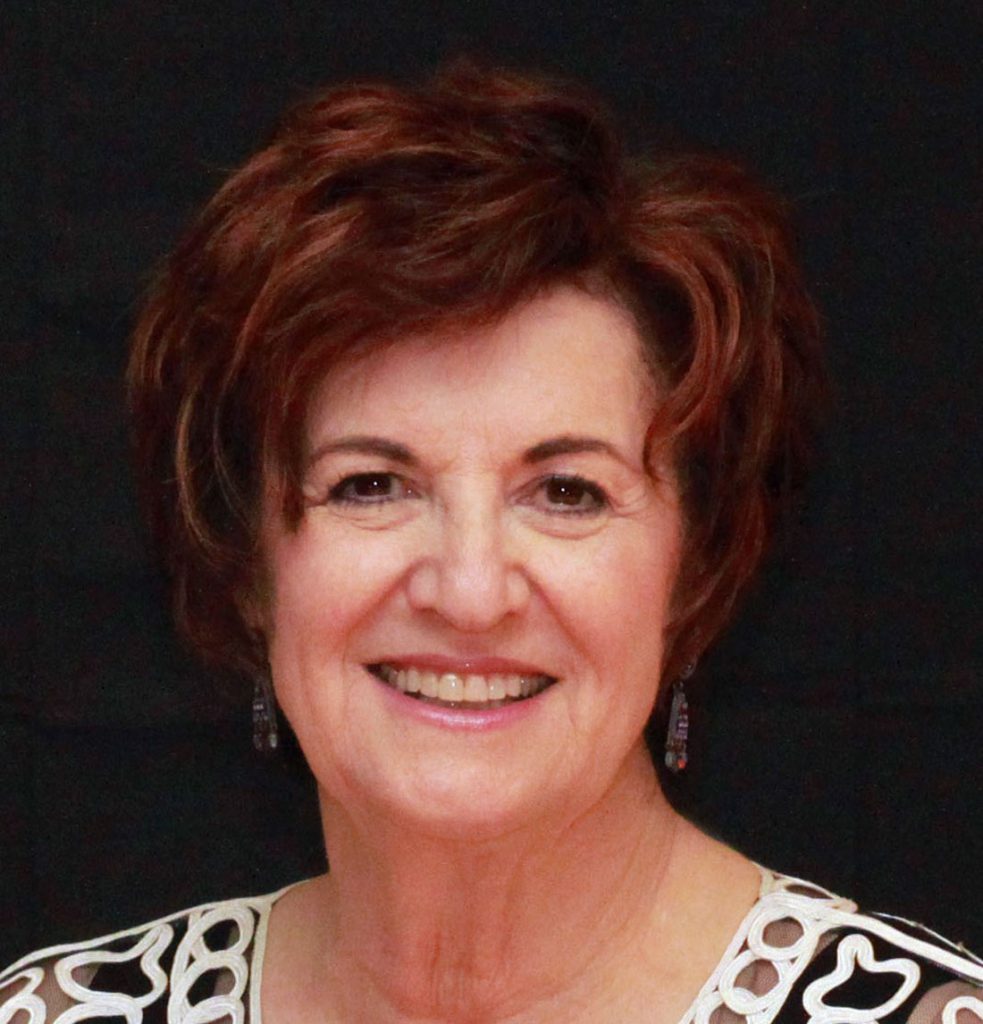
Rabbi Debbie Israel is Interim Rabbi/Rabbi Emerita of Congregation Emeth, serving South Santa Clara and San Benito counties. She is a founding member of the Interfaith Clergy Alliance of South County and its liaison to the Interfaith CommUNITY of South County (ICSC). She can be reached at ra***@***th.net.







There is relatively little compassion in the world when compared to the very plentiful anger or rage and violence. I’ve noticed myself getting angrier over the last few years, especially about domestic and global injustices, or at least how I perceive them as such.
Maybe my anger is largely related to the Internet’s ‘angry algorithm’ sending me the stories, etcetera, it has (unfortunately correctly) calculated will successfully agitate me into keeping the (I believe, overall societally-/socially-damaging) process going thus maximizing the number of clicks and scrolls I’ll provide it to sell to product advertisers.
Mostly relevant to the social and political turmoil seemingly everywhere are the words of American sociologist Stanley Milgram (1933-1984), of Obedience Experiments fame/infamy: “It may be that we are puppets — puppets controlled by the strings of society. But at least we are puppets with perception [and] awareness. And perhaps our awareness is the first step to our liberation.”
At least as individuals, we can try to resist flawed human nature thus behavior, however societally normalized it may be, once we become aware of its potential within ourselves. Once cognizant of it, perhaps enough of us could instead perform truly humane acts in sufficient quantity to initiate positive change on a large(r) scale.
Racist and other bigoted sentiment is typically environmentally developed/acquired during childhood, often enough even passed down generationally, if not also genetically. Especially if it’s deliberate, exposing very impressionable cerebrally-developing children to such an environment of baseless contempt and overt bigotry amounts to a formidable form of child abuse.
If the parents won’t do it for plain moral reasons, they then should do their own children a big favor by NOT passing down onto them such destructive anti-social/-societal sentiments and perceptions (including stereotypes and ‘humor’), since such rearing can readily make life much harder for those children.
It fails to prepare them for the practical reality of an increasingly diverse and populous society and workplace. It also makes it so much less likely those children will be emotionally content or (preferably) harmonious with their multicultural, multi-faith and multi-ethnic/-racial surroundings.
The narrator in Nobel laureate Toni Morrison’s novel Beloved notes that, like the South, the Civil War era northern states also hated Black people but happened to hate slavery more.
Of course, this succinct summation of the callousness, if not ugliness, of the politics of difference and scale is applicable elsewhere, today: for example, they may hate libertarians but hate liberals more; hate Hispanics but abhor Chinese people even more; and loath Jews but despise Muslims far more, etcetera and etcetera.